Quality is Just as Important as Quantity in Food Pantries

My food pantry often receives donations of food from other organizations that are unable to distribute it for a variety of reasons. Recently, staff from one of these pantries stopped by with a donation as I was loading up a cart of butter. Several of the cases had been crushed, and butter was oozing out of the packaging. It was a mess, and the ruined boxes were inappropriate and unsafe for anyone to eat. I quickly sorted through them and tossed them in the garbage without a second thought.

The staff from this other pantry watched me do this with horror. “You’re just throwing it out? Can we take it? I can’t believe you threw it out!”

This request was an uncomfortable surprise. As the packages were clearly damaged and leaky, they were not safe to distribute according to food banking guidelines. I did not let them take the butter.

This incident makes me reflect on the bigger question of what exactly our two food pantries are trying to accomplish, and how we use wildly different strategies to pursue those goals.

For many years, the traditional food pantry model has operated under the idea that quantity of food distributed is the primary measure of success. Pounds given away is the easiest metric available, and combined with the attitude that people should be “grateful for what they get,” has produced a culture that encourages and rewards the process of giving as much food away as possible, prioritizing quantity over quality. This results in food pantries eager to share ruined packages of butter with their clients.

Luckily, the food banking industry is slowly transitioning towards a focus on dignity, which challenges the assumption that quantity trumps quality.  This requires anti-hunger organizations to consider the quality of the food they are distributing and how it impacts the people who eat it instead of focusing on our need to give it away.

In many cases, this means throwing out food that you might salvage in your own kitchen, but is inappropriate for a food pantry.

This dichotomy is why I am wary about conversations celebrating the reduction of food waste by donating to food pantries. It perpetuates the idea that it’s okay for people experiencing hunger to eat food that should be thrown away.

Food banks and pantries depend on these donations, but we must be incredibly careful about how we frame these discussions.

If an onion has a little mold on it, it’s quite easy to cut and peel the bad spot off and use the rest. However, no one has ever left a food pantry with a moldy onion and felt excited, respected, or supported. Volunteers and leadership may baulk at the idea of throwing the onion out, citing fears that clients won’t have enough food. A single onion will never make-or-break someone’s food security. But when we make a habit of distributing food of poor quality; slimy lettuce, mushy bruised pears, and packs of butter that look like they were run over by a truck, then we are hurting food security and obstructing food justice. Quantity can never overcome poor quality when it comes to food.

When our goal is to distribute as much food as possible, we fail to offer the support our community really needs while also disrespecting our shoppers.

As hunger needs rise, food pantries must prioritize increasing our food supply. But when that is our only measure of success, it focuses entirely on our side of this transaction.

Saving food from the garbage and giving away as much as possible looks great to donors, volunteers, and supporters, but it entirely disregards the needs of our shoppers.

When food pantries make empathy our primary focus, examining what it’s like to receive our own food options can be transformative. We will always need to prioritize seeking more resources, finding new donors, and building a stronger food supply (until we solve the root causes of hunger). But if we don’t intentionally and deliberately examine what food we are distributing and why, food pantries can lose track of our common goal to ensure that everyone has the food they need to thrive.

The opinions expressed here are solely my own and do not express the views or opinions of my employer.

Want to learn more about food justice? Subscribe so you never miss a post! Look for one email in your inbox every Monday morning.

The Problem is Never Just Hunger

“I just need food- I didn’t know I had to fill out any paperwork!” This woman’s vehement opposition to completing our food pantry’s new client intake form took me by surprise, which increased as she abruptly strode off with tears running down her face. I’d never had this happen before.

I followed her into the parking lot, and after some hesitant discussion, it became clear that she was a survivor of domestic violence. This woman was terrified at the prospect of any documentation that might enable her ex to find her. Respecting that fear, we did not record her visit, and ensured that she and her two children got the food they needed to survive a couple more days.

Nearly three years ago, this incident remains lodged in my memory as an early catalyst for my food pantry’s transition to practicing trauma-informed care, with the recognition that no one comes to our organization facing hunger as their only challenge.

Hunger was only one obstacle among many for this woman as she struggled to access the resources she needed while keeping her family safe.  Even though our mission is to meet the nutritional needs of our community, it is essential that anti-hunger organizations always recognize our visitors carry many other burdens when they walk through our doors, whether they share them with us or not.

This is why it is so important for every food justice advocate to deliberately plan, script, and implement strategies that focus on compassion and respect, and not just food access. This can help transform the process of seeking emergency food assistance from one of panic and humiliation to one of dignity and empowerment.

Every day, our food pantry welcomes people who are houseless, who have recently arrived from nations ripped apart by war, are facing imminent financial emergencies, or are experiencing a mental health crisis. Food pantry clients are never just facing food insecurity, but there is ample opportunity for us to provide support beyond just food.

Here’s how food pantries can build environments that support all their shoppers and the backgrounds they bring:

  • Trauma-informed training for staff, leadership, and volunteers. Recognizing and respecting the trauma that people carry helps us develop systems to support them. Foster systems that accommodate those needs, such as ignoring the administrative responsibilities for the woman escaping a violent ex or packing a personalized food box for an individual who is overstimulated by the crowd and long line.
  • De-escalation training. We serve clients who arrive stressed and emotionally charged every day, and it requires tact and sensitivity to help them find stability. For example, we occasionally encounter clients who haven’t eaten for several days. Finding them a snack and a bottle of water before they shop is often the most effective way to set them up for success shopping in the pantry.
  • Focus on an attitude of abundance. Even if food supplies are running low, a sense of abundance helps shoppers feel more food secure and supported. When our food pantry line grows especially long, people worry that we won’t have enough food for everyone. Reassuring them helps quell anxieties before they even get inside.
  • Wrap-around services. Although we don’t provide additional programming, we network with health clinics, organizations that deliver food, free clothing, and housing assistance so we can direct clients in the right direction. We partner with several nursing-student programs who have provided us with meal planning projects, recipe development, and other resources. This semester our students have developed information on wound care to share with our clients who are living outside. Although we rarely have exactly the resources our shoppers need, being able to point them in the right direction can save them from the overwhelming fear of solving these challenges alone.

The opinions expressed here are solely my own and do not express the views or opinions of my employer.

Want to learn more about food justice? Subscribe so you never miss a post! Look for one email in your inbox every Monday morning.

Learning to Cook Won’t Solve Hunger

Americans love to judge what people are eating. We have complicated and contradictory expectations about what and how people experiencing hunger should eat. One of the dominant assumptions I hear far too often is that people living in poverty make poor food choices, and that different decisions would improve both their budget and health. A common solution to this assumption is to teach people to cook.

Identifying a lack of cooking skills as a root cause of hunger transforms it into an individual rather than a systemic problem. It shifts the responsibility of solving hunger from policy-level to one of individual responsibility.

It’s also completely wrong. Hunger has very little to do with the individual choices anyone makes.

People experiencing hunger do not have worse cooking skills or nutritional knowledge than individuals who are food secure. They face greater barriers to accessing and cooking healthier foods.

Every day at my food pantry, I engage with clients who admire our fresh produce but then explain how their 16-hour workday, or lack of refrigeration in their apartment, or disability that keeps them from standing too long, prevents them from utilizing these foods.

When people aren’t using emergency food assistance programs, fresh produce is more expensive and primarily available at larger grocery stores. It can be hard for low-income communities inundated with gas stations and convenience stores to find fresh options, and what is available is often more costly.

Even when whole foods are accessible, cooking from scratch is time-consuming. Many households experiencing food insecurity work long hours and/or multiple jobs, which limits both time and physical capacity to prepare fresh meals. Anyone who has worked a long day knows how hard it can be to get home and assemble a labor- and time-intensive meal.

Cooking Education is a Solution to the Wrong Problem

Many anti-hunger organizations host or facilitate cooking classes. I love to cook and believe that everyone benefits from being comfortable in the kitchen. However, it is important to not foster the narrative that better cooking skills can end hunger. Teaching a family how to prepare dry beans does not help them escape poverty.  Even if this saves a couple dollars, it is unlikely to make a meaningful impact on anyone’s budget (Millennials tired of avocado toast condemnation will sympathize).

And far too often, cooking classes focus on foods and meals familiar to program leadership, which may not be the same as their clients. Creating a culinary curriculum intended to save money or improve health can easily dismiss the practices and foods important to the community being served.

Most people know the essentials of healthy eating, but face enormous systemic barriers to actually changing how they eat.

How to effectively partner cooking education with anti-hunger advocacy:

  • Present cooking classes as a community activity, a social event, and an effort to help people have fun in the kitchen. Improved skills and confidence in the kitchen can greatly increase quality of life, but they are not an anti-hunger solution. Organizations that present cooking classes as budget savers should tread carefully, recognizing the tradeoffs in time spent and cultural relevance. (Learning to cook with dry beans is a dominant theme of anti-hunger cooking classes, but it requires extra time that people might not have and neglects the fact that many cultures don’t eat beans. It’s great for people to try new foods, but we never want to dismiss them as less valuable than what people are already comfortable eating.)
  • Practice community leadership. Ask food pantry clients to teach how to make culturally relevant dishes. Celebrate their traditional preparation methods. Make sure the foods available are appropriate, useful, and accessible to participants.
  • Don’t ever waiver from the concept that hunger is a systemic problem and that it requires systemic solutions. Our individual efforts can make an individual impact, but they don’t change how inequality is structured. Cooking classes should be treated as a supplemental option, rather than a targeted solution.

The opinions expressed here are solely my own and do not express the views or opinions of my employer.

Want to learn more about food justice? Subscribe so you never miss a post! Look for one email in your inbox every Monday morning.

Respecting Culinary Traditions: I Don’t Want to Eat What You Eat

Years ago, at one of the first food pantries I managed, I had an organizing problem. For some reason, I kept finding canned goods in the wrong sections, despite my careful signage and meticulous sorting. My assistants were high school students, mostly immigrants from a certain region in Africa, who were committed to helping the pantry run smoothly, so I was unsure what was going on.

One day, I had a student ask me to explain what broth was as they didn’t know what shelf to put it on. This led to the discovery that they had never eaten soup before. Soup was not a part of their culinary tradition. Suddenly, it made sense why I kept finding chicken noodle soup in the pasta section, minestrone on the vegetable shelf, and chili among the beans.

               The foods we grow up eating and the culinary traditions our cultures practice are deeply ingrained in our identities. They are so much a part of us that it can be exceptionally easy to forget that they are not shared by everyone around us.  

I had not considered that these students might not recognize all the foods we were distributing. Since many of them were also food pantry clients, this also taught me that my food pantry was offering up foods that their families didn’t eat. This is an easy mistake to make, and one that is seriously detrimental to how we fight hunger.

It is essential that we ensure people experiencing food insecurity have access to foods that are comfortable for them, and not just easy for organizations to distribute.

Food pantries, and nonprofits in general, tend to be led and managed by people of homogenous backgrounds. This means that services will always skew towards the traditions and practices of their specific culture, even when clients have a different background. Although anti-hunger advocates have made great strides in developing a diversification of services, we still have a long way to go.

This past week, my current food pantry moved into full Thanksgiving mode.* We are lucky enough to have turkeys for everyone, along with stuffing, mashed potatoes, gravy, and canned pumpkin. This abundance is immensely popular- it was our busiest week in history.

But we also served hundreds of households who don’t celebrate Thanksgiving and came to us for cabbage, and peppers, and stew meat and the day-to-day foods that make them happy. It takes deliberate and conscious effort to ensure their needs are not subsumed by the demand for Thanksgiving foods, since our organization’s leadership and volunteer community are overwhelmingly celebrants who haven’t considered that anyone might not be mashing potatoes or baking pie this week.

How Food Pantries Can Prioritize Culturally Specific Foods:

  • Encourage clients to volunteer (all food pantries should do this anyways, for a thousand reasons). Clients will have the best insights into what foods work and what doesn’t, and what their community wants more of. They may also recognize these foods when they’re donated, since they can be unfamiliar to other culinary traditions.
  • Examine the demographics of your clientele. Even anecdotal information will give you valuable insight- if you serve a significant population of a specific community, you should discuss with them what foods they might be looking for.
  • Let people take what they want, and as much as they want. Many of my eastern European clients are thrilled to take 5-6 cabbages, while our Latinx families are particularly enthused by bags of peppers. Mandating that everyone gets an equal amount of both only ensures that everyone’s cultural preferences are denied, while letting them take what they needs empowers them eat how their culture practices.
  • Experiment. Don’t shy away from foods just because you don’t know what to do with them. You may learn that no one really wanted that specific food, or you may realize it’s in high demand and you just hadn’t heard the requests for it. This can be a fun opportunity for staff and volunteers to learn about new foods.

*While I respect the importance of culinary tradition, it’s also important to remember that the origins of Thanksgiving are found in a myth crafted to obscure a history of colonization and the genocide of millions of Native Americans. For many, this day is a day of mourning.


The opinions expressed here are solely my own and do not express the views or opinions of my employer.

Want to learn more about food justice? Subscribe so you never miss a post! Look for one email in your inbox every Monday morning.

Keep Calm and Fight Hunger

Historically, the week before Thanksgiving is the busiest of the year for our food pantry. Combined with the growing need and fears of yet another government shutdown, it will likely be the busiest week in our organization’s history. Record-high attendance last week attests to this.

High demand and even higher stress levels add to the difficulty of maintaining a space that feels welcoming, abundant, and respectful. Such high numbers deplete our food supplies and adds to the stress felt by staff and volunteers alike while fostering fears of scarcity in our shoppers. Yet it is still possible to ensure that everyone feels welcome, seen and nourished despite the chaos.

Here’s how other organizations can replicate this success.

How do we maintain an attitude of abundance in a high stress environment?

  • We encourage our clients to take as much as they want of as many items as they can. At the beginning of every day, we’ll ensure our shelves are filled to bursting with canned goods and pay special attention to items that feature in holiday dishes like canned pumpkin, green beans, and cream of mushroom soup. It is more work to keep the shelves full, but pays off in the relief we can see in our clients’ faces as they wheel full shopping carts out the door. It can also help make up for the essential ingredients we generally don’t have- like evaporated milk, sugar or flour.
  • We are excited and enthusiastic to welcome new clients. As soon as they walk in the door, they are greeted with “I’m so glad you made it in today! We’re excited to help you out!” This makes a huge difference in ensuring people feel welcome, even after waiting in a long line outside in the cold. We’ve created a specific volunteer role dedicated to providing a welcome and orientation for first-time shoppers, which both improves flow and gives our new shoppers confidence that we are truly pleased to welcome them.
  • I make sure my team feels appreciated. We’re working harder than anyone else I know, and at the end of the day it’s easy to see the fatigue in everyone’s faces. It’s essential that anti-hunger advocates celebrate and highlight our individual contributions. Too often, nonprofit organizations take for granted the enormous burdens that their staff shoulder in order to foster success, which is an easy way to burn out your best people.

Hunger is a systemic problem and can’t be solved just by offering food to those who need it, but at the same time, hundreds of families will enjoy a bountiful holiday dinner thanks to the efforts of food pantries across the country. By making simple adjustments in how we display food, treat our clients, and appreciate our contributions, we make enormous progress in building more effective, dignified, and welcoming emergency food assistance programs.

The opinions expressed here are solely my own and do not express the views or opinions of my employer.

Want to learn more about food justice? Subscribe so you never miss a post! Look for one email in your inbox every Monday morning.

No One Needs to Be Grateful For Food

“They should just be grateful for what they get!”

If you spend enough time around food pantries, you will inevitably hear this comment. Most often, it’s a default response to an individual in need expressing any level of discomfort, asking for accommodation of a dietary need, or even just pointing out a spot of mold on a loaf of bread. Anything that can be perceived as criticism of emergency food services is often interpreted as a lack of gratitude, and subsequently condemned. 

While the practice of gratitude can be healthy and fulfilling, demanding it at a food pantry is neither. 

Gratitude cannot be required. That’s why it is a beautiful and powerful emotion- it must be voluntarily fostered and practiced. 

Demanding that someone experiencing food insecurity be grateful for otherwise discarded food is the ultimate assertion of dominance. 

There is an enormous power differential between team members and clients at food pantries. Staff and volunteers determine what type and how much food clients can get. We grant or deny access to foods that reaffirm their culture, traditions, and health. We choose when and how rules are enforced, and we determine what behaviors can strip someone of the privilege of receiving food altogether.

Emergency food access programs have a long history of seeking to control behavior. Work requirements, drug testing, and other policies embody the assumption that hunger results from poor decision making. This reasoning is used to justify strict programs limiting individual choice. Knowing that food is necessary for survival, it’s a powerful way to assert authority and mandate specific behaviors (even though they’re not found to have much effect). Somehow, the idea persists that demanding gratitude from a person in need can also be a tool to help them succeed.

We all need food to live. The question of “who deserves to eat?” is essentially synonymous with “who deserves to live?”

Every person deserves a healthy, nourished life.

Even though there are an abundance of barriers preventing access to the foods people need to lead that healthy life, they still deserve it unconditionally.

Most of the foods that food pantries distribute have already been rejected by someone else. Cans may be dented, some items are expired, and many of the fresh options are nearing the end of their lifespan. Even the most dignified organizations depend upon reframing the reality that most of their food is salvaged from food waste. 

It’s incredibly gratifying when a food pantry client leaves the building with tears in their eyes, effusively gushing about the impact that the food pantry had on their life and the gratitude in their heart. Everyone feels good after that kind of encounter.

But it’s essential to remember that a food pantry has just as powerful an impact on the client who is angry that they need a food pantry at all, who is frustrated from a day of enduring microaggressions, who is resentful of the cheerful person who arrived in a shiny BMW telling them they can’t have an extra can of green beans. This individual is just as deserving of food as anyone else, and food pantries need to ensure that they have systems and practices that do not allow this client to be treated with anything other than respect and dignity.

The opinions expressed here are solely my own and do not express the views or opinions of my employer.

Want to learn more about food justice? Subscribe so you never miss a post! Look for one email in your inbox every Monday morning.

Ending Hunger: Why You Should Break Down the Greatest Barriers First

Food banks and pantries do essential work. Hunger is a dominant and growing problem in our country, and having the capacity to provide a family with several days’ worth of food makes a huge difference. But it is essential to recognize that the emergency food assistance program, and the systems we’ve built around it, are merely a band-aid. We cannot solve hunger by handing out free food because the conditions that perpetuate hunger have nothing to do with food.

Especially since the surge of racial justice protests of 2020, there has been greater public discussion, although still inadequate, of how inequality is engrained into our daily life.

Anti-hunger organizations and individuals are beginning to acknowledge that hunger is caused by systems of oppression that deny people access to the resources they need.

We live in a world where access to resources and opportunity to thrive are heavily determined by race, gender, sexual identity, and ability, among many other forms of discrimination.

Certain identities face greater barriers than others in finding affordable housing, living wages, accessible healthcare, and communities where they feel safe and welcome. Denial of any of these conditions makes it harder for people to access, afford, purchase, and prepare the food they need to thrive. The higher risk of hunger for demographics who experience greater rates of oppression clearly demonstrates how it is a systemic, and not an individual, problem.

To effectively address hunger, it’s important for anti-hunger advocates to learn who faces greater barriers to food access both out in the world and in their own organization.

As an example, my food pantry has a distinctly religious logo. Even though it has been many years since we were affiliated with a church, it’s impossible to tell that we aren’t a faith-based organization. In the past three years, I’ve heard from multiple LGBTQIA+ clients that they were initially hesitant to use our services due to fear of the attitudes they might encounter and a history of hate from religious institutions.

LGBTQIA+ individuals have experienced hostility, poorer service, or even violence when seeking social services from religious-based charities. It has only been through a very slow process of establishing our reputation as an inclusive space that we’ve seen an increase in our LGBTQIA+ clientele, since changing the logo is not an option. Although this evidence is anecdotal, it’s clear that fear of discrimination is a significant barrier to food access for many in my community.

Before I began deliberately welcoming LGBTQIA+ individuals to our pantry, it would have been easy to assume that this demographic didn’t need our services since they weren’t coming. Without considering why people aren’t utilizing our resources, we may completely ignore the needs of the community.

Fighting discrimination is hard but if we really want to end hunger, we must address oppression. 

It is inadequate for emergency food assistance programs to just offer food. While pantries are an essential service, and one I passionately believe in, providing food to those who come for it only overcomes the smallest barriers. If we aspire to make food justice a priority, it is imperative that food pantries tackle the big problems. This means honestly evaluating what systems are keeping the most vulnerable communities away from our resources, and how our efforts may contribute to those barriers.

Here are three questions for food pantries to examine the potential barriers they may reinforce:

1. What is the makeup of the leadership, staff, and volunteer base?

A homogenous group both looks unwelcoming to others, but also means that your decision-making lacks diversity. If your pantry team is of all the same cultural background, you are unlikely to prioritize foods that you are unfamiliar with, even if they are important for the communities you serve. If there is no one who speaks the language on the team, it’s harder for those clients to even learn about services, let alone utilize them. If there’s no one with lived experience of hunger guiding decision-making, it’s easy to implement policies based on assumption rather than reality.

2. What’s the culture of the pantry?

Are clients monitored for their behavior or choices as they shop? It’s highly probable that implicit bias plays a role in how clients are supervised. The more rules your program implements, the more opportunities there are to enforce them unequally. This is why I advocate for as few rules as possible, and is why my pantry does not require our shoppers to move along a specific pathway. We have more traffic jams, but we don’t manufacture opportunities for people to do something wrong. This is also one reason why I oppose setting limits on how much food people can take.

3. Do they practice trauma-informed care?

People visiting a food pantry never just face hunger. On top of the challenges of paying rent, buying their children new shoes, and maintaining their prescriptions, it’s likely they’re also enduring racial harassment, sexual violence, or ableist discrimination. If your organization is knowledgeable and empathetic to these burdens, your shoppers are more likely to feel respected and welcomed. If you prioritize just giving everyone food, you ensure these clients feel silenced and invisible.


By deliberately evaluating how your pantry can overcome the barriers faced by our most vulnerable populations, we make food more accessible for everyone. If we really intend to end hunger, then we have no excuse for ignoring the communities with the highest needs.

The opinions expressed here are solely my own and do not express the views or opinions of my employer.

Want to learn more about food justice? Subscribe so you never miss a post!

No One Knows What I Should Eat Better Than Me

As someone with an autoimmune disorder, at the beginning of the pandemic I was one of the individuals warned to be extra careful about exposure. To reduce my risk, I initially tried utilizing a grocery delivery service.

Although it was convenient to not make the physical trip to the store, I was quickly frustrated by the choices that my shoppers made, even when I could not have articulated my preferences beforehand. I had envisioned getting a slightly smaller onion. I wouldn’t have picked the lettuce with the wilted spot on the edge. Almond flour was not an acceptable substitute for cassava flour.

Having the power to make our own food choices is important. Not only does it allow me to eat what my body wants and culture practices, but also offers empowerment. Allowing someone else determine our food choices feels infantilizing and undignified.

               The emergency food assistance system has long fostered the attitude that people experiencing hunger do so through their own failures, and need an authority to guide them in the right direction which justifies denying them choice in the matter.

For many years anti-hunger programs have offered very few opportunities to people experiencing hunger to select their own foods, or labeled individuals “ungrateful,” if they dared make special requests.

In traditional food pantries, opportunities for individuals to make their own choices can be severely limited. Food pantries are dependent on donations, and rarely have all the options that a family needs. Most also utilize systems that limit what and how much families can take, which means the ability to make decisions based on individual wants is significantly curtailed.

While I passionately believe that food pantries are powerful tools for implementing food justice, it’s important to call out these weaknesses so that we can begin to build better and more equitable systems.

We can do better (and many programs do!)

Food justice requires honoring the needs of every individual. This can only be accomplished by ensuring everyone has the power to choose their own foods. We all know our own needs best, and having the autonomy to make those decisions brings empowerment and dignity to our relationship with food.

It is inadequate for food assistance programs to provide food without allowing choice.

What programs allow people experiencing hunger make their own food choices?

-Grocery model pantries. This style of food pantry allows clients to make their own selections of what foods they want, and an increasing number allow clients to take the quantities they need as well. Although food pantry options will always be limited by their inventory which depends upon donations, this model provides people experiencing hunger with an experience as close to a grocery store as possible.

-Supplemental Nutrition Assistance Program (SNAP). SNAP provides dollars for families to make their own food purchases with few restrictions, and are one of the most effective ways to ensure people have access to foods that work for them. SNAP generally can’t be used on hot foods or dining out, but give families essential resources for making their own choices about what they need in the grocery store.

Double Up Food Bucks. This program matches SNAP dollars (generally up to $10) spent at farmers markets, providing shoppers with $20 to spend on fresh produce. This is a fantastic and growing program, as it makes farmers’ markets significantly more accessible to people with limited funds for food. Farmers’ markets are known for offering high quality but expensive produce that is often out of reach for low-income individuals. Available in 27 states, this program empowers participants to support their local farmers while increasing their power of choice and quality of food available.

I’m sure there are more programs that do incredible jobs of increasing choice and access- please feel free to share!

The opinions expressed here are solely my own and do not express the views or opinions of my employer.

Want to learn more about food justice? Subscribe so you never miss a post!

How to Make Your Food Donations Count This Winter

This week at my food pantry, as I walked by the long line of clients eagerly waiting to come inside to shop for groceries, I heard one woman on her cell phone say, “I’m already three months behind on my rent. I need all the help I can get.”

Unfortunately, this is not a unique story. Particularly as the holiday season approaches and people struggle with the impacts of inflation, more and more families will make hard choices about what they can afford and what they can do without, and far too often food is the easiest to cut.

At about this time every year, food banks and pantries across the country also begin strategizing and planning for the influx of need that accompanies the holiday season and the dark, colder months.

Emergency food access programs are bracing for a crush of clients as the need continues to rise.

We increasingly encounter clients forced to choose between buying food or heating their home, or paying rent, or purchasing new jackets for their children, or staying up-to-date on their medication.

Luckily, the holiday season also tends to bring a huge interest in donating food. Food banks and pantries will soon start to see a significant increase in both direct donations from individuals as well as through food drives. While we can’t solve most of the challenges faced by our clients, we can work to get them the food they need so their money can be spent elsewhere.  

The food we offer our clients can make a huge difference as to whether we can really meet their needs, or simply alleviate an immediate crisis, so being thoughtful about your choices can have a powerful impact. If your or your community are contemplating donating to anti-hunger programs, here’s what you should know.

What we love:

Donate foods that make YOU happy. If you love it, chances are someone in our clientele will love it too. We serve an incredibly diverse population, and I’ve yet to encounter a food that someone doesn’t want. Go ahead and donate canned dolmas, giant jugs of chili oil, and bags of dried mushrooms. Someone’s got a recipe they’re excited to try.

Seasonings and condiments. There is a strong emphasis on donating healthy foods right now (as there should be) but even with all the healthy options in the world, it can be hard to make them into a tasty meal without salt, pepper, herbs, or spices. These are more expensive ingredients, which means they are donated less frequently.

Baking ingredients. While boxed mixes are wonderful for many people, we also serve plenty of clients who are delighted to make their own bread, cookies for their grandkids, or sometimes even pastries for food pantry staff! We are chronically low on flour, sugar, baking soda and powder, baking chocolate, and other ingredients for from-scratch baking. These items in particular often help people celebrate their culture and traditions, and we love any chance we have to uplift them.

If you’re planning a food drive and know the specific organization you want to donate to, call and ask what they need! They will probably have some very specific answers, and appreciate your attention to their food supply.

What we don’t love:

Homemade foods. You may be the most accomplished canner in the world, but we don’t know that, and all our foods must be made in a commercial kitchen so we cannot give away your beautiful homemade jam.

Open and partially-used foods. If you’re moving or cleaning out your kitchen, you may be eager to donate half-empty bags of sugar or gently-used spices rather than throw them out. While they may be safe and functional, no one wants someone else’s cast-offs. Give these to your friends instead because we cannot distribute them.

Alcohol. It should be obvious, but it happens too regularly that someone donates a bottle of wine or a couple cans of beer. While it is surely well-intentioned, there are a million reasons (and federal regulations) why we can’t give theses away.

When you package items together. Most pantry models cannot keep your donation together, so while we appreciate the thought that goes into taping spaghetti, pasta sauce, and shelf-stable parmesan together, it is highly unlikely that we can distribute them that way.

Want to do even more?

Donate year-round. Consider signing up for a program like the Portland Food Project (commonly known as Green Bag) that ensures donations come in throughout the year instead of just during the holidays. My household participates, and we have fun every two months loading up our green bag at the grocery store with the food options I know are most in demand. My food pantry is also a recipient, and the program adds essential variety to our food supply, especially in the summer months when donations drop significantly.

Avoid glass options when you can. With the volume of food we’re working with, it can be hard to ensure it is all handled as gently as it should.

Consider adding non-food items like can openers, toothbrushes, diapers (especially bigger sizes) or menstrual hygiene products. Many food banks and pantries also have systems to distribute these high demand items.   

The opinions expressed here are solely my own and do not express the views or opinions of my employer.

Want to learn more about food justice? Subscribe so you never miss a post!

The Hardest Part of Fighting Hunger Has Nothing to do With Food

Every day, our food pantry distributes approximately 7,000 pounds of food, all of which is carried or loaded on carts from the warehouse to be displayed on shelves, tables, or in bins. The physical demands of this work are extreme, and volunteers and staff are often exhausted at the end of shifts.

It’s easy to get caught up in these big numbers- our team moves 35,000 pounds of food per week, and we’re extremely proud of it. But tangible statistics like this can also mean that we forget to consider the other forms of labor that are equally essential to keep a food pantry running. For instance, the labor of helping someone facing food insecurity feel more comfortable and at ease while shopping at a food pantry.

Using a food pantry is highly stigmatized, and people experiencing food insecurity may feel embarrassed, humiliated, or simply extra emotional when they walk through our doors.

Welcoming clients to the pantry requires staff and volunteers to put forth extra positive and open energy.

I see this effort each day in how our team practices empathy as we explain the process for an overwhelmed new shopper, patience as we explain it again for individuals who worry about doing something wrong, and sympathy as we confess how our food supply may not meet everyone’s needs.

In part due to the stigma of food assistance, people often wait until their cupboards are completely bare before they seek our services.  Sometimes they arrive under massive stress, which at times can manifest in some uncomfortable encounters: disrespectful or abusive language and unpredictable or even scary behavior.

It’s important for food pantries to explicitly recognize that managing client stress levels while offering respectful, dignified food assistance is emotionally exhausting.

Our pantry staff are exceptionally skilled in de-escalation, and when difficult or dangerous situations are diffused with skill, it’s easy for leadership to miss the fact that it was necessary at all.  And even harder to recognize the full extent of the emotional labor that goes into prevention rather than reaction.

 To build a pantry that prioritizes compassion, respect and dignity requires enormous amounts of effort to ensure clients feel welcome even when they’re rude, or feel taken care of even when they’re dissatisfied, or feel like their needs are heard even when we can’t meet them.

Recognizing that emotional labor is an essential part of fighting hunger, how can leaders in anti-hunger organizations better support their staff and volunteers?

  • Listen. For many people, even the concept of emotional labor is unfamiliar. I’m confident my female readers, and some men out there, have tried to explain the stresses and demands of emotional labor, only to have them brushed away.  Anti-hunger leaders need to listen and learn about the emotional demands of this work.
  • Recognize the extra burden through compensation.  Exhaustion due to emotional labor means other tasks may not get done, which can impact performance, promotions, and wages.   Leaders must work to avoid penalizing women working just as hard, if not harder than their male peers.  Emotional labor is rarely listed on job descriptions, but can easily be a full-time job in itself.

Major thanks to Kern Herron for his contributions to this piece.

The opinions expressed here are solely my own and do not express the views or opinions of my employer.

Want to learn more about food justice? Subscribe so you never miss a post!

Why Are We Burning Out Our Anti-Hunger Champions?

For the past week or more, anti-hunger advocates have been nervously watching the news regarding a potential government shutdown. A shutdown would have had immediate, harmful impacts on programs that are essential for keeping families fed, and left charitable organizations strained to the max.

SNAP, WIC, and the National School Lunch Program are the most effective tools we have for fighting hunger.

SNAP serves nine times more people than American food banks, which is why a pause in funding had this field so panicked.

For an industry that is already overwhelmed with need, the repercussions of this shutdown had my colleagues and I quaking in our shoes. The thought of adding to our already oversized workload was daunting, to put it mildly.

Although I’m relieved to see that the immediate crisis has been postponed, the panic this incited in the anti-hunger field is important to examine.

Several days ago, I had an informational interview with someone who works on national-level anti-hunger program implementation, and I learned that these advocates are equally exhausted. During the height of the pandemic, fears of hunger rates escalating out of control led to the dedication of significant (and needed!) additional funding. But this boost in resources also increased the workload of the people who administer the programs far beyond their capacity.

My colleague and I commiserated on the fact that anti-hunger advocates at every level are burnt out. A perpetually increasing workload (with no end in sight) and the nonprofit industry’s preference for spending as much as possible on clients and programs and as little as possible on staffing and overhead means that staff lack the support to thrive (or even just succeed) in their roles.

We’re reaching a tipping point.

At the end of February 2023, people receiving SNAP benefits lost approximately $90 per person per month to spend on food. Anti-hunger advocates correctly sounded the alarm that we were facing a hunger crisis that could overwhelm emergency food resources.

Several months later, those warnings have been proven correct. My food pantry has seen a significant increase in the number of clients, and particularly in people who have never before used emergency food services. A year ago, we were serving about 110 households per day. Last Friday, we served 181 in the same four-hour period.

Considering the impacts of inflation, we anticipate breaking new attendance and distribution records every month from now through at least December.

It is important that we continue to provide exceptional service to these families, but I’m also realizing that now is the time we need to pay attention to our anti-hunger advocates.

The physical demands of running a food pantry include moving several thousand pounds of food every day alongside the emotional labor of making sure clients feel comfortable and safe, volunteers are welcomed, and as much support as possible is provided to individuals in crisis. Growing numbers of clients mean more food, higher stress levels, and greater administrative responsibilities, all to be completed in the same eight-hour workday.

No matter how much we love the work, we cannot continue to meet the demands being placed on emergency food assistance programs without additional support.

As the holidays approach, we will begin to hear calls for food drives, volunteers, and funds from food banks and pantries who will likely cite the increasing hunger needs of our communities. They may boast about how the majority or entirety of your donation goes to helping people in need. What this claim neglects to include is that they only achieve this by minimizing wages and depriving staff of the resources they need to do their job well.

How can you fight hunger without burning out your advocates?

  • Research the priorities of your favorite nonprofits. Do they boast about low overhead costs? Does their staff make a living wage? Let this inform your donation decisions and be vocal about it.
  • Advocate for trust-based philanthropy. The neglect of nonprofit staff is just as much a fault of funders as it is of leadership. When organizations have the autonomy to spend money how they want rather than being told by outside voices, they can make choices that support their mission rather than cater to donor preferences.

The opinions expressed here are solely my own and do not express the views or opinions of my employer.

Want to learn more about food justice? Subscribe so you never miss a post!

Find the Right Balance Between Healthy and Comfort Foods

Recently, while doing a quick walk around our food pantry perimeter after we closed, I saw one of our clients sitting in her car eating a box of four chocolate-covered strawberries. I imagine that she is a mom who was about to head home for an evening of family and responsibilities, and it makes me happy to see that she got a break, however brief, to enjoy a fancy treat all to herself. 

American society identifies hard work as the key to success, which means our culture is eager to vilify people living in poverty as lazy, entitled, and unmotivated. I’m sure there are some who would condemn this mom for taking a break, eating unhealthily, or not sharing her family.

In our food pantry, we recognize that food is just as important as a tool for self-care as it is a vehicle for nourishment. For some, cooking an elaborate healthy meal helps them feel nourished and competent, while other people find comfort in a bag of potato chips or cookies. We all have these habits and traditions, but it is primarily low-income individuals who are berated for careless eating or lack of cooking skills. This is one reason we see such aggressive advocacy for policies that limit access to unhealthy foods for low-income individuals.

Beyond the fact that we know ignorance is rarely the root cause of these choices, the focus on nutrition neglects the reality that food is a powerful tool for self-care. In the same way that I like to treat myself to a little bit of chocolate with my morning cup of coffee, or my partner finds joy in a bowl of fresh popcorn in the evening, food is a powerful way that humans take care of ourselves.

When I was at my sickest and unable to eat my normal diet, I learned just how much I use food to manage my mental and emotional health. It was agony to no longer be able to drink my normal cup of black tea, and abstain from the flaky fresh biscuits my coworker taught me how to make. 

While it is essential that we continue to emphasize and facilitate access to healthy, fresh fruits and vegetables for everyone, it’s also important that we not ignore the value of foods that we use for our mental and emotional sustenance.

In food pantries, shoppers are regularly limited in their access and choices. They are forced to make decisions about what foods they need the most, and what they can go without for another week.

More and more anti-hunger organizations are working to develop nutritional and donation policies that more closely manage the types of food that they accept and distribute. While fighting to increase client access to fresh fruits and vegetables should absolutely be a priority, it’s also important for these policies to appreciate the value of offering other options rather than eliminating them altogether.

For an individual who is stressed and worried, finding a bag of potato chips for their kids at the food pantry may help them relax, knowing they can both feed their family and also help their kids feel like kids, with all the same options their neighbors and friends have.

It is challenging to establish a balance between healthy and comfort foods, but this is exactly what food banks and pantries should aspire to do.

Our food pantry places fresh produce front and center and has been working hard to increase our supply so that clients can really celebrate in our abundance. But we also work hard to make sure that our shoppers feel good about all their options, and don’t feel like they are being limited or judged even if the fresh options don’t work for them.

How can we balance healthy and comfort foods in food pantries?

  1. Fresh produce is prominently displayed in the center of the pantry lobby, but we also offer potato chips and sweets as they are available through the donation stream. We have them mostly displayed at checkout (much like at a grocery store,) where they are grabbed last minute as people exit the building. For families anxious about their food supply, their carts are often already full and topping them off with some bonus treats feels welcoming, appropriate, and responsible.
  2. We are vocal about letting our clients know that we want them to take what they need and offer no judgement. Whether they leave with a shopping cart brimming with collard greens or bags stuffed with flaming hot Cheetos, we work hard to educate our volunteers not to comment or judge the food choices of others. No one should be ever be shamed by their food choices, but especially not in a food pantry where there is already so much trauma and emotion present in the experience.
  3. We celebrate when our clients find the food that they need. Volunteers know that we are here to help our community, and someone leaving with a shopping cart full with food (that they themselves chose) is exactly why we do this work. Ultimately, we want our neighbors to have the foods they need to thrive, and we recognize that they are the sole best judge of those needs. By offering as many healthy options as we can alongside foods that provide emotional comfort and joy, we have options that ensure everyone who visits us feels welcome and nourished.

The opinions expressed here are solely my own and do not express the views or opinions of my employer.

Want to learn more about food justice? Subscribe so you never miss a post!

Do People Work Less When They’re Food Secure?

“I might not see you again,” one client solemnly informed me the other day at our food pantry.

This sounds foreboding, but it’s a statement I hear somewhat regularly, and is cause for celebration. This shopper was telling me about his new job and how he hoped once he got his first paycheck, he might not need our food pantry services any longer.

One of the main concerns that people often voice about food pantries and emergency food assistance is that providing aid disincentivizes hard work. There’s an assumption that receiving any help facilitates laziness and exploitation (based on the faulty belief that poverty is a personal choice rather than systemic failure).

In my experience, this couldn’t be further from the truth.  My clients proudly tell me how long they managed to go without visiting a food pantry, whether it was weeks or months. They share with excitement when a household member gets a raise or a new job that empowers them to visit less or stop coming altogether. I hear gratitude for our services, but real enthusiasm in their voices at the prospect of no longer utilizing our help.

Food assistance has never been, and will never be, a disincentive to work.

Although the cost of food is ridiculously high, the other costs of living like healthcare and housing mandate that people have a source of income even when food is easily available. Providing food assistance does not encourage anyone to be lazy.

Why does this idea persist?

One of my regular clients works nights in the warehouse for a certain online global retailer, and they often come to the pantry after their shift and take a nap while waiting in line before we open. Sleeping at 9am in front of the food pantry may look lazy to some, which is why it’s so important we check all our biases at the door.

Food pantries tend to have awkward hours, based on the availability of volunteers rather than the times people experiencing hunger need access to food. Because volunteers are predominantly retirees, this may mean pantry hours are better suited to serving people who are un- or underemployed than full-time workers. My own pantry is open weekdays from 10am-2pm, which are legitimately difficult hours for someone working a full-time job, especially when you consider the long line that sometimes has clients waiting for up to an hour. Because of this scheduling challenge, pantries may self-select a clientele that is not working full time or a traditional work schedule, which can reinforce community biases that our services enable laziness.

Why Food Assistance Doesn’t Disincentivize Work:

Our food pantry will never have all the essentials for someone to comfortably feed themselves without doing their own shopping.

Pantries rarely have things like spices to make a meal taste good, and we’re chronically low on staples such as cooking oil, salt, and coffee. There are very few opportunities for a food pantry to completely free its’ clients from buying any food. Almost all food pantry clients must spend some money on food to make their diet palatable and healthy.

Even if our food pantry had exceptionally good food options, the high cost of living in our area demands other sources of income.

The Portland-Metro area has astronomically high housing costs, which means even people with full-time jobs may not be able to afford food after they’ve paid their rent and utility bills.

After food, the number one request for resources we get is for housing assistance. And tragically, options are limited. There’s often little I can do for a worried family besides making sure that they have as much food as I can give them. There is no scenario where I give them so much food that they can reduce their hours or quit their job.

If you, my reader, make enough money to cover your basic needs, why do you keep trying to do better?

My guess is you have goals, both monetary and professional, that you hope to achieve, and you know they require hard work, time, and dedication. Why does society think people who use food assistance are any different from you?  


Many of the assumptions we carry about people experiencing hunger are based on the premise that people living in poverty are fundamentally different- in their goals, their version of success, and the pathways they take to get there. While it’s important to appreciate the diversity of visions within our community, this concept of fundamental differences is used to justify the idea that our own success stems from hard work rather than systemic advantages.

Understanding and eradicating hunger starts with recognizing that people experiencing hunger want all the same things anyone does- safe, comfortable housing, delicious, nutritious meals, a healthy work-life balance, and the opportunity to treat themselves every once in a while. Calling out the myth that food assistance facilitates laziness helps us advance the real work to ending hunger- ensuring everyone has access to the same advantages and wins.

The opinions expressed here are solely my own and do not express the views or opinions of my employer.

Want to learn more about food justice? Subscribe so you never miss a post!

Don’t Let Your Heart Write Anti-Hunger Policy

Hunger is an emotional subject. Any human who feels compassion and empathy should feel discomfort at the idea of another person going hungry. Unfortunately, the passion it carries also results in the development of policies fueled by this emotion rather than data and evidence.

American society has internalized assumptions about who is hungry and who deserves assistance, and too often these biases result in weak or ineffective policies that respond to feelings rather than reality. We see this prioritization of emotion over data at all levels, from local to federal policy.

Food pantries implement limits on food items so that no one can take too much, based on the assumption that people are greedy, selfish, and don’t know their own needs best. SNAP benefits have work requirements, reflecting the idea that people living in poverty are lazy and won’t work unless forced to. Anti-hunger resources for seniors and children far outweigh those for working adults, based on the idea that some populations have the power to extricate themselves from hunger while others are helpless against it.

These policies tell us far more about our own assumptions than they address the reality of the problem.

Although food banks and anti-hunger organizations are growing increasingly sophisticated in their advocacy efforts and focus on the root causes of hunger, and can utilize data to back it up, not all organizations have the capacity or access to the same level of expertise.

Food pantries often lack staff or volunteers with experience working with data, which means even if they collect relevant information, they may not fully understand what it means or how to use it to advance their efforts.

This is a huge opportunity lost, because as the implementers of on-the-ground anti-hunger efforts, food pantries have some of the greatest opportunities to influence how well their community eats.

As recipients of both federal and state funding and other donated resources, food pantries are obligated to collect a certain amount of information from the people they serve, including age, declarations that they meet income eligibility requirements, as well as recording how much food they distribute. Additional information collected varies based on country or state, coalition membership, and the pantry’s own interest in data.

Here are three things food pantries can prove immediately with the data they already collect:

Hunger rates are predictable.

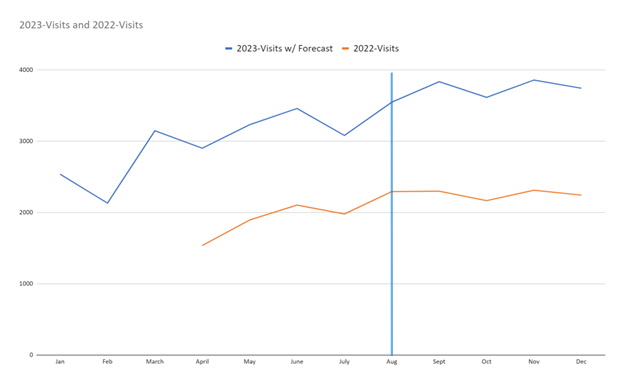
Every year, our pantry sees a significant increase in clients from September through December. Without fail, the summer slump ends the moment school starts, peaks in November before Thanksgiving, and finally begins to slow down mid-January. Anti-hunger organizations should not be surprised to see these fluctuations throughout the year, and should plan accordingly. Rising inflation clearly correlates this year with increasing food insecurity. We have no excuse to be surprised by the increasing need, yet too many organizations are shocked and overwhelmed at the demand every holiday season.

This graph shows my pantry’s total client visits since April, 2022 (when we reopened as a grocery-style model). The jump in March, 2023, is due to the expiration of pandemic-era SNAP benefits. Using past trends, this graph makes predictions for the numbers we’ll receive this winter. (I’ll keep you updated on how accurately this plays out!)

Food pantry clients work.

Most food pantry households have at least one member who is employed. Although our society is eager to assume that people utilizing welfare seek to exploit the system, the employment status of pantry clients proves otherwise. Food pantry clients are eager for work, but they regularly struggle to access well-paying jobs (as non-food pantry clients also must recognize). Surveys and anecdotal evidence can quickly disprove the myth that people use food pantries to avoid employment.

People don’t take food they don’t need.

Everyone knows what foods they need to thrive. Recognizing this, there is increasing popularity in the grocery-style food pantry model, which allows clients to select the items they want rather than receive a prepacked selection. The implementation of this system has demonstrated that shoppers know what foods they will and will not use. Clients rarely take everything that is offered because they don’t want to take what they won’t use, contrary to popular assumptions. Assessing what foods people take and in what amounts provides ample evidence that clients know their own needs best and are not taking food they won’t eat.


This is only a short list of the assumptions that food pantries can dispel through data. With a commitment to evidence and interest in continuing education on the part of leadership, food pantries can use the information they already have to create effective, powerful policies that empower their shoppers rather than play out their biases.

The only way that we can effectively reduce hunger in our communities is through the development of policies that are based on reality rather than the assumptions in our gut.

The opinions expressed here are solely my own and do not express the views or opinions of my employer.

Want to learn more about food justice? Subscribe so you never miss a post!

How Food Pantries Can Support Those Without a Kitchen

I once lived in an apartment on a quiet street where my dog woke up annoyingly early for the first walk of the day. One summer, I noticed a young man regularly sleeping in his car on our street.

My morning dog walk often coincided with passing him as he brushed his teeth and put on his dress shirt and blazer. Then he’d drive away, presumably to work, where I would guess that no one knew he was living in his car.

Our society has a very narrow idea of what it looks like to be houseless, typified by mental illness and substance use, which massively fails to understand the nuances and complexity of the experience. These assumptions can also cause us to misinterpret the food needs of people who are not securely housed.  

Houseless vs. Homeless

The words we use carry power, which is why it’s important to be thoughtful and reflective of our choices.

In my food pantry, we are intentional about using the term “houseless” rather than “homeless.” Because the term “home” encompasses a structure as well as our surrounding relationships and support system, “homeless” implies that someone doesn’t belong, both physically and socially. Although some of our clients lack a physical house, many have strong roots and relationships in the community that should not be dismissed or erased. This is their home, no matter where they live.

Our society tends to assume that people who are houseless only live on the street. The reality is there are many ways someone may be without a consistent place to stay.

  • People who lack a physical house may jump from couch to couch in friends’ homes.
  • They may live in a long-term hotel or a shelter.
  • We serve an increasing number of people who are staying in their cars.
  • Some individuals have a car which allows them to travel to a camp in the woods for greater privacy and safety.
  • I’ve met individuals who rented a self-storage locker and lived there for months at a time.

Particularly in the Portland Metro area where housing costs are incredibly high, it’s entirely feasible that someone can have a steady income and a car but still not be able to meet the demands of a rental deposit and consistent bills. Without the capacity to prep or store food, it can be hard to access the food they need to thrive and be secure.

We often don’t know if people are houseless when they enter our pantry. When they don’t meet our visual expectations of an unhoused person, we often assume they are securely housed, which can influence the foods that are offered to them.

Accommodating Diverse Needs

The foods that food banks and pantries offer are generally not well-suited to those experiencing houselessness. Especially with the growing push for healthier, from-scratch options, food pantry resources increasingly require access to a kitchen and cooking implements.

Without consistent housing, our clients may not have a refrigerator to store food, a saucepan for cooking it, or even a fork to eat with which limits what these shoppers can eat.

Our food pantry is located downtown in a major metropolitan area with a significant houseless population. Years ago, the organization realized that there was a need for more options than fruits and vegetables and canned goods to meet the needs of the people who couldn’t use our average pantry offerings.

We now operate a Snack Window, which is open to everyone but particularly targeted at people without cooking capabilities. Here we serve donated sandwiches and salads from Safeway and 7-11, chips, granola bars, juices, protein shakes, and pastries from Starbucks. (Because it is all donated, we never know what we will get, which is why it is a “snack window” as opposed to a “meal” or “lunch” site).

This window currently serves over one hundred individuals per day, including people living outside, in their cars, couch surfing, shelters, or in apartments that lack kitchens, cooking equipment, or utilities.

We also offer what we call a Traveler’s Box. I once received an impassioned note from a houseless client who was frustrated that when he had shopped at our pantry in preparation for a holiday closure, there were few options he was able to stock up on without access to a kitchen. This note inspired the Traveler’s Box for anyone who is looking for more than a snack but unable to cook.

These boxes include canned soups, fruit, meats (such as tuna and chicken) and meals like Chef Boyardee or Spaghetti-O’s, which are all pop-top and don’t require a can opener. We also pack shelf-stable milk and cereal, peanut butter, crackers, and snacks like chips and granola bars. Traveler’s Boxes provide more food than the daily snack window option but likely less than what people might take if they did a full shop, which is often ideal for those who may be on foot or have limited storage capacity.

The demand for these types of foods varies based on the population served. Food pantries in less accessible locations to individuals on foot may not have such a need for instant and easy-to-prepare options. But all anti-hunger organizations should assume that a portion of their clientele is under-housed, and ensure they offer options and services to support them.

How can pantries support people experiencing houselessness?

-Encourage donations of can openers, pop-top cans, and foods that don’t require preparation or refrigeration and make them easily accessible to clients.

-Seek out donations of prepared foods like sandwiches, cut fruit, and single-serve drinks.

-Educate volunteers, donors, and staff on the complexity of houselessness and discuss our assumptions and stereotypes.

-Engage or partner with local shelters who may offer or know of additional resources.


The opinions expressed here are solely my own and do not express the views or opinions of my employer.

Want to learn more about food justice? Subscribe so you never miss a post!

Should Food Justice Be Fair?

As I pushed a cart piled high with fresh fruit into the food pantry lobby, a child of about 8 years old yelled out “FRUIT!” in a hilariously loud and deep voice. He eagerly selected apples, nectarines, blueberries, and several bags of grapes while his mom assured me that he’d eat them all in no time. 

I love it when our shoppers are excited about the options we have, and I always encourage my clients to help themselves when they see items that will bring them joy and nourishment. But it’s also important to note that because this client took so much fruit, other clients had less available to them.

I am a passionate advocate for allowing clients to take as much as they want of whatever they like. For those who believe that individuals living in poverty can’t be trusted to make sound choices, this is a daring and uncomfortable strategy. The opposite approach is to manage client choices by dictating what and how much food they can take, which is often justified in the name of fairness.

If we are working to end hunger, is fairness an appropriate goal?

In food pantries, food supplies are often closely managed to ensure that everyone has access to all the same food and no one is given an advantage over another (like taking all the red onions so that someone else doesn’t get any).

As anti-hunger advocates increase our understanding of social justice, we’re starting to recognize that equitable food access acknowledges everyone has different needs and challenges that bring them to the food pantry, and there’s no “one size fits all.”

Initially, it sounds reasonable that everyone visiting a food pantry be given the exact same options. No one wants to see that the person in line in front of them get a box of strawberries while they get none. Is that fair?

Why should food pantries focus on equity instead of fairness?

Everyone has different needs.

Some families are thrilled to fill their shopping cart with fresh fruit. Others eagerly stuff their bags with frozen breakfast sandwiches. Occasionally, someone is enthused about cream of mushroom soup. It does all these households a disservice to give them all the exact same thing, even if the fresh fruit family won’t eat the breakfast sandwiches, and only one person wants the cream of mushroom soup. By limiting their options, all these families will probably leave the pantry with less food than they need because they don’t take the food they won’t use.

It’s easy for people of privilege to rationalize that if someone is truly hungry, they’ll take whatever is offered (the idea “beggars can’t be choosers”), but that attitude is ignorant of reality. We shouldn’t expect people to give up their cultural, religious, or nutritional needs to accommodate our judgements about what is fair.

Many food pantry clients have different cooking capabilities.

Some people have full kitchens, but many are working with nothing but a microwave or a hot plate. Some people have refrigerators, and some have campfires. Mandating that everyone has equal access to all the same types of foods simply reduces the amount of available food that they can utilize (one of the pillars of food security.) A senior may have no interest in chopping up a heavy squash, while a immigrant family may be passionately opposed to eating microwave meals. Allowing each of these households one squash and one prepared meal does them both a disservice.

Many food pantry clients also have disabilities or chronic illness, and dictating that they have access to the same foods as everyone else can also impact their health. A diabetic may prefer taking extra vegetables over canned fruit. A gluten-free individual may want to snack on apples rather than the box of crackers granted to them.

Food pantries will never have a food supply that enables them to treat everyone fairly.

We are chronically short of popular items like fresh berries, cooking oil, eggs, and pasta sauce. There will always be clients who get some while others don’t. The only option for creating a totally fair system is to store these items until we’ve collected enough for everyone (but how much is everyone? All the clients who attend in a day, a week, a month?)

My definition of what is fair is probably different from yours.

Particularly when it comes to deciding what and how much food someone experiencing hunger should get, what is considered fair varies based on cultural background, country of origin, level of affluence, and many other factors. As the leadership of nonprofits and charities are predominantly composed of white, affluent seniors without lived experience of poverty, their concept of what is fair is probably different from that of the people they serve.

When we institute systems that are one-size-fits-all (even when we adjust for household size, as pantries regularly do), we dismiss the unique needs of our community.

Every single one of my clients will emphatically argue that their needs are different from anyone else’s, and they don’t want the same foods. Increasingly, food justice organizations are working to acknowledge these differences (which is why grocery-style/client choice food pantries are growing in popularity as organizations move away from the pre-boxed model.)

Although I won’t deny that an equitable model allowing clients to take what they need requires more oversight, deliberate management, and thoughtful reflection, accommodating the diversity of needs in our food pantry will always provide more effective support for those seeking assistance. If we are truly committed to ending hunger, we need to demonstrate it by prioritizing the needs of our community over our own comfort and ideas of fairness.

The opinions expressed here are solely my own and do not express the views or opinions of my employer.

Want to learn more about food justice? Subscribe so you never miss a post!

People Experiencing Hunger Deserve Nice Things Too

Occasionally, someone pulls up to our food pantry in a shiny, pristine car. There are no Mercedes or Tesla in our parking lot, but a well-maintained car with a bit of chrome stands out. This is something that our volunteers tend to notice immediately, and begin grumbling.

“They don’t need our food.”

“If they can afford that car, then they can afford their own groceries.”

In the U.S., we have a very rigid perspective of what poverty should look like, heavily influenced by suspicions that poverty stems from bad choices rather than systemic problems. A nice car pulling into a food pantry is seen as confirmation of these suspicions that people either are looking to take advantage of the system or made a foolish purchase that forces them to seek food assistance.

I am confident that neither assumption is true.

Poverty and hunger are not chronic conditions. They ebb and flow. Most people who struggle financially also experience periods of relative stability.

On average, Americans live in poverty poverty for about three years before at least temporarily regaining stability, and only a minority experience it for extended periods of time. This doesn’t mean that people are comfortable, but it does mean they are not constantly on the verge of a financial crisis.

When individuals are feeling financially secure, they can treat themselves to a reliable car that makes their life easier.

We all have different ways of treating ourselves, and poverty shouldn’t disqualify someone from practicing self-care. It doesn’t make sense to get rid of that reliable car when we hit hard times just because it doesn’t conform with society’s vision of what poverty looks like.

 Most Americans do not have an emergency fund. That means that all it takes is one major car repair, medical bill, or job loss to upset a comfortable lifestyle. If we believe that everyone deserves to eat, then we need to serve everyone without judgement knowing that the situations which bring them to a food pantry are valid and complex (and also none of our business).

Food pantries and anti-hunger activists should actively engage their community in fighting assumptions which reinforce the stigma and shame of hunger.

Here are three talking points for educating your community on why poverty may not match their vision:

  • Although it may be more expensive initially, a well-maintained, quality car will often run better than a dented vehicle with 300,000 miles on it. Why should anyone turn down the opportunity to drive something reliable that will last longer if they have the capability?

We have a food pantry client whose car doesn’t work in reverse, which means every time she visits, we must physically push her car out of the parking lot. If she had the option, should she choose to keep it because it is cheaper than something more functional?

And someone driving a nice car may have borrowed it, it may have been a gift, or the driver may be shopping for someone else who was unable to come to the pantry in person.

  • Everyone deserves nice things. Obviously, what is accessible to an individual changes based on financial situation, but in the same way I will argue that all our clients deserve organic produce, expensive meats, or a cookie that makes them smile, they are equally entitled to own things that bring them joy.

If we aspire to end hunger, it’s essential that we take the time to examine our assumptions about poverty. Do you grumble if you see a houseless individual using a cell phone? Would you feel uncomfortable witnessing SNAP benefits being used to buy a fancy steak? 

What is your objection to someone driving a car they can count on to get them where they need to go?

The opinions expressed here are solely my own and do not express the views or opinions of my employer.

Want to learn more about food justice? Subscribe so you never miss a post!

Does Everyone Need to Eat Fresh Vegetables?

I began my career in food justice by teaching healthy eating in low-income, rural communities. The goal was to teach elementary school students the basics of nutrition and the value of fresh produce to improve their future diets. What I learned, however, was that these kids were already excited to eat healthy.

Some children had never eaten a fresh vegetable before, and they were absolutely enthralled with the magic of harvesting a radish and crunching into it with dirt still clinging to the sides.

It became clear that improving their diet was a problem of access rather than education. The local grocery store carried an incredibly limited supply of wilted and spoiled produce, and none of their families could afford the fuel to drive to the next nearest store, thirty miles north. No matter what I did with their enthusiasm, there wasn’t much I could do to access more healthy foods.

One of the most solidly cemented assumptions in our society is that people living in poverty don’t care about what they eat. The fact that many individuals depend on convenience stores and cheap snacks is taken as an indicator that they don’t know any better. Higher rates of diet-related disease are seen as confirmation of this assumption.

What I see in our food pantry is that shoppers are passionate about fresh and healthy foods

Our produce cooler is the most difficult to keep full, and we can always find a home for its contents whether they be banana leaves, acorn squash, or jalapenos. We know green cabbage days are the ones we have to work the hardest and fastest because demand is so high. Salad greens are one of the most requested items we have, even though we rarely have dressing. Shoppers are often excited to cook with a vegetable they’ve never tried before.

Our food pantry clients all know the basics of a healthy diet but share with us every day how fresh and healthy options are inaccessible to them. Many don’t have easy access to a grocery store, so they depend on convenience stores or gas stations for their meals.

Others are in living situations without the capacity for food preparation or storage. Using only a hot plate or sharing a communal fridge severely limits what foods they can use. And a high number of our shoppers are overwhelmed with caregiving responsibilities (paid and unpaid) that limit their time and capacity for cooking.

Although food pantries can supply our community with healthy, fresh options, we can’t improve their cooking capacity or give them the time to cook for their families. No matter what delicious produce we have, some of our visitors still can’t utilize it.

I worry to see a pantry client walk out our door with only a partially full grocery bag. It is important that everyone feels a sense of abundance and leave confident that they have the food they need to survive. That’s why our pantry strives to offer a variety of different foods, including things like instant meals, frozen dishes, and lots of snacks alongside our fresh produce. We aspire to provide options for everyone, and always assume that our shoppers know their own needs best.

We also recognize the hardship that our clients experience daily. One client recently lost yet another job (the third since I’ve known them). Another client was desperately seeking Narcan for a household member at risk of opioid abuse. Someone just found out they are unexpectedly pregnant with twins.

Everyone comes to our pantry with a complex story, and we believe it’s important to ensure they have foods that bring them comfort as well as nourishment. Food plays a huge role in mental as well as physical health.

It’s not unusual to see a frazzled individual eating a pastry or candy in their car after shopping our pantry, so that their family never knows they got to enjoy a sweet treat in solitude.

Although emergency food assistance programs need to continue seeking pathways to improve the diet and nutrition of people experiencing hunger, it’s extremely important that we view this challenge holistically. While prioritizing fresh fruits and vegetables is an important step, we need to fight the stigma that people don’t know how to eat healthy and instead make sure they have the tools to really do so.

 Frozen fruit is only functional if you have a freezer. Cooking butternut squash requires a hefty knife and the physical capacity to cut it. Dry beans need the time and space to appropriately soak and prepare.

Over the last decade, food banks and pantries have made incredible progress in improving the quality of foods distributed. More fresh items are available than ever before. But the stigma remains that people experiencing hunger don’t know any better than to eat junk food, which ignores the significance of the many other burdens that keep a nutritious diet inaccessible.


The opinions expressed here are solely my own and do not express the views or opinions of my employer.

Want to learn more about food justice? Subscribe so you never miss a post!

The Best Volunteers are Taught, Not Found

Several years ago, I was working with a group of volunteers who were sorting donations of fresh and perishable foods. I remember emphasizing that if they were unsure of the quality, they should throw it out because making sure that no one got sick from this food was of the utmost importance. One volunteer nodded and said, “That’s true, because if they get sick then they’ll want us to pay for their medical bills too!”

I was shocked to hear this comment from someone who was volunteering to fight hunger.

It was hard to believe that an individual motivated to do this work could also be so cynical and unkind to the people they were there to help.

One of the major challenges that all food banks and pantries face is working with volunteers. Because nonprofits tend to depend on donated labor to keep staffing costs low, volunteers are essential for accomplishing our social justice goals. However, volunteers come with an incredibly wide range of motivations which can present unique obstacles for the organizations with which they serve.

Volunteering is widely recognized to be good for our physical and mental health, provides important social opportunities, and gives everyone a way to make a meaningful contribution to the world around them. However, this also means that nonprofits are faced wrangling a diverse and eclectic population to meet their goals.

The most effective food pantries have volunteers with a comprehensive understanding of the root causes of hunger, respect for the realities of living in poverty, and trust the mission of their chosen organization to make an impact. (A future post will explore the importance of volunteers with lived experience of hunger.) Here are some of the strategies I use to ensure my volunteers have the skills, confidence, and knowledge they need to be powerful food justice advocates.

Building a Powerful, Anti-Hunger Volunteer Force

1. Present a Unified Message

Every anti-hunger organization needs to be articulate about their mission and goals, which should clearly align with the assignments of volunteers. Are you trying to end hunger? Give your clients all the food they need to thrive? Ensure all the children in your neighborhood have a healthy dinner tonight? This message needs to come from the organization’s leadership, have buy-in from staff, and be regularly explained and reviewed with volunteers.

2. Repetition

Many of your volunteers might not agree with your message. They may believe that people experience hunger because they’re lazy. They may volunteer because they want to spend time with their friends. They may be committed to reducing food waste to be more environmentally friendly. Whatever reason brings them to your food pantry, you will have to explain and model your mission a thousand times every day. Although tedious and emotionally fatiguing, this repetition will help your team understand and eventually internalize your message.

3. Address Power Dynamics

It is essential to be aware that even in the most respectful food pantry, there is an imbalance of power. People seeking assistance are expected to adhere to rules, and volunteers are generally there to enforce them. They have the authority to supply or deny an individual the food they’re looking for, and this authority must not be abused.

As this famous 1973 Stanford experiment taught us, people adopt attitudes that reflect the position they’re in. As the prison guards became more abusive of their authority, it’s easy for volunteers to also inappropriately focus on enforcing rules.

I have two solutions to this problem:

 A. Implement as few rules as possible, so that there are fewer opportunities for violation or enforcement. For example, our clients have no predetermined path that they must travel through our pantry, and they can take as much as they like of many items.

B. Explicitly discuss the power imbalance and the specific language we expect from volunteers to minimize it. For example, if a volunteer sees a client taking more of something than the posted limit, their script is, “we ask that everyone only take (#) of this item. I know it’s not enough, but we’re trying to ensure that everyone gets some. We’re sorry about that.” We always interrupt the use of phrases like a client trying to “take too much” or “steal food,” and instead discuss the potential challenges of accessing the food they need. (We also tell our volunteers that if they find themselves getting too caught up in monitoring our clients, they are to excuse themselves to the breakroom for some candy.)  

4. Model Respect

Like any organization, we occasionally serve individuals who are annoying, frustrating, or aggravating. But no matter how challenging I find them to be, it is essential that volunteers only hear staff speak of and treat these clients with respect and dignity. We also discuss the factors that may influence the behavior of our clients such as stress, embarrassment, mental health, or trauma.  

When I first started working with my food pantry, there were two clients in particular who were known to be difficult. Every visit was an event that took an enormous amount of maintenance to be successful. Eventually, it became clear that previous volunteers had been rude and disrespectful to these individuals so they anticipated conflict every time they came to use our services. By establishing an environment that prioritized respect where they knew they would be treated with kindness, the challenges with these clients largely vanished. Your community will respond to the attitudes of your volunteers, who look to pantry leadership for guidance. When respect is expected at every level, everyone has a better experience.


No matter what your specific mission is, every organization has the capacity to harness their volunteers to be food justice advocates. This is a slow process that depends on the environment you create and the organizational culture you celebrate. Eventually, these attitudes and tools will produce volunteers who find greater fulfillment from their service, higher client satisfaction, and an organization less prone to conflict or abuse.

The opinions expressed here are solely my own and do not express the views or opinions of my employer.

Want to learn more about food justice? Subscribe so you never miss a post!
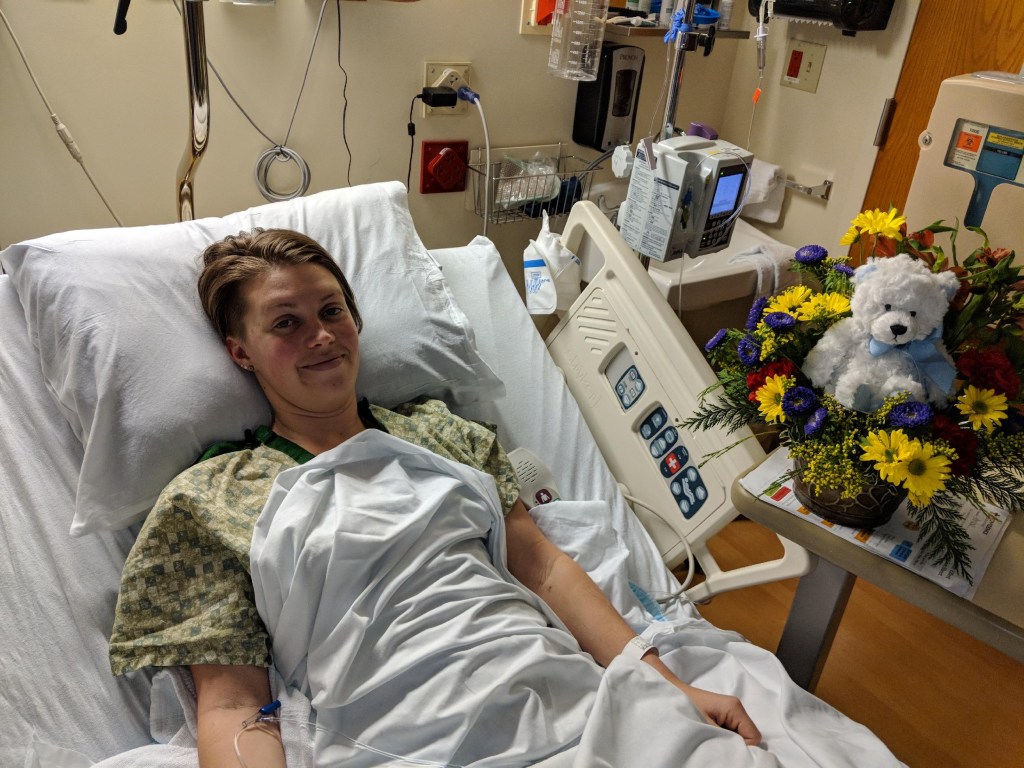
The Power of Our Words to Fight Hunger

“Just think positive!”

Who hasn’t had someone tell them that thinking a certain way will influence the outcome of a situation? Although it is rarely welcome advice and easier said than done, there is validity to the idea that how we think about problems influences our understanding and capacity to solve them.

There is nowhere this is more true than in the effort to end hunger. The more I learn, the more convinced I am that successfully ending hunger must start with changing how we think about and discuss it.

There is so much baggage and emotion tied up with our society’s existing understanding of hunger that building a new framework will be easier and more effective than trying to rework the old one.

Changing the language we use is a small step that should be followed by more tangible action, but is an incredibly powerful way to bring more food justice to the world around you.

Here are three examples of how word choice impacts hunger:

Food Stamps vs. SNAP Benefits

From 1939-2008, people using government food assistance relied on Food Stamps. Highly visible pieces of paper made it hard to use discreetly, and cultural biases and assumptions led to stigma against the people utilizing this essential resource. Because of this, Food Stamps were deliberately renamed the Supplemental Nutrition Assistance Program, or SNAP, in 2008. Although SNAP is a term slow to be adopted by the general public, the change was a intentional effort to reduce the stigma of food assistance. Given that embarrassment for needing help is one of the primary barriers to utilization, this is a small but important effort towards making food assistance feel more accessible to everyone.

Food Bank vs. Food Pantry

When I worked at a large urban food bank, people regularly came to us for food. These visitors were given a small box of nonperishable foods, and a resource list of local food pantries that would be able to provide them with more help. The formal distinction between a food pantry and food bank isn’t widely known, which often left these individuals feeling embarrassed and or even angry when told we didn’t offer the assistance they were looking for.  

Food banks are food hubs that collect and store food, which is then distributed to partner agencies such as food pantries or soup kitchens. Although the terms are often used interchangeably, people looking for free groceries are looking for a food pantry. Before the pandemic, few food banks distributed food directly to people experiencing hunger (although since 2020 the number who manage some type of distribution has grown significantly).

Data clearly shows that people seeking food assistance are more likely to use the search term “food bank” rather than “food pantry” as they research options. Although I am generally an obedient rule-follower, food pantries adopting the title of food bank would help ensure that people in need find them more easily and avoid awkward encounters at food banks.

It may be time to think of a new term for food banks that more adequately encompasses the work they do, especially as many expand their missions to include advocacy, education, and services beyond that of a food hub.

Free School Lunch vs. Universal School Meals

Framing has a huge impact on how our ideas are perceived. Particularly in America, there’s a staunch expectation that people need to earn their success, and strong opposition to the concept that anyone should be given anything for free.

One way this idea manifests is in the current discourse around school meals. There is a growing movement to offer free meals to all students in low-income public schools and not just those who qualify. Requiring an application and examination of a family’s income stops many families from applying, which leaves their children without access to school lunch.

(I once worked reviewing these applications for CACFP, the school lunch equivalent for daycare centers, to ensure that students qualified for a free or reduced-price meal program. It was clear that language barriers, education level, and understanding of the program were major factors influencing who applied, and that the number of applications didn’t reflect the true needs of the community.)

Advocates are working to ensure that high-poverty schools offer meals to all students to eliminate the bureaucratic barriers that leave kids hungry. While much of the political pushback focuses on the costs, there certainly remains an aura of reluctance to provide anything for free.

If we choose to advocate for universal school meals rather than free lunches, it reduces the fear that anyone receives anything for free (that we think they might not deserve). It’s hard to argue that children don’t need lunch at school, so simply renaming this policy helps make it palatable to people with more diverse perspectives.


The words we choose to talk about hunger have a powerful impact on how we, and the people around us, think about the issue. Anti-hunger advocacy doesn’t have to be phone banking, or volunteering, or lobbying for policy change. Carefully considering the words we use offers an opportunity to implement subtle shifts in how our community thinks about hunger, which will help us foster buy-in when we do choose to be more active participants.  

The opinions expressed here are solely my own and do not express the views or opinions of my employer.

Want to learn more about food justice? Subscribe so you never miss a post!