
When we are depleted, it is harder to take care of those around us. It’s difficult to convince our community we have the resources we need to support them when we ourselves don’t believe it.
There is no time or place where this reality is more relevant than right now in our food pantries and banks. Rising numbers of visitors alongside interruptions and cuts to the food supply mean that anti-hunger fighters face increasing burdens with fewer resources.
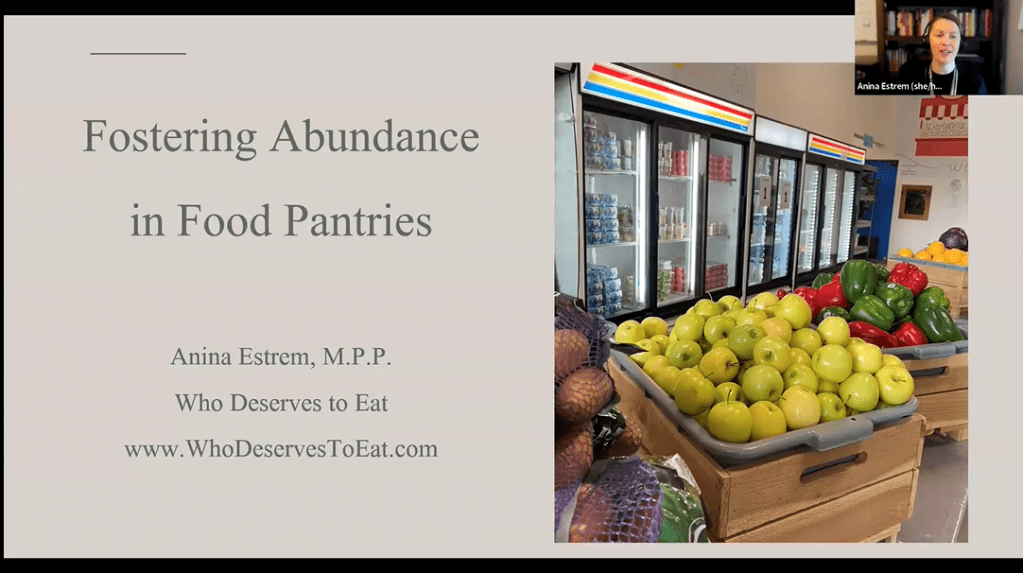
Last week, I had the ultimate privilege of being part of a webinar panel on building abundance hosted by Katie Martin, the author of Reinventing Food Banks and Pantries, alongside food banking expert and consultant Seana Weaver.
We spoke about why the idea of abundance is so important to food pantries, and dug into some of the ways that we can foster that attitude among anti-hunger advocates. Here is the video if you’re interested.
It’s important to remember that abundance means having a lot of something, and that it’s possible to have a lot without having enough. This is an essential duality that food pantries experience every day.

How we think about hunger is one of the most powerful influences on how we fight it. When we focus on what we don’t have, the emphasis falls on maintaining limited resources, often to the detriment of the people we intend to serve. When we adopt an abundant mindset, it empowers us to celebrate what we do have and use it more effectively.
While a future post will discuss what we can do to help food pantry guests feel this sense of abundance, it’s important that we start with staff and volunteers. Convincing this demographic that your food pantry has the resources to thrive means they can more successfully convey it to your community.
Introducing abundance to staff:
- Adequate wages and benefits. Too often the nonprofit world expects employees to be martyrs, dedicated to the work regardless of the reward. No matter how we feel about the work, the reality is that we also must pay rent, afford medical bills, buy food, and maintain our vehicles. You’re likely to breed resentment if your focus on abundance is limited to the people you serve.

- Support: Are there enough staff to do the work? Is it possible for staff to comfortably take a break or lunch? Is there an expectation (spoken or not) that staff should sacrifice to support each other, like not taking days off? While I recognize that few pantries have the resources to add staff, keep in mind that retention is cheaper than regularly hiring and training new individuals.
- Recognition: Fighting hunger demands an enormous amount of emotional labor. Every day, staff work with people who are struggling with enormous challenges; not just hunger but also housing insecurity, medical debt, caregiving, and all kinds of discrimination. Offering daily support to 40 or 50 different people experiencing some kind of trauma is enormously exhausting. Too often, workplaces don’t recognize that the conversations that go into these interactions are just as difficult and draining as moving thousands of pounds of canned goods.
Demonstrating abundance to volunteers:

- Celebrate abundance. When a guest leaves the pantry with an abundant amount of food, I’ve often heard volunteers mutter comments about how it’s “too much.” I like to counter this attitude by regularly telling volunteers how excited I am when someone leaves with lots of food, and to envision the excitement and security that the individual must feel when accessing this support. This can gradually help your volunteers transition from the idea that your pantry should give out as little food as possible to maintain supply, and instead to give out as much as is necessary to ensure your community feels supported and nourished.
- Pick a food item to treat abundantly. Ask your volunteers to act as if they have an unlimited supply to encourage guests to take. It doesn’t have to be a popular food, and it doesn’t have to be consistent (I’ve done this with everything from cranberry sauce to cabbage to veggie chips.) Demonstrating an excess will help volunteers gradually process that their role is to be givers of abundance rather than gatekeepers, while also sharing this attitude with your pantry guests.

- Don’t put volunteers in enforcement roles. When volunteers are responsible for supervising shoppers, such as telling them where they are allowed to go or how much food they may take, it forces them into a confrontational position focused on scarcity. It’s incredibly difficult to feel positive about the impact they’re making when the focus is on telling people what not to do and what they can’t have. I encourage pantries to have volunteers in monitoring positions, but to get staff when enforcement is needed so that volunteers remain immersed in abundance. This is an increased responsibility for staff- highlighting the need for support and recognition!
Building an abundance mindset is not something that can be achieved overnight. It requires repeated exposure over a long period of time until it is gradually adopted as part of the food pantry culture.

The most important thing to remember about implementing an abundance mindset is that you can make a significant impact simply by adjusting the way you think and talk about hunger. Even if you’re not able to make any changes to systems or structures, considering the attitudes we approach hunger with can have a powerful impact on the experience of everyone within the food pantry community.
The opinions expressed here are solely my own and do not express the views or opinions of my employer.
Want to learn more about food justice? Subscribe so you never miss a post!





 Reintroducing justice and dignity to the fight to end hunger