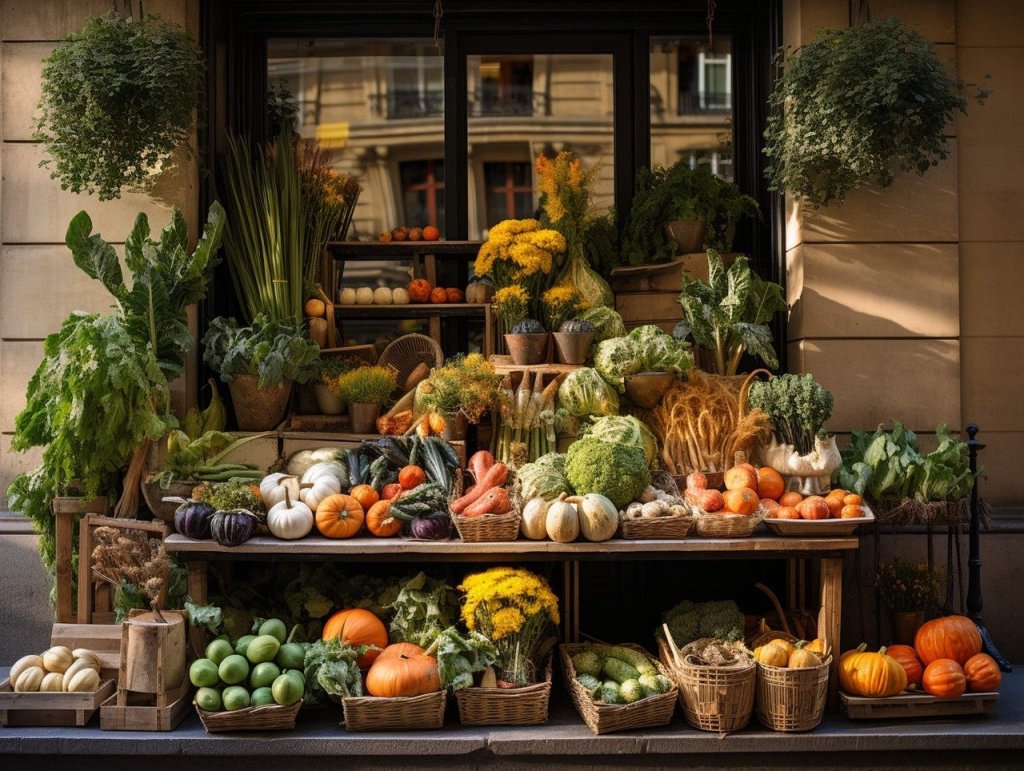
We Can’t End Hunger By Improving Production

Hunger has always been a part of the human experience, and we are largely conditioned to assume it is unavoidable. But as technology improves, networks grow, and our understanding of the world evolves, it becomes increasingly apparent that it is not a foregone inevitability.

Trending solutions for fighting hunger often focus on improving agricultural production and reducing food waste. Considering the growing impacts of climate change, the issues of production and conservation certainly deserve attention, but these solutions fail to address the real barriers to ending hunger.

Hunger is a distribution problem, which means we need to address food access rather than food supply.

We are failing in the distribution of resources. Baring a major disaster, people with wealth always have the means to purchase the food they need. The cost of food may rise astronomically, or it may drop to more accessible levels, but wealth insulates against scarcity.

Individuals and communities living in poverty don’t have the resources to overcome these barriers. If they had the resources to access food, then they would no longer be food insecure.

Hunger isn’t a food problem.

Some people face greater barriers than others in accessing food, such as higher transportation costs, greater storage challenges, or culturally specific needs, but all these barriers can be overcome with money. None of these obstacles result directly from a food shortage or high rates of food waste. We lack systems that facilitate food access for everyone, both nationally and globally.

Food distribution is complicated, because food is perishable and there is a limited amount of time that it can be stored, shipped, and distributed before it spoils.  Some parts of the country (and world) are in close proximity to agricultural production which fosters affordable prices and culturally appropriate foods. This makes it simple to get the food people need. Other regions experience greater scarcity, which means residents depend on food traveling greater distances. This increases the cost and makes it more vulnerable to disturbances.

This is why the food justice movement places so much importance on food sovereignty- on empowering people to have ownership over their food system to ensure it meets their needs best and minimizes the risk of external disruption.

Food sovereignty does not demand increasing agricultural production. Instead, it recognizes that empowering people with ownership over their food choices is the best way to build individual and communal health.

Food is an intensely personal choice, and expression of individuality. Every individual, family, community, and culture have their own preferences when it comes to culinary traditions, nutritional needs, and celebration. We are our healthiest and most empowered when we have access to the foods that are a part of our identity.

This is another reason why increasing agricultural production does not solve hunger; mass-produced crops are not often the ones that a community craves. Bringing more corn or wheat to a community may briefly alleviate starvation, but does little to empower health, celebrate cultural traditions, or build food autonomy. When a community has influence and power over its food choices, it can ensure its options are right for everyone.

Increasing the food supply is an easy go-to answer to ending hunger, but the reality is that it completely ignores the root causes of food insecurity.  Without addressing the inaccessibility of our food supply, increasing it only ensures that those who have food will have more, and those who don’t have access will continue to go hungry.

The opinions expressed here are solely my own and do not express the views or opinions of my employer.

Want to learn more about food justice? Subscribe so you never miss a post!

Can You Find Fun in the Kitchen When You’re Food Insecure?

One of my regular food pantry clients once came up to me the moment she walked in the door and shouted, “I LOVE BRUSSELS SPROUTS!”

She told me that she had never had them before but we had an abundance the last time she came to the pantry, so she decided to give them a try. It turned out she was a big fan; she had just never had the opportunity to taste them. Every time since, she would load up on these oft-maligned veggies.  

Our society is eager to condemn people experiencing hunger for eating unhealthy foods. With the prevalent assumption that people experience hunger because of poor judgement, it’s easy to assume that this applies to their food choices as well. This motivates many anti-hunger programs to focus on making decisions for people experiencing food insecurity, like what foods they should and shouldn’t have access to.

We see this attitude perpetuated in regular proposals to increase restrictions on foods purchased with SNAP dollars, in a misguided attempt to force people to eat healthier. SNAP is already inadequate, so this restriction reduces available options without addressing any of the limitations that already exist, like high costs of healthy foods.

The reality is, the only way we can empower people to eat better quality food and to try new things is to give them the capacity to experiment and take risks. (On another day we will also examine the need for time to cook, which means not having to work three jobs; and having a functional kitchen, which means safe and affordable housing.)

We can fight hunger by giving everyone room in their food budget for failure.

Even the most accomplished cooks occasionally make meals that aren’t winners, and every parent knows that their kids will sometimes refuse even the most perfectly prepared meal.

There is security in buying the foods that you know your family enjoys. With a too-tight food budget, it is an unnecessary risk to buy something that your family might not eat. When money is short, it can’t be wasted.

The client who loved Brussels sprouts had four hungry teenagers at home, so she had to maximize her food budget to ensure everyone had enough to eat. Why would she risk spending money on Brussels sprouts that those kids might refuse, or that she might not like, when she already was struggling to keep everyone fed?

But offering Brussels sprouts at the food pantry gave her room to take risks. There were no trade-offs if her family didn’t want to eat them- only a lesson learned.

If we really want to empower people experiencing food insecurity to eat healthier and try new foods, then we need to facilitate the conditions that allow risk-taking.

Children, and people of all ages, often need several exposures to a new food before they start to like it. That requires the capacity to serve it, and have it rejected multiple times before it is accepted. For someone who struggles to afford every bite, this is a nearly impossible risk.

Although food pantries are an inadequate response to hunger, this is one area where they offer opportunity. When clients are empowered to shop for themselves with as few restrictions as possible, there’s room to try something new. There’s no risk if their child refuses to eat the new vegetable, or it turns out the whole family hates that flavor of sauce. They can experiment with tofu just to say they tried it and see for themselves whether Brussels sprouts really deserve their reputation.

While health should absolutely be a priority in anti-hunger work, it’s important that we not lose sight of all the nuances that go into creating an environment where people can eat what’s right for their bodies, and not just what fits within their budget.

The opinions expressed here are solely my own and do not express the views or opinions of my employer.

Want to learn more about food justice? Subscribe so you never miss a post!

Why Shouldn’t All Students Eat Lunch?

I am a 2023-24 FoodCorps Alumni Advocacy Lead, and am working to increase engagement on school food policies at the local and national level.

As the Oregon representative, I am writing a short blog series on local opportunities for supporting stronger, healthier food policies in schools. Oregon’s short legislative session this February revolves around the budget, and legislators have an opportunity to positively impact students’ food access by moving us closer to implementing full Universal School Meals. This second post of the series explains the value and importance of this program. Read the first post on Summer EBT here.

Look up any photo or illustration intended to convey hunger in the U.S., and the chances are high that it includes a child or a senior. This is due to our societal conviction that people need to earn the right to food.  Because they are considered helpless to change their situation, children who are at their parents’ mercy and seniors who live on a fixed income are consistently determined deserving of food assistance.

Despite the pervasiveness of this idea, it should be surprising and disturbing that childhood anti-hunger efforts are often met with nearly as much scorn as any other demographic. In 2024, many states hope to move forward on policies implementing universal school meals, and already politicians and opponents are gearing up for battle.    

When the pandemic hit in 2020 and hunger needs skyrocketed, lawmakers made the dramatic move to implement universal school meals, empowering all public-school children to eat lunch, whether they had the capacity to pay for it or not.

This move was hugely effective in ensuring that millions of children ate even when their families’ lost jobs, saw reduced wages, faced illness, and experienced the grief and chaos that accompanied the first years of the pandemic. This was a policy decision that significantly influenced hunger rates across the US, made even more visible now with their expiration.

For those of us working in the arena of childhood hunger, this is baffling.

Abundant evidence demonstrates that school meals are a powerful tool for childhood health, and education. The conditions to qualify for free or reduced-price meals, including the simple administrative requirements, along with the stigma of food assistance, are often powerful deterrents from participation. Universal school meals solve both problems.

If the American attitude around hunger is that only those who deserve it should receive help, and that children are deserving of that support, then why is there an active push against this policy?

Certainly, budgets and cost of the program are major sticking points, but one of the biggest concerns regularly cited is that universal school meals are universal, which risks some children receiving a free meal even if they don’t need it. And that is enough for opponents to decide the whole policy should be scuttled.

There are few instances that provide such a clear illustration of the attitude that someone needs to earn or deserve food. Objections are couched in the idea that assistance needs to be “fair,” because otherwise it will be exploited. Opponents prefer that hungry children have reduced access to a free lunch rather than risk children who don’t need it benefiting from this program.

Progress will come from changing the ways we think and speak about hunger.

Advocates have made headway by simply changing the language we use. “Free” meals have transitioned to “universal.” Opponents were slightly more strongly opposed to the idea that the undeserving might receive something for free than everyone getting to participate.

The logistics of implementing Universal School Meals are complex and vary state by state. Currently, nine states have a policy in place with several more seeking to implement or improve access, including Oregon.

If you are an Oregon resident and haven’t already, please send a note to your representative letting them know it’s important to you that Oregon children have the food they need to succeed in school!

If you live elsewhere, it’s worthwhile researching where your state is in the process and looking for opportunities to change how we think, and how we publicly talk about hunger and who deserves to eat.

The opinions expressed here are solely my own and do not express the views or opinions of my employer.

Want to learn more about food justice? Subscribe so you never miss a post!

Are You Gatekeeping While You Fight for Food Justice?

As a resident of Portland, Oregon, my city is famously mocked for once buying up all the kale in the face of an approaching snowstorm.

Kale is a popular superfood. It’s a power-packed leafy green that is versatile in salads, smoothies, soups, and more. I confess I’m a fan and regular consumer.

But at a food pantry just outside of Portland, we used to receive regular donations of kale while almost always struggling to give it away. Our clients just didn’t seem interested.

This week I finished reading How the Other Half Eats by Dr. Priya Fielding-Singh, who at one point examines kale’s cultural context. She observes that “…kale is generally marketed toward and endorsed by upper middle class, primarily white people. Because of that, while kale may be healthy, it is seen as a wealthy white person’s food, making its appeal culturally limited and its glorification culturally alienating” (123).

America aggressively condemns SNAP recipients for buying expensive food like organic produce. Theoretical examples of welfare fraud almost always reference lobster. Promotions for building food security depend heavily on learning to cook dry beans. It’s been made very clear that people living in poverty aren’t supposed to eat the same foods as rich people.

In a food pantry, where every food choice is often judged and scrutinized, it makes complete sense that clients shy away from a food we have all been taught to see as part of a rich person’s diet.

Because every food has a cultural context, it’s essential that we explore intangible barriers like this to see how our attitudes influence the landscape around us.

Kale Versus Collard Greens

Kale and collard greens are closely related, with almost identical nutritional profiles. Yet their place in foodie culture heavily impacts which one people eat, depending on their background.

Despite their similarities, kale is lauded as a powerhouse superfood while collard greens are judged for their place in soul food, southern-influenced cooking identified with Black America which is stereotyped as much less healthy.

The stereotypes and assumptions we carry about foods like kale and collards build barriers just as significant as any challenge of cost or access.

There is no “right” way to eat. Every culture has a culinary tradition on which people have thrived for hundreds, if not thousands, of years.

Our cultural obsession with identifying “right” and “wrong” foods fails us and the communities we come from.

Building food justice means ensuring that everyone has access to the foods that they want to eat and are not constrained by the ideas of what society has established their identity should eat.

How Do We Practice Embracing All Food Choices?

  • Find out what food pantry clients want to eat. What are the dominant cultures shopping at your pantry, and what are their essential foods? It’s also important to examine why your organization does not offer them already (if that’s the case). Were they evaluated in comparison to other foods in making this decision? While these foods may be more expensive or harder to find, their absence likely reinforces existing biases about what foods are good or appropriate for shoppers.
  • Recognize and call out bias. I often witness volunteers celebrating certain kinds of donations, like cheese or expensive options which are familiar to them, while donations of lemongrass and lamb are ignored. Evaluating foods as we see them makes it very clear which foods are valued and celebrated, and what are not. Finding ways to celebrate all foods can help stop reinforcing attitudes within the organization, and grow your teams’ understanding of food justice.

The opinions expressed here are solely my own and do not express the views or opinions of my employer.

Want to learn more about food justice? Subscribe so you never miss a post!

Are You Really Fighting Hunger if Your Staff Can’t Afford Food?

At the very first food pantry I ever worked at, our parent organization (one of the biggest nonprofits in the region) was enthusiastic and vocal about prioritizing the client experience. I was excited to partner on this mission, until I learned that this focus on client services was achieved at the expense of staff. Our leaders were adamant that the organization could only afford the most minimal wages and benefits to ensure maximum support for our clients. Because I could not afford groceries on this wage, I became a client at my own food pantry.

Although this happened over a decade ago, it is a pattern I have seen repeated at every food pantry I’ve worked with since. Full-time staff members unable to support themselves or their family on their wages become clients of their own services, which the organization provides without a second thought.

Can you really be an anti-hunger advocate if you’re not willing to make sacrifices for the mission? This attitude is pervasive, and perpetuates a culture that actively inhibits people from thriving while doing this work.

Why is food insecurity accepted within anti-hunger organizations?

American society has narrow attitudes about nonprofits. The belief persists that nonprofit employees should do the work out of the goodness of their hearts rather than for the money.

I once had a Board member brag that our organization paid staff in “heart” to make up for low wages, as if that was an achievement to be celebrated that employees would appreciate.

Paying individuals less than a living wage is a primary cause of food insecurity.

Whether or not money is a motivating factor for nonprofit professionals, it does not mean that we are somehow exempt from paying rent, buying gasoline, or the rising cost of groceries.

When organizations advocating for food justice perpetuate food insecurity, it should throw serious doubt on their commitment. Denying employees the resources to buy their own food while employed at an anti-hunger institution demonstrates a perversely performative interest in fighting hunger.

While every organization benefits from leadership who knows what it’s like to be food insecure, we should not tolerate those that force lived experience upon their employees.

Food banks and pantries who recognize hunger as a systemic problem rather than an individual responsibility are slowly beginning to demonstrate it by working towards institutionalizing living wages.

This is not a simple or easy change. Nonprofit culture uplifts and celebrates low overhead costs and strong client services, an attitude deeply internalized by funders. My previous food pantry regularly received donations specifically allocated for food to ensure that it was spent on clients rather than staff. But this is short-sighted. Who do donors anticipate will do the work if no one should be paid?

Most nonprofits already lean heavily on volunteers, and have paid staff for the jobs that require additional expertise, reliability, or confidentiality. The nonprofit field is one place where these professional individuals are regularly degraded for seeking a comfortable wage that appreciates their skills.

Developing effective solutions to social ills requires that we have the most creative, passionate, and enthusiastic people working on the problem. But the nonprofit field as it currently exists offers weak incentives for attracting or retaining these individuals.

Ending hunger is a complicated and multi-faceted challenge. Amidst the complexity, it’s easy to ignore how we treat the people doing the work. Paying anti-hunger advocates a living wage requires changing priorities, educating funders, and adjusting budgets. But the long-term implications are higher retention rates, improved productivity, stronger competition, and one less client waiting in line at the food pantry.

Next steps:

Check out some resources for starting these conversations from the Next Shift, a campaign encouraging anti-hunger organizations to examine internal processes and attitudes about social justice parallel to their external goals.

The opinions expressed here are solely my own and do not express the views or opinions of my employer.

Want to learn more about food justice? Subscribe so you never miss a post!

How We Get Started Solving Hunger

Hunger has long been a part of the human experience. Throughout history, our ancestors endured starvation enough that our physiology adapted to withstand periods of abundance and of scarcity, which is why we struggle so in our current calorie-rich environment. Despite the abundance of food in our world today, hunger remains so normalized that eliminating it tends to be added to lists of aspirational-but-unobtainable goals like world peace and time travel.

The Food and Agriculture Organization (FAO) framework for food security identifies four essential conditions necessary for an individual, community, and nation to be food secure- access, availability, knowledge, and stability. An evaluation of these conditions can help inform us on why hunger persists, and provide a starting point for action.

Is hunger really inevitable?

To eliminate hunger completely in the US, we need to ensure that every resident has each of these conditions fulfilled:

  • Access: This is our biggest hurdle. Inflation and high costs of living severely cut into food budgets. Even living in close proximity to grocery stores, too many people cannot afford to nourish themselves. In isolated or rural regions, the higher costs associated with accessing it make food even harder to maintain food security. People experiencing discrimination have further reduced access because of lower wages, poorer housing, or a lack of physical safety in their community.

High food costs force many people to work longer hours or multiple jobs, which further cuts into time and energy available for cooking. Inadequate and unaffordable housing necessitates survival with substandard kitchen and restricted cooking capabilities, which further impacts the ability to safely store and prepare food.

  • Knowledge: People living in poverty are regularly condemned for lacking budget-friendly cooking skills, as if knowing how to cook dry beans can somehow extricate them from poverty. Knowing how to cook is a powerful way for improving quality of life and adding fun to the process of nourishment, but the idea that a lack of cooking skills is a cause of hunger comes from the assumption that hunger is personal failure rather than systemic problem. Further, programs that uphold this idea often teach cooking a precise way, or use specific ingredients, which ignores cultural traditions and identity. By dictating that there is a “right” and “wrong” way to eat, it implies that those who don’t use these specific practices perpetuate their own poverty. A lack of knowledge is not a contributor to food insecurity in the US.

Improving food access is the primary solution for solving hunger in America.

The Supplemental Nutrition Assistance Program (SNAP) is our primary tool for addressing food insecurity (although there are many others). SNAP provides families with an allotted amount of money every month that can be spent on food at participating retailers. The amount of money received assumes that household costs for food are much lower than they actually are. As a result, even those receiving food assistance still experience food insecurity.

At the onset of the pandemic, when millions of people lost their jobs or had their hours reduced, hunger loomed. In response, the government both expanded the amount of benefits as well as the flexibility of anti-hunger programs, and it worked.

Effective policy action has shown us that hunger is not inevitable. We have the resources, the knowledge, and the policy mechanisms to end hunger. We simply lack the political will.

As the Covid-era programs implemented to fight hunger expire, we see the need once again rising. Fears of welfare fraud and belief in individual responsibility have overridden our commitment to ending hunger as supports are reduced or eliminated.

Next Steps

We must change the way we think about hunger. The cultural assumptions we carry and the policy tools we use perpetuate the attitude that hunger is a personal failure rather than a systemic problem.

 To facilitate the evolution of our policy solutions, our discussion on this issue must evolve too. By adjusting how we frame and talk about hunger, we can significantly impact the anti-hunger environment around us to transform this nebulous issue into a tangible problem with a practical solution.

The opinions expressed here are solely my own and do not express the views or opinions of my employer.

Want to learn more about food justice? Subscribe so you never miss a post!