Preparing for the Next Hunger Crisis

With the end of the year comes planning for the one to come, and this year most anti-hunger organizations are preparing for a much more difficult next twelve months.

With cuts to SNAP, purchasing restrictions, implementation of new eligibility requirements, and the expiration of ACA subsidies leading to higher healthcare costs, many, many more people are going to face hunger in 2026.

Frustratingly, the chronic nature of hunger and perishability of foods means that it’s incredibly difficult to preempt it in the food banking system.

In a perfect world, we’d take the policy steps necessary to prevent it by ensuring people have money to buy what they need and that healthy food is accessible to everyone.

The next best option would be to ensure that food pantries and food banks have an abundant support so that they don’t ever have to send someone away hungry.

Tragically, most anti-hunger advocates have access to none of these options. But that doesn’t mean that we must just sit back and wait for the coming crisis. There are still steps that we can take to preemptively fight hunger and make our communities stronger. Effective action demands that we recognize the complexity of hunger and acknowledge that it does not exist in a silo.

Food insecurity is not really about the cost of food or the absence of the resources to pay for it.

It’s about the health of individuals and communities, both physical, economic, and social, and what resources are made available to them. Hunger is no accident.  

Most importantly, hunger is not something that we can manage individually. The only way we can successfully fight it is through coalition building with traditional and unconventional partners.

What can anti-hunger organizations do to fight hunger without food:

  • Connect with organizations who can provide support on health insurance. Health insurance is a confusing monster. I can’t pretend to understand how it all works, and I also don’t have the time (or patience!) That’s why it’s so important to seek out people and organizations who understand the details and can offer resources and empathy to individuals who face astronomically rising costs or having to go without it altogether.

Instead of waiting for the deluge of phone calls, start researching today who can be on your support team. Find shareable links or the phone numbers of real human beings. With costs doubling or more, it means people will have to choose between eating or having health insurance, which leaves them less healthy overall and vulnerable to emergencies.

  • Make friends with your local housing advocates. Housing security is closely tied to many other factors, and keeping people safely housed can help them weather significant other challenges. Housing resources are highly localized and almost as confusing as health insurance, but most big cities will have several organizations specializing in housing support. They are likely also overwhelmed but can hopefully still offer opportunities for information sharing and collaboration that can benefit you and the people you serve.
  • Connect with local schools. While they’re just as strapped for funding as any food pantry, they offer enormous access to children and local families, compelling opportunities for storytelling, and motivated advocates. Maybe they’ve already got teams engaged around school lunches or a backpack program, and there may be opportunities for collaboration or expansion. Anti-hunger issues are too often managed alone, but now is the time to eliminate those barriers.


I confess that I don’t have good feelings about 2026 overall. However, I find solace in the knowledge that there are so many people doing anti-hunger work right now driven by passion, empathy, and fierce determination. Every day, I see incredible innovation, experimentation, and a willingness to think outside the box that we haven’t previously harnessed in this field.

This is exhausting work, but I’m excited and honored to be among peers committed to ensuring all our neighbors are nourished with compassion and dignity.

The opinions expressed here are solely my own and do not express the views or opinions of my employer.

Want to learn more about food justice? Subscribe so you never miss a post!

Don’t Rebuild: Let’s Reimagine Fighting Hunger

Right now, my social media feed is nearly exclusively discussions on the reductions being made to anti-hunger resources. With cuts to Farm to School, SNAP, LFPA, TEFAP and more, the industry is shocked, panicked, and legitimately frightened about the future.

For impacts as tangible as cuts to the food supply, it’s incredibly hard not to focus on what we’re losing. Anyone who works in the food justice field knows that we simply can’t support the growing numbers of people facing food insecurity. Food banks and pantries just can’t meet the need as resources and food supplies are decimated.

While it remains essential that we strategize based on our remaining resources, I have been reflecting on how these cuts mean we’re no longer tied to these antihunger programs.

Their effectiveness has been deliberately whittled away, and they’re not doing what we need them to do.

This offers us a moment to fantasize about how we move forward. We have always known that our anti-hunger systems were inadequate, politically motivated, and rarely effective at addressing the root causes of poverty.

Rather than recreating what we had, we face an opportunity to imagine new possibilities.  

Untether yourself for a moment from the constraints of the current political environment, and brainstorm what we can change, rather than what we keep the same, to fight hunger.

My fantasy for achieving a hunger-free future:

What if, instead of restoring all the cut funding relating to food insecurity, we implemented universal healthcare? The average American in 2023 spent over $14,000 on healthcare (although the average in this case is somewhat misleading- some people spent astronomical amounts while others didn’t survive because they had nothing to spend.) In contrast, in 2023 Americans spent on average a little less than $10,000 on food.

Increasing access to healthcare (and hopefully its effectiveness too) and saving Americans this cost would more than cover the cost of food. While this wouldn’t address all the gaps in food access we currently have, it would make a significant impact alongside the added benefit of fostering a healthier population.

What would happen if instead of instead of maintaining WIC, we aggressively implemented programs ensuring that all women, LGBTQ+, and BIPOC individuals earned equal wages to white men and had mandated paid sick and maternity leave? Bonus points if we throw in universal free childcare, which has wide-reaching social and economic ramifications.

There’s ample evidence that rectifying the gender pay gap effectively fights poverty, stimulates the economy, and improves retention rates for businesses.

What if we reallocated ALL of the funding our nation is currently putting toward militarizing the police, and established accessible housing for every single American? The U.S. Congress has allocated a little less than $20 billion to fund ICE this year, while in contrast, estimates to end houselessness range from $10-30 billion.

Are these realistic or simple tradeoffs? Absolutely not. Policy is never simple, and we live in difficult times. Making these changes won’t solve anything overnight- we will still need programs actively offering food to people facing insecurity.

But despite this, right now is exactly when anti-hunger and food justice advocates should brainstorm new ways to fight hunger, without restraint. Most advocates will agree that the tools we’ve been using are ineffective and clunky. If they’re being actively dismantled and we’re starting from scratch, we shouldn’t build systems that recreate the inadequacies of the past. We should build new tools that move us towards an anti-poverty future and not just a less food insecure one.

The opinions expressed here are solely my own and do not express the views or opinions of my employer.

Want to learn more about food justice? Subscribe so you never miss a post!

Ignoring Hunger Doesn’t Make it Go Away

The prosperity following World War II helped pull the U.S. from the wreckage of the Great Depression. Mobilization for the war effort produced jobs and industry that countered the unemployment of the previous decade, while years of rationing and disposable incomes prompted an eagerness to indulge.

Thanks to the general increase in prosperity, worries about food insecurity were not a significant part of the 1950s.

While children were admonished to finish what was on their plates while thinking of starving children in other countries, there was little public awareness of hunger in America. There was no data or research being done on the issue which left it mostly invisible.

Policy makers and the average American largely assumed that food insecurity was an occasional event, prompted by a crisis like a job loss or a hurricane. There was little discussion regarding chronic or ongoing food insecurity.

In 1967, Senators Robert Kennedy (NY) and Joseph Clark (PA) made an eye-opening visit to the Mississippi Delta where they witnessed families living in extreme poverty. This prompted a (long overdue) realization about the existence of chronic hunger in the United States.

Fueled by this new interest, in 1968 CBS released the documentary “Hunger in America” which painted a truly gruesome picture of hunger in the U.S. for the general public. It brought chronic food insecurity into the public awareness in a way that it hadn’t been examined previously.

This mobilized the U.S. to action, and over the next several decades prompted an expansion of the Food Stamp Program, the formalization of the National School Lunch Program, the introduction of school breakfasts, and other programs specifically intended to fight hunger.

The U.S made significant progress on fighting hunger thanks to this increased visibility. The public and policy makers demanded an increase in data and the need for effective solutions. Until food insecurity in America received this extra publicity, it was easily ignored and overlooked.

In 1995, the U.S. implemented the American Household Food Insecurity Survey to track hunger rates and provide essential data for helping policy makers evaluate what policies were most effective. This became an essential tool for helping anti-poverty and anti-hunger advocates understand the root causes of hunger and evolve our development of solutions.

Last week, the USDA announced that it was eliminating this survey, stating that it did not provide any useful data.

Without relevant data on food insecurity, it becomes harder to measure the effectiveness of policy. A lack of facts facilitates a transition towards policies built on assumptions and attitudes rather than data. And history has clearly shown us that anti-poverty policies built on assumption tend to be punitive and ineffective, with a goal of punishing rather than uplifting people who need support.

Although food banks and other advocacy organizations will do their best to continue collecting data, they have neither the funds or the capacity to maintain the same scale as the federal government.

Eliminating this survey indicates that the federal government wants hunger to disappear.

This decision should be a signal to all anti-poverty and food justice advocates that cuts to programs are likely only just beginning.

Without accurate hunger rates, it’s easier to make false claims about the economy, quality of life, and satisfaction with leadership. Without data, it grows harder to justify the need for SNAP benefits, food bank funding, school meals, and any other program that supports people experiencing food insecurity. Food banks and pantries can’t replace this essential resource.

The opinions expressed here are solely my own and do not express the views or opinions of my employer.

Want to learn more about food justice? Subscribe so you never miss a post!

The Future of Hunger in America

No matter how you feel about the outcome of this election, the reality is that if Trump implements the policies he has proposed, food insecurity is likely to significantly increase.

Mass deportation (or even just threats of) will decimate the agriculture community which depends on migrant labor. This will contribute to both food shortages and increased costs.

Separating nutrition programs from agriculture within the Farm Bill, as proposed by Project 2025 (Chapter 10), removes any incentive for compromise between parties and is a deliberate move towards slashing SNAP. (This one really frightens me.)

Further proposals within the document recommend reinstating SNAP work requirements, which are proven to increase hunger and have no positive impact on employment.

The administration also plans to target Universal School Meals, which over the last year have provided ample proof that nourished children have better outcomes. The list goes on.

It’s true we have no idea what will happen, but these are the policies that have been proposed.

What this means is that we can expect significant changes in America’s hunger landscape. The resources we have and the policies we uphold are likely to fluctuate alongside a volatile economy. We face uncertainty, fear, and an increasing disinterest in evidence-based policy. Anti-hunger work is going to get harder.

One of my biggest frustrations of working in the anti-hunger community is that we tend to be reactive rather than proactive. Food bank and pantry staff are overworked, underpaid, and under-resourced, which makes it incredibly hard to plan long-term. But long-term planning is the only way we will make a difference, because ending hunger depends on ending it tomorrow and not just today.

We can amplify our impact if we are prepared for the future, which is why I’m outlining steps that food pantries should take now to prepare for increasing need.

What your food pantry can start doing today to prepare for a changing landscape:

  • Conduct a SWOT analysis. Does your pantry have the capacity to grow if demand for your services increases? By how much? What are the obstacles to that growth?

I fully recognize and empathize that we are entering the busiest time of year for this industry, but doing this now is the only way we can prepare for future changes that could very well overwhelm our services.

  • Clarify your organizational values. While I’m sure you’ve got beautiful mission statements on the wall of your pantry, it is important for food pantries to be clear about whether they are a safe space and who they are dedicated to serving. The Trump administration has shown enthusiasm for attacking marginalized communities like BIPOC, LGBTQ+, migrants, and others. People within these communities are rightfully concerned about their safety in all public spaces, given the increase in hate crimes we saw during his last administration. Food pantries can be proactive by deciding if they are safe for these communities. If you want to keep serving these communities, you need to prove they are welcome.

I know that there are plenty of organizations and staff that aren’t interested in being these safe spaces. It’s important that everyone share this information- so advocates know where we can safely refer our clients and direct resources. If your pantry doesn’t want to serve LBGTQ+ shoppers, I certainly don’t want to send them to you.

  • Build safe spaces. This means establishing a staff and volunteer team committed to genuinely welcoming vulnerable communities. Teach your team about the importance of pronouns. Source culturally specific foods, and celebrate them. Do your shoppers see their communities represented among volunteers, staff, and leadership? A future blog will specifically examine building safe physical environments and the trend of food pantries hiring security staff. If our neighbors are fearful of law enforcement, a security agent can deter them from seeking food assistance.
  • Assess eligibility. Who do you serve, and who do you have capacity to serve? One of the major food access programs in my region uses federal welfare eligibility as their primary qualifier for services. What happens if the administration adds requirements that cause people to lose benefits? I will be looking for whether this organization changes their eligibility requirements, or if they allow the disqualification of thousands of their shoppers because of federal changes. Who do you serve, and/or who do you have capacity to serve? Who might need more help in the future?
  • Teach your volunteers and broader community about the value of a well-nourished world. When everyone is well-fed, we are all stronger. Policies that eliminate food access resources are intended to punish individuals for behaving differently than we think they should. But these efforts to deprive our neighbors of the food they need to survive do not help anyone. They hurt us all.

The opinions expressed here are solely my own and do not express the views or opinions of my employer.

Want to learn more about food justice? Subscribe so you never miss a post!

Fighting Hunger Vs. Food Justice

For most of America’s history, anti-hunger efforts have focused on getting food into the hands of people who need it. An essential component of survival, we prioritize efforts to sustain people needing nourishment today. This is why this work predominantly manifests through services like food pantries and meal sites. As important as it is, this strategy does nothing to help people access food tomorrow.

The emergency food access industry often argues that by freeing people from spending money on food, we’re helping them save up to escape poverty. Realistically, this is unlikely.

If food was the only thing that was unaffordable, maybe it would make a difference. Unfortunately, poverty also makes appropriate housing, healthcare, transportation, and childcare inaccessible. While providing food aid might allow individuals to reallocate the dollars they would have spent on food, it’s unlikely that families have enough to save rather than spend it on other essentials.

While I enthusiastically believe in the need for the services provided by food pantries and meal sites, it’s important to recognize their inadequacy. Without deliberate efforts to address the root causes of hunger, they simply maintain a system that leaves too many people without the food they need to thrive.

This is why we need food justice.

While I find myself occasionally using anti-hunger and food justice terms interchangeably, it’s important to recognize that they have distinct meanings.

Fighting hunger means getting food into the hands of people who need it. Food justice seeks to change the systems preventing people from accessing food in the first place.

Anti-hunger organizations focus on food access for individuals. By their very nature, these efforts treat hunger as a personal, rather than systemic, failure.

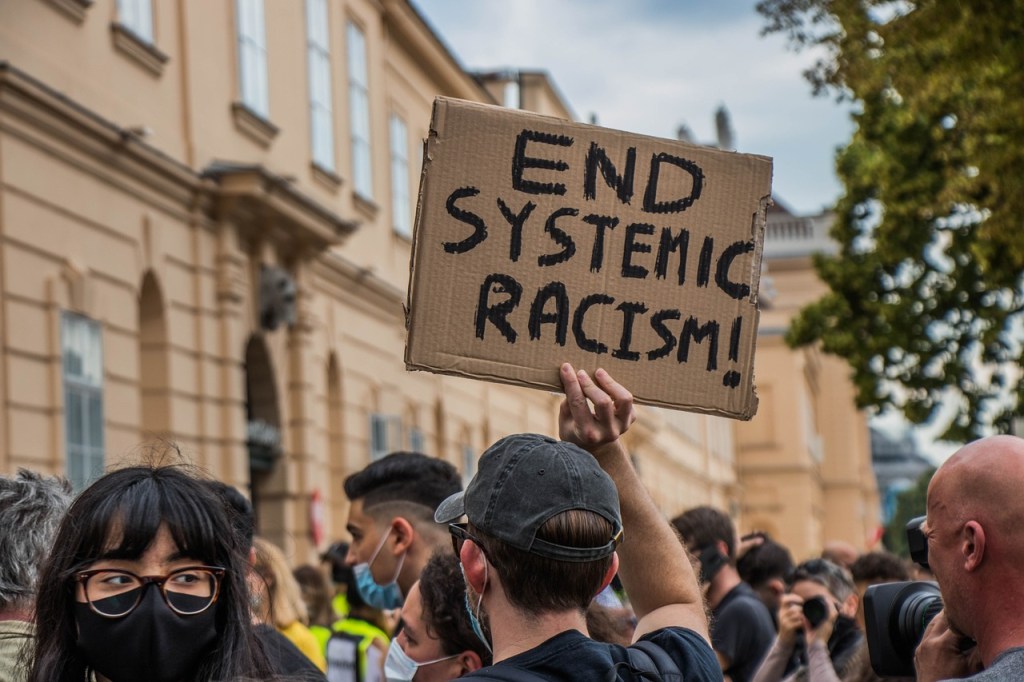
In contrast, food justice explicitly calls out the systemic barriers that perpetuate hunger like racism, sexism, unaffordable housing, and inaccessible healthcare. For organizations such as food banks who have long staunchly maintained their “apolitical” status, going anywhere near these controversial issues can be terrifying.

This is an area that increasingly causes discomfort in anti-hunger organizations unwilling to step away from the narrative of hunger as an individual problem precisely because it means examining systems of oppression.

We can’t effectively fight hunger without pairing the fight against hunger with food justice. Without examining root causes, food banks will never meaningfully influence the problems that bring food insecure individuals through their doors. But without providing immediate food assistance, food justice efforts may induce change too slowly to help people facing hunger today.

How can food access organizations introduce food justice to their communities?

  • Educate your team on how hunger is a systemic rather than individual problem. If your organization is gun-shy about discussing controversial issues, you can start by focusing on how some people can’t afford food because of a lack of jobs, affordable housing, or accessible healthcare, which allows you to stay clear of more controversial topics. (You should be prepared to dig into these challenges, but I understand that for many organizations this transition will be slow. I encourage you to take a slow approach rather than avoiding it completely).
  • Start an advocacy program, whatever that looks like for you. Provide resources to help people register to vote, or advocate for SNAP, WIC, and Summer EBT. Start a conversation about what systemic problems perpetuate food insecurity in your community.
  • Examine the language you use when you talk about clients to donors, volunteers, and other community members. If it’s not the same language you would use in front of your shoppers, then you need to revisit your standards of dignity and respect. I emphatically believe that how we talk about hunger is the most influence thing shaping how we treat it. Take an active role by choosing your words.

The opinions expressed here are solely my own and do not express the views or opinions of my employer.

Want to learn more about food justice? Subscribe so you never miss a post!
How Hunger-Free Communities Benefit Us All

Today is the last day of Hunger Action Month, a time to raise awareness about the prevalence and reality of hunger in America. I firmly believe that the way we think about hunger is the primary obstacle to solving it, so this month I have focused on challenging the assumptions we’ve been conditioned to accept, and offering new tools for taking those ideas out into the world.

In today’s political climate, it’s easy to fall into the trap of assuming that someone who doesn’t agree with you has completely different goals and interests. Election season is the prime time for the media and political campaigns to capitalize on fears that someone else’s interests diverge too far from our own to ever find compromise.

Despite the division that permeates much of the public sphere, the reality is that we have more goals in common than we have differences. We all want crime to drop, and to enjoy clean air and safe water. We want our neighborhood schools to be recognized for their excellence, and to find jobs that align with our values and appreciate our skills. We want a world where we can celebrate that hard work and dedication got us to where we are today, without a hint of unearned advantages. No matter which side of the political spectrum you land on, these are common aspirations for people all over the world.

We run into conflict when we decide that other people don’t have these shared goals. This “othering” helps us justify targeted or unfair treatment.

I regularly hear people worry about individuals using food pantries who don’t really need the food, a fear commonly used to justify harsh restrictions and limitations on access. I like to ask the worried person if they have ever used a food pantry when they didn’t need to, and they always recoil in offense. “Absolutely not!”

When asked what makes them different from someone regularly shopping at a food pantry, there’s no answer.

Our society is quick to sort people into winners vs. losers, with little consideration for how naïve and destructive this tendency really is. Our world is better when our neighbors are food secure, which means when we treat people experiencing hunger poorly, we have a negative impact upon our own lives.

Whatever we believe about what an individual has earned or deserves, a well-fed, healthy neighborhood is safer, more stable, and has a stronger community.

We all benefit from ensuring the people around us have the food they need to thrive, no matter what conditions lead to that security.

It is short-sighted to sacrifice our own well-being just because we believe others don’t deserve the help. Fighting hunger benefits everyone

Food secure communities experience less crime and violence.

Well-nourished students learn better and are less disruptive to their peers, which benefits the entire classroom.

Food insecurity and diet related diseases increase strain on our already not-awesome healthcare system, and the high costs push our neighbors into financial crises that taxpayers must help cover. Nourished families improve healthcare for everyone.

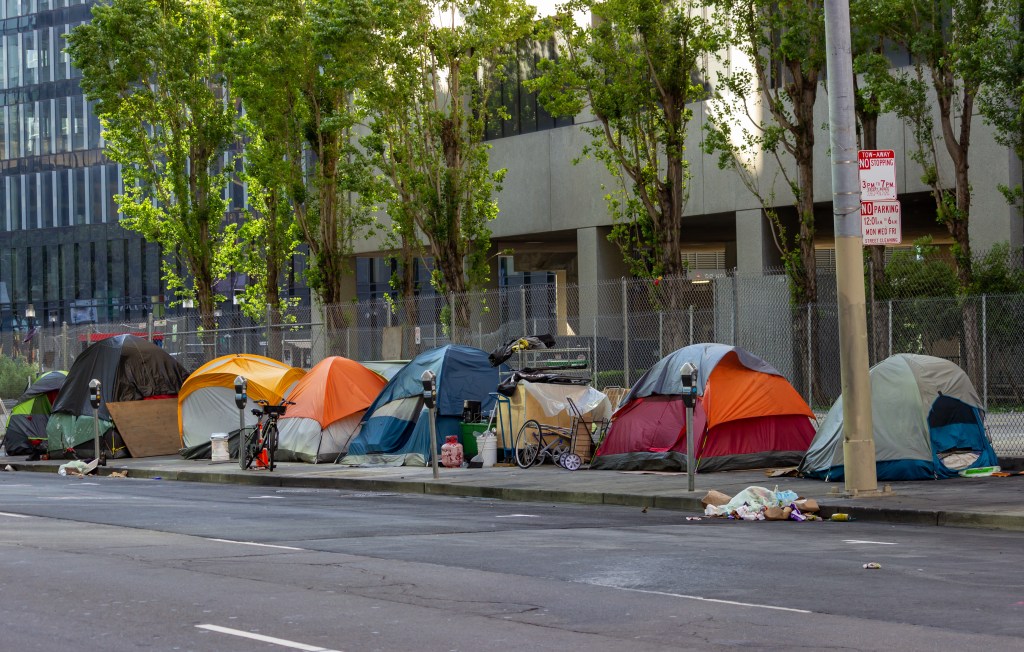
Food insecurity often precedes houselessness, so active efforts to fight hunger can reduce the number of people in our cities and communities who are unhoused.  

It’s ridiculous that we live in a world where too many people would rather deal with the negative implications of hunger rather than solve the problem, just so that someone doesn’t get help we don’t think they’ve earned.

As we wrap up Hunger Action Month and head into the height of election fever, I implore you to remind your communities that hunger hurts everyone, including ourselves, and that fighting and preventing hunger is one of the most effective ways we can enhance the quality, stability, and dignity of our own lives.

The opinions expressed here are solely my own and do not express the views or opinions of my employer.

Want to learn more about food justice? Subscribe so you never miss a post!

Hunger is Political

September is Hunger Action Month, a time to raise awareness about the prevalence and reality of hunger in America. I firmly believe that the way we think about hunger is the primary obstacle to solving it, so this month I am focusing on challenging the assumptions we’ve been conditioned to accept, and offer new tools for taking those ideas out into the world.

Several years ago, I worked as a volunteer coordinator at a major food bank. I was lucky enough to start there just as we rolled out a new advocacy strategy, which meant my colleagues and I were responsible for introducing it to the community. As part of the volunteer repack shifts, we began to develop discussion points for engaging volunteers in anti-hunger advocacy.

While respecting the lobbying limitations of a nonprofit, we initiated conversations about the relationship between hunger and housing, healthcare, racial justice, and other issues. While some volunteers were receptive, many others were deeply irritated or even offended that we mentioned such problems.

“Stay in your lane! Hunger isn’t supposed to be political.”

I regularly received feedback that people volunteer with the food bank specifically because hunger “wasn’t political.” The second we started talking about how increasing affordable housing or accessible healthcare would fight hunger, we crossed a line.

The reality is, hunger is intensely political. The food insecurity rates of our neighbors and communities are directly related to the choices that we, from individuals to nations, make every day.

Hunger does not exist in a silo. No one experiencing hunger faces that as their only challenge. Hunger is intimately related to housing, healthcare, wages, racism, discrimination, gender, childcare, and a million other issues. If we really want to end hunger, then we need an organized plan to address poverty and all that encompasses.

If you are angry with your food bank for talking politics, then you aren’t really fighting hunger.

You’re fighting for the status quo.  

Every public policy related to hunger. But while hunger is political, it doesn’t have to be partisan.

For example, libraries offer a space for people to use computers and the internet for free, which can be essential for applying to jobs or accessing resources. Losing this option can heavily impact the food security of an individual. The library bond on your ballot is a hunger issue.

Many, many people rely on public transportation to get to work, buy groceries, and carry out their daily life. Without a reliable way to get around, people go hungry, work can’t get done, and the economy suffers. The loud city bus your neighbor complains about is a hunger issue.

Many our food pantry clients have jobs, but are still forced to live in their cars, shelters, or couch surf. Without housing options within their budgets, they struggle to maintain a job, stay safe, and eat healthy food. Food pantries and SNAP are designed for people with kitchens, which meant we have fewer options to offer these people who go hungry as a result. Affordable housing is a hunger issue.

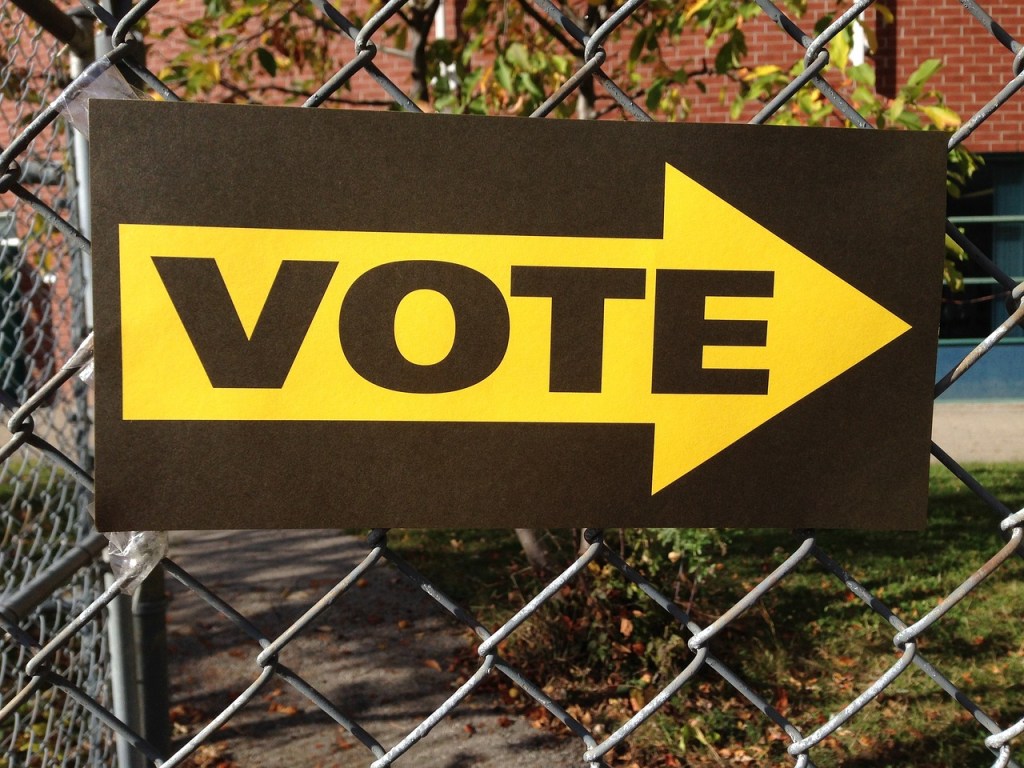
Voting is one of the most important ways we provide feedback and guidance to our government. Increasing barriers to vote (like we’re currently seeing) means we silence valuable opinions and lived experience that help shape stronger communities. Voting rights are a hunger issue.

It takes bravery for anti-hunger organizations to publicly discuss these relationships. And the legalities of nonprofits and politics make many organizations wary of crossing a line. But if we really want to solve hunger, we can’t limit our advocacy efforts to just food access.  

Here’s how anti-hunger organizations can begin engaging with the bipartisan politics of hunger in their communities:

  • Host voter registration drives. This is a great entry point because it doesn’t explicitly connect hunger with politics, but it still opens the door for action from clients and volunteers alike. There is also an enormous amount of misinformation and voter suppression this year, so providing reliable resources and support is an incredibly valuable option.
  • Incorporate clients referrals to partner organizations that can help them with other issues like housing, healthcare, childcare, education, and other challenges. Make sure your volunteers know about these relationships, and why they are important. Every opportunity that our community sees a connection between hunger and other symptoms of poverty helps strengthen our understanding of the challenge we face.
  • Develop systems where your public-facing employees can have these conversations. Does volunteer orientation discuss how hunger relates to other challenges in your region? Start small, in one-on-one or small group discussions for practice, before bringing it to bigger volunteer shifts. Don’t try this unless leadership at every level believes and is ready to support the intersectionality of hunger. You’re likely to irritate or lose those volunteers who maintain that these discussions are too political- make sure to support your staff when this happens, but also remember that it also builds a stronger team who is better prepared to take decisive actions towards ending hunger.

The opinions expressed here are solely my own and do not express the views or opinions of my employer.

Want to learn more about food justice? Subscribe so you never miss a post!

How SNAP Solves Hunger Better Than Food Pantries

Ending hunger is a big goal. I believe it can be done, but it’s important to acknowledge that it can’t be done through food pantries. As much as I love this model, food pantries have very little capacity to influence the systemic roots of hunger. They are merely a band-aid for a much bigger wound.

For the general public, the inadequacy of food banks and pantries to solve hunger may not be obvious.

Hunger is a symptom of oppression. People experience hunger because they have less access to money than others.

Even in the most isolated, famine-stricken deserts, there are people who have money to buy food and those who don’t. Fundamentally, hunger is a money shortage problem- not a food problem.

People who struggle to afford food have jobs that don’t pay living wages, can’t find safe and accessible housing within that low budget, can’t afford the medical care they need to stay healthy, face discrimination in employment or housing, or a host of other barriers that prevents them from being able to afford basic necessities.

The scope of need is far beyond what our food banking system can support. Over forty-four million Americans, or one in eight households, are food insecure.

It’s far more efficient to supply families with the money they need to buy their own food than to give them food.

A 2022 Feeding America study identified approximately 60,000 partner organizations including pantries and meals sights fighting hunger across the country serving more than fifty-three million households. This is a higher number than the one listed above because estimating food insecurity rates is complicated and often undercounts the reality.

If the work was evenly distributed between these organizations, each partner agency would serve 883 households, which is far beyond the capacity of most organizations. With few food banks or pantries able to meet the full nutritional needs of their clients, it’s obvious that meeting the needs of nearly nine hundred households is an impossible and utterly unrealistic goal.  

Beyond this, emergency food assistance programs are not equally accessible. Pantries are rarely open more than one or two times a week, with many only offering a few hours once per month to serve a couple dozen clients.

Food pantries are often open during the hours most convenient for volunteers and staff, which are likely the opposite of accessible hours for working individuals or those juggling caregiving responsibilities.

Food banks and pantries also tend to prioritize urban areas, which makes them much less accessible to rural residents who are more vulnerable to hunger. Organizations congregate near their food sources rather than their clients, which leaves them as inaccessible as the grocery stores that households experiencing hunger can’t get to.

Food pantries are predominantly run by people of Western European backgrounds, which means they may not have the interest, knowledge, or capacity to serve culturally appropriate foods for their clients.

In comparison, as an entitlement program, anyone who qualifies for SNAP (formerly known as Food Stamps) can use it, which means there is no limit on the number of households served, unlike food pantries. This program can support the level of need (if politicians are willing to fund it).

SNAP provides money specifically allocated for food via Electronic Balance Transfer (EBT) which allows people to shop discreetly by paying with a card.

Although SNAP can only be spent at participating retailers, the number of stores accepting SNAP far outweighs the number of food pantries. Additionally, grocery stores have wider hours that can accommodate families working long or flexible shifts.

The most valuable aspect of SNAP is that it allows autonomy of food choice.

Although still limited by the funds available, users get to make their food purchases based on what their family wants or needs, rather than the much more limited and restrictive options that food pantries provide.

While SNAP users still experience harassment for being food insecure, there is less humiliation and judgement in shopping at a grocery store than in using a food pantry.

SNAP is one of the best anti-hunger tools we have. It’s important to recognize the urgency to shift the burden of fighting hunger from food pantries to SNAP and other federal programs if we’re actually committed to solving this problem.

How can food pantries uplift SNAP?

  • Help sign clients up for SNAP! As a government program, the application process can be intimidating, confusing, and wrought with complications. Making sure everyone has the support to participate is huge- too many people who are eligible don’t even apply.
  • Educate our communities on the complex relationship between housing, healthcare, wages, and hunger. Money is more effective than donated and expired food, and increasing SNAP benefits is our best tool against hunger.
  • Help clients sign up for SNAP! This is so important it deserves to be said twice. Food banks and pantries can’t end hunger, and SNAP is our strongest opportunity for relieving the burden on this industry.

The opinions expressed here are solely my own and do not express the views or opinions of my employer.

Want to learn more about food justice? Subscribe so you never miss a post!

Where Do I Find Super Volunteers?

Every food pantry has at least one super volunteer. The person who is always happy to fill in when someone else cancels at the last minute, who knows how to work in every position, and acts as a compassionate mentor for new volunteers. The volunteer who just laughs and rolls up their sleeves when you hesitantly ask them to take on a nasty job like rinsing the compost bins or sweeping under the produce-sorting table.

Often, these volunteers seem to appear organically. Someone excited to have an impact on their community, enthusiastic about the policies they’re following, and happy to connect with the people around them. At every pantry I’ve ever worked at, there was always one volunteer (or several when I was lucky) about whom we’d wistfully say, “I wish we could clone you,” and “I need ten of [that person.]”

But it’s not just luck that finds you the best volunteers.

Organizational mission, culture, and practices have a significant influence on the community members we attract and retain.

Here are some simple steps to help you find and keep the volunteers you need most.

  • Be clear on your mission. Volunteers seek out organizations that align with their own interests and passions. You’re more likely to find volunteers that are aligned with your mission if the public is clear on what that is.

If reducing food waste is your goal, advertise that. If you’re focused on social justice and root causes of hunger, don’t be shy in sharing. This helps volunteers identify any mismatch of values early on. A volunteer who wants to minimize food waste may not be a fit for a pantry focused on maintaining the highest quality of food and asks them to throw out options they deem usable.

            I once knew a food pantry leader reluctant to clarify the mission for this same reason- they didn’t want to risk committing to any values that might deter someone from volunteering. This is how we ended up with volunteers inconsistently enforcing policies, increased conflict, and excessive staff energy spent on volunteer supervision and mediation. If we had clarified our specific values and goals, our volunteer network might have been smaller, but healthier and more productive.

  • Find teaching opportunities. Every quiet moment should be an educational opportunity for volunteers, which requires having staff who are knowledgeable and ready to share. Although more intensive, one-on-one conversations are where your volunteers are most likely to have an a-ha moment about your work! It can be easy for food pantries to neglect the value of continuing education for staff, so make sure you’re paying fair wages and not burning them out– your volunteers will notice in the quality of interaction and education.
  • Enforce client dignity. Like any industry, we all have encounters with people who are challenging. Food pantry clients are likely to carry trauma and stress, which can make interactions harder and bias our attitudes. Proactively working to uplift our community is a habit that needs to be fostered and developed through our language choices. It’s tempting to say, “that client was annoying,” but making the transition to “I was challenged by that interaction” or “I was getting frustrated in that conversation,” avoids fostering an adversarial attitude.

Any time a volunteer has a negative comment about a client, I try to find an alternative idea that puts them in a positive light. Hearing, “they took way too much food,” I respond with, “they must feel so secure to have that food for their family right now. I can’t imagine the relief.” “That person was so rude today” answered with, “I hope their day is better now that they know their family is having dinner tonight.”

  • Prioritize making a positive impact on the community you serve. When we amplify impact, it helps us move away from the stationary goal of providing food. This attitude also makes it easier to embrace new strategies, because of the widely accepted goal for progress.

Volunteers are notoriously reluctant to change, but by incorporating a commitment to outcomes rather than inputs, you can make it a little easier to support the evolution of your program.


Consistent, positive messaging from leadership is infectious, and the most powerful opportunity we have for defining the culture of our anti-hunger organization. Practice enough, and your volunteers will start to internalize this way of thinking and pass it on to new volunteers as it becomes a standard part of the organization.

This attitude is difficult to get started, but through repetition, it’s possible to build momentum and establish your organization as one where the volunteers are known to be well-educated on food insecurity, compassionate about the stigma of visiting a food pantry, and enthusiastic about stepping up when and where you need it.

The opinions expressed here are solely my own and do not express the views or opinions of my employer.

Want to learn more about food justice? Subscribe so you never miss a post!

Are You Really Fighting Hunger if Your Staff Can’t Afford Food?

At the very first food pantry I ever worked at, our parent organization (one of the biggest nonprofits in the region) was enthusiastic and vocal about prioritizing the client experience. I was excited to partner on this mission, until I learned that this focus on client services was achieved at the expense of staff. Our leaders were adamant that the organization could only afford the most minimal wages and benefits to ensure maximum support for our clients. Because I could not afford groceries on this wage, I became a client at my own food pantry.

Although this happened over a decade ago, it is a pattern I have seen repeated at every food pantry I’ve worked with since. Full-time staff members unable to support themselves or their family on their wages become clients of their own services, which the organization provides without a second thought.

Can you really be an anti-hunger advocate if you’re not willing to make sacrifices for the mission? This attitude is pervasive, and perpetuates a culture that actively inhibits people from thriving while doing this work.

Why is food insecurity accepted within anti-hunger organizations?

American society has narrow attitudes about nonprofits. The belief persists that nonprofit employees should do the work out of the goodness of their hearts rather than for the money.

I once had a Board member brag that our organization paid staff in “heart” to make up for low wages, as if that was an achievement to be celebrated that employees would appreciate.

Paying individuals less than a living wage is a primary cause of food insecurity.

Whether or not money is a motivating factor for nonprofit professionals, it does not mean that we are somehow exempt from paying rent, buying gasoline, or the rising cost of groceries.

When organizations advocating for food justice perpetuate food insecurity, it should throw serious doubt on their commitment. Denying employees the resources to buy their own food while employed at an anti-hunger institution demonstrates a perversely performative interest in fighting hunger.

While every organization benefits from leadership who knows what it’s like to be food insecure, we should not tolerate those that force lived experience upon their employees.

Food banks and pantries who recognize hunger as a systemic problem rather than an individual responsibility are slowly beginning to demonstrate it by working towards institutionalizing living wages.

This is not a simple or easy change. Nonprofit culture uplifts and celebrates low overhead costs and strong client services, an attitude deeply internalized by funders. My previous food pantry regularly received donations specifically allocated for food to ensure that it was spent on clients rather than staff. But this is short-sighted. Who do donors anticipate will do the work if no one should be paid?

Most nonprofits already lean heavily on volunteers, and have paid staff for the jobs that require additional expertise, reliability, or confidentiality. The nonprofit field is one place where these professional individuals are regularly degraded for seeking a comfortable wage that appreciates their skills.

Developing effective solutions to social ills requires that we have the most creative, passionate, and enthusiastic people working on the problem. But the nonprofit field as it currently exists offers weak incentives for attracting or retaining these individuals.

Ending hunger is a complicated and multi-faceted challenge. Amidst the complexity, it’s easy to ignore how we treat the people doing the work. Paying anti-hunger advocates a living wage requires changing priorities, educating funders, and adjusting budgets. But the long-term implications are higher retention rates, improved productivity, stronger competition, and one less client waiting in line at the food pantry.

Next steps:

Check out some resources for starting these conversations from the Next Shift, a campaign encouraging anti-hunger organizations to examine internal processes and attitudes about social justice parallel to their external goals.

The opinions expressed here are solely my own and do not express the views or opinions of my employer.

Want to learn more about food justice? Subscribe so you never miss a post!

Why We Need Summer EBT

I am a 2023-24 FoodCorps Alumni Advocacy Lead, and am working to increase engagement on school food policies at the local and national level.

As the Oregon representative, I am writing a short blog series on local opportunities for supporting stronger, healthier food policies in schools. Oregon’s short legislative session this February revolves around the budget, and legislators face a powerful opportunity to positively impact students food access with Summer EBT. This first post of the series explains the value and importance of this program.

When the Covid-era SNAP Emergency Allotment benefits expired in March 2023, anti-hunger advocates saw an immediate increase in the need for food assistance. Even before the expiration of the additional $90 per person that the program contributed, inflation left people struggling to afford food. When these benefits disappeared, households abruptly faced the choice of paying their rent, receiving healthcare, feeding their family, or meeting other necessary needs. Overwhelming demands on an already overburdened food banking system has led to a noticeable increase in American hunger rates.

Summer EBT (Electronic Balance Transfer)

Starting this summer, many states will have a new and valuable tool for supporting food insecure residents with the rollout of the Summer EBT program.

This program provides $40 in SNAP benefits to each child every summer month (for up to four months) for households receiving free or reduce price school lunches.

Why is this important?

Many sites that offer summer meals as an extension of the National School Lunch Program (NSLP), but they often require traveling to a specific site to pick it up. For many working families this is an insurmountable hardship, even with waivers allowing children to eat offsite.

Summer EBT provides dignity and autonomy to these families. It allows them to make their own food purchases and find the options that are tasty and appropriate for their families. Guardians can access the food their kids need to eat on their schedule. While it’s important to recognize that $40/month doesn’t go far enough, it is an encouraging start.

It’s also important to recognize that the EBT format facilitates food access for all family members. Far too often, parents eat less or skip meals to keep their children fed. Giving a family more money to buy food helps everyone eat better.

The summer EBT program is federally funded but requires states to pay half of the administrative costs. Some states have declined to participate, while others scramble to find essential funding.

In my home state of Oregon, the legislative session begins February 5th, and this short session will focus on the budget, including considering sourcing the $35 million necessary to implement Summer EBT.

Fellow Oregonians, please consider sending a message to your Congressperson letting them know why this program is important.

For non-Oregonians, investigate whether your state, Territory or Tribe is participating. 15 states have opted out.

Consider looking into any upcoming policy and funding bills for your state that may include antipoverty or antihunger resources, and let your representative know that policy change is far, far more effective at fighting hunger than any action we take individually or through charity.

The opinions expressed here are solely my own and do not express the views or opinions of my employer.

Want to learn more about food justice? Subscribe so you never miss a post!

Do You Advocate Like Everyone Deserves to Eat?

When I say that “everyone deserves to eat,” no one argues with me. This statement is lauded as commendable, generous, and noncontroversial.

But when I start to discuss individual populations and how to make sure they have the food they need to thrive, I regularly encounter resistance. Even with mission statements about universally ending hunger, many individuals and organizations have confidential qualifiers about who is really included in their anti-hunger efforts.  

Who is regularly excluded from the idea that everyone deserves to eat?

The idea that children are helpless to fight hunger makes them a high priority for food assistance programs. Adults without children, less so. In 2019 the anti-hunger community had to aggressively rally to prevent SNAP rule changes increasing the burden on individuals without children to continue receiving food assistance. The assumption is that people able to work can make enough money to be self-sufficient if they just try hard enough, regardless of the mountains of data demonstrating otherwise.

For the same reason, seniors are a primary focus of anti-hunger efforts. Living on fixed retirement incomes, they are vulnerable to economic fluctuations and sudden changes in circumstance.

As a result, many anti-hunger organizations seeking noncontroversial community backing will emphasize through their mission statements, goals, and donor outreach that they support and nourish families, children, and seniors. But this comes at the expense of people who don’t fall within those demographics.

To maintain the impression that anti-hunger efforts only support individuals truly deserving of help, few food justice organizations are brave enough to advocate for people living in poverty just because they live in poverty. Even fewer are comfortable identifying the racial and systemic injustices that produce this condition.

Beyond the anti-hunger community’s preference for serving families, there are several other demographics who are consistently judged as undeserving of healthy food and food access.

The quality and health of food in prisons is a growing topic lately, with many people promoting the assumption that breaking the law exempts an individual from the right to healthy food and a healthy body.  

Further, people with criminal convictions may be restricted or banned from receiving food assistance long after they complete their sentence, again justified by the idea that breaking the rules exempts them from privileges.

Regardless of your opinion on whether these demographics really deserve to eat as much as anyone else, it demonstrates that the concept that ‘everyone deserves to eat’ is far more loaded than it appears.

If we’re committed to being true anti-hunger advocates, then we need to make sure there is alignment between our words and our actions. Here’s how to check:

  • Who does your organization serve? Are there specific groups or demographics targeted more than others? Is that specifically identified in your outreach efforts? Does your mission statement and/or vision reflect this?
  • How narrow or broad are your advocacy efforts? Do you only act on childhood hunger, but offer food access services to adults?
  • Do you use data to inform your policy actions? For example, does your organization prioritize demographics like families or children even when your region has uncomfortably high hunger rates among other, deemed “less deserving” demographics?
  • What relationships will you gain or lose if you’re honest about who your organization does or does not prioritize/serve?

Ensuring anti-hunger advocates and organizations have a clear alignment between their mission and actions ensures we’re building trustworthy leaders. It is hard to let go of preconceived ideas about what our community wants to support, what our leaders are comfortable fighting for, and the easiest ways to achieve our goals. Transparency in how we think about and act on our anti-hunger aspirations is the only way we will build a truly effective and motivated coalition that can actually end hunger.

The opinions expressed here are solely my own and do not express the views or opinions of my employer.

Want to learn more about food justice? Subscribe so you never miss a post!

Ending Hunger: Why You Should Break Down the Greatest Barriers First

Food banks and pantries do essential work. Hunger is a dominant and growing problem in our country, and having the capacity to provide a family with several days’ worth of food makes a huge difference. But it is essential to recognize that the emergency food assistance program, and the systems we’ve built around it, are merely a band-aid. We cannot solve hunger by handing out free food because the conditions that perpetuate hunger have nothing to do with food.

Especially since the surge of racial justice protests of 2020, there has been greater public discussion, although still inadequate, of how inequality is engrained into our daily life.

Anti-hunger organizations and individuals are beginning to acknowledge that hunger is caused by systems of oppression that deny people access to the resources they need.

We live in a world where access to resources and opportunity to thrive are heavily determined by race, gender, sexual identity, and ability, among many other forms of discrimination.

Certain identities face greater barriers than others in finding affordable housing, living wages, accessible healthcare, and communities where they feel safe and welcome. Denial of any of these conditions makes it harder for people to access, afford, purchase, and prepare the food they need to thrive. The higher risk of hunger for demographics who experience greater rates of oppression clearly demonstrates how it is a systemic, and not an individual, problem.

To effectively address hunger, it’s important for anti-hunger advocates to learn who faces greater barriers to food access both out in the world and in their own organization.

As an example, my food pantry has a distinctly religious logo. Even though it has been many years since we were affiliated with a church, it’s impossible to tell that we aren’t a faith-based organization. In the past three years, I’ve heard from multiple LGBTQIA+ clients that they were initially hesitant to use our services due to fear of the attitudes they might encounter and a history of hate from religious institutions.

LGBTQIA+ individuals have experienced hostility, poorer service, or even violence when seeking social services from religious-based charities. It has only been through a very slow process of establishing our reputation as an inclusive space that we’ve seen an increase in our LGBTQIA+ clientele, since changing the logo is not an option. Although this evidence is anecdotal, it’s clear that fear of discrimination is a significant barrier to food access for many in my community.

Before I began deliberately welcoming LGBTQIA+ individuals to our pantry, it would have been easy to assume that this demographic didn’t need our services since they weren’t coming. Without considering why people aren’t utilizing our resources, we may completely ignore the needs of the community.

Fighting discrimination is hard but if we really want to end hunger, we must address oppression. 

It is inadequate for emergency food assistance programs to just offer food. While pantries are an essential service, and one I passionately believe in, providing food to those who come for it only overcomes the smallest barriers. If we aspire to make food justice a priority, it is imperative that food pantries tackle the big problems. This means honestly evaluating what systems are keeping the most vulnerable communities away from our resources, and how our efforts may contribute to those barriers.

Here are three questions for food pantries to examine the potential barriers they may reinforce:

1. What is the makeup of the leadership, staff, and volunteer base?

A homogenous group both looks unwelcoming to others, but also means that your decision-making lacks diversity. If your pantry team is of all the same cultural background, you are unlikely to prioritize foods that you are unfamiliar with, even if they are important for the communities you serve. If there is no one who speaks the language on the team, it’s harder for those clients to even learn about services, let alone utilize them. If there’s no one with lived experience of hunger guiding decision-making, it’s easy to implement policies based on assumption rather than reality.

2. What’s the culture of the pantry?

Are clients monitored for their behavior or choices as they shop? It’s highly probable that implicit bias plays a role in how clients are supervised. The more rules your program implements, the more opportunities there are to enforce them unequally. This is why I advocate for as few rules as possible, and is why my pantry does not require our shoppers to move along a specific pathway. We have more traffic jams, but we don’t manufacture opportunities for people to do something wrong. This is also one reason why I oppose setting limits on how much food people can take.

3. Do they practice trauma-informed care?

People visiting a food pantry never just face hunger. On top of the challenges of paying rent, buying their children new shoes, and maintaining their prescriptions, it’s likely they’re also enduring racial harassment, sexual violence, or ableist discrimination. If your organization is knowledgeable and empathetic to these burdens, your shoppers are more likely to feel respected and welcomed. If you prioritize just giving everyone food, you ensure these clients feel silenced and invisible.


By deliberately evaluating how your pantry can overcome the barriers faced by our most vulnerable populations, we make food more accessible for everyone. If we really intend to end hunger, then we have no excuse for ignoring the communities with the highest needs.

The opinions expressed here are solely my own and do not express the views or opinions of my employer.

Want to learn more about food justice? Subscribe so you never miss a post!

The Power of Our Words to Fight Hunger

“Just think positive!”

Who hasn’t had someone tell them that thinking a certain way will influence the outcome of a situation? Although it is rarely welcome advice and easier said than done, there is validity to the idea that how we think about problems influences our understanding and capacity to solve them.

There is nowhere this is more true than in the effort to end hunger. The more I learn, the more convinced I am that successfully ending hunger must start with changing how we think about and discuss it.

There is so much baggage and emotion tied up with our society’s existing understanding of hunger that building a new framework will be easier and more effective than trying to rework the old one.

Changing the language we use is a small step that should be followed by more tangible action, but is an incredibly powerful way to bring more food justice to the world around you.

Here are three examples of how word choice impacts hunger:

Food Stamps vs. SNAP Benefits

From 1939-2008, people using government food assistance relied on Food Stamps. Highly visible pieces of paper made it hard to use discreetly, and cultural biases and assumptions led to stigma against the people utilizing this essential resource. Because of this, Food Stamps were deliberately renamed the Supplemental Nutrition Assistance Program, or SNAP, in 2008. Although SNAP is a term slow to be adopted by the general public, the change was a intentional effort to reduce the stigma of food assistance. Given that embarrassment for needing help is one of the primary barriers to utilization, this is a small but important effort towards making food assistance feel more accessible to everyone.

Food Bank vs. Food Pantry

When I worked at a large urban food bank, people regularly came to us for food. These visitors were given a small box of nonperishable foods, and a resource list of local food pantries that would be able to provide them with more help. The formal distinction between a food pantry and food bank isn’t widely known, which often left these individuals feeling embarrassed and or even angry when told we didn’t offer the assistance they were looking for.  

Food banks are food hubs that collect and store food, which is then distributed to partner agencies such as food pantries or soup kitchens. Although the terms are often used interchangeably, people looking for free groceries are looking for a food pantry. Before the pandemic, few food banks distributed food directly to people experiencing hunger (although since 2020 the number who manage some type of distribution has grown significantly).

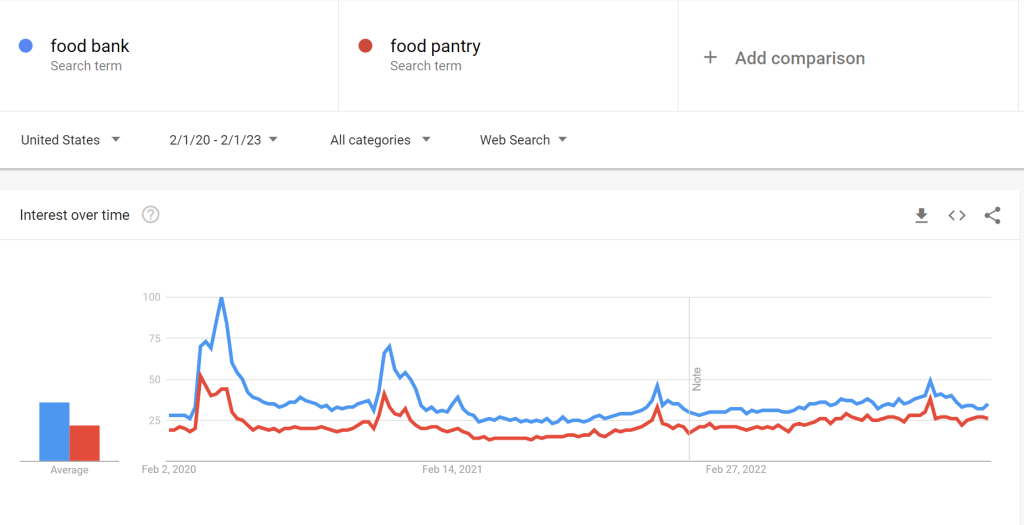
Data clearly shows that people seeking food assistance are more likely to use the search term “food bank” rather than “food pantry” as they research options. Although I am generally an obedient rule-follower, food pantries adopting the title of food bank would help ensure that people in need find them more easily and avoid awkward encounters at food banks.

It may be time to think of a new term for food banks that more adequately encompasses the work they do, especially as many expand their missions to include advocacy, education, and services beyond that of a food hub.

Free School Lunch vs. Universal School Meals

Framing has a huge impact on how our ideas are perceived. Particularly in America, there’s a staunch expectation that people need to earn their success, and strong opposition to the concept that anyone should be given anything for free.

One way this idea manifests is in the current discourse around school meals. There is a growing movement to offer free meals to all students in low-income public schools and not just those who qualify. Requiring an application and examination of a family’s income stops many families from applying, which leaves their children without access to school lunch.

(I once worked reviewing these applications for CACFP, the school lunch equivalent for daycare centers, to ensure that students qualified for a free or reduced-price meal program. It was clear that language barriers, education level, and understanding of the program were major factors influencing who applied, and that the number of applications didn’t reflect the true needs of the community.)

Advocates are working to ensure that high-poverty schools offer meals to all students to eliminate the bureaucratic barriers that leave kids hungry. While much of the political pushback focuses on the costs, there certainly remains an aura of reluctance to provide anything for free.

If we choose to advocate for universal school meals rather than free lunches, it reduces the fear that anyone receives anything for free (that we think they might not deserve). It’s hard to argue that children don’t need lunch at school, so simply renaming this policy helps make it palatable to people with more diverse perspectives.


The words we choose to talk about hunger have a powerful impact on how we, and the people around us, think about the issue. Anti-hunger advocacy doesn’t have to be phone banking, or volunteering, or lobbying for policy change. Carefully considering the words we use offers an opportunity to implement subtle shifts in how our community thinks about hunger, which will help us foster buy-in when we do choose to be more active participants.  

The opinions expressed here are solely my own and do not express the views or opinions of my employer.

Want to learn more about food justice? Subscribe so you never miss a post!