Building an Abundance Mindset in Your Anti-Hunger Team

When we are depleted, it is harder to take care of those around us. It’s difficult to convince our community we have the resources we need to support them when we ourselves don’t believe it.

There is no time or place where this reality is more relevant than right now in our food pantries and banks. Rising numbers of visitors alongside interruptions and cuts to the food supply mean that anti-hunger fighters face increasing burdens with fewer resources.
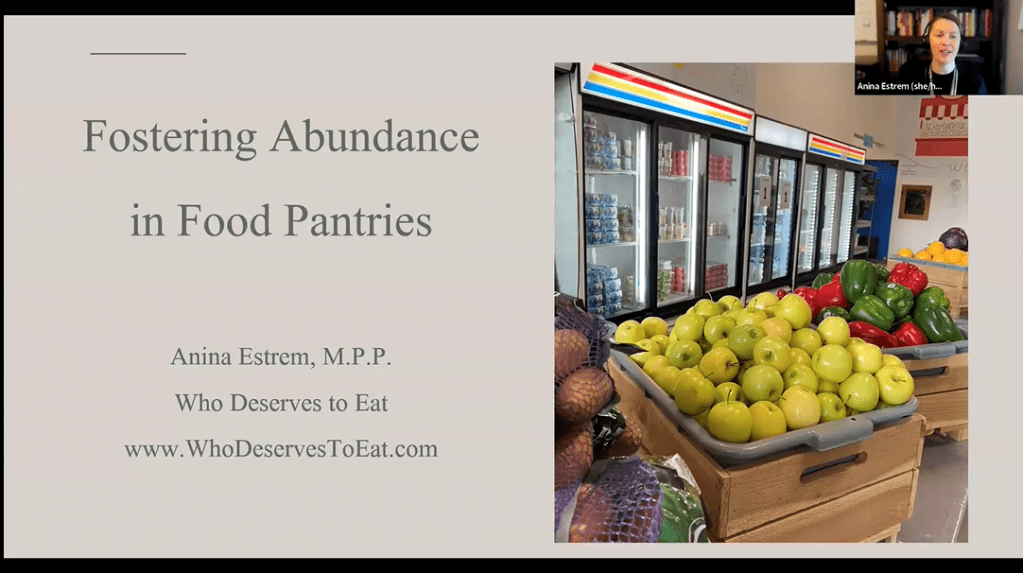
Last week, I had the ultimate privilege of being part of a webinar panel on building abundance hosted by Katie Martin, the author of Reinventing Food Banks and Pantries, alongside food banking expert and consultant Seana Weaver.

We spoke about why the idea of abundance is so important to food pantries, and dug into some of the ways that we can foster that attitude among anti-hunger advocates. Here is the video if you’re interested.

It’s important to remember that abundance means having a lot of something, and that it’s possible to have a lot without having enough. This is an essential duality that food pantries experience every day.

How we think about hunger is one of the most powerful influences on how we fight it. When we focus on what we don’t have, the emphasis falls on maintaining limited resources, often to the detriment of the people we intend to serve. When we adopt an abundant mindset, it empowers us to celebrate what we do have and use it more effectively.

While a future post will discuss what we can do to help food pantry guests feel this sense of abundance, it’s important that we start with staff and volunteers. Convincing this demographic that your food pantry has the resources to thrive means they can more successfully convey it to your community.  

Introducing abundance to staff:

  • Adequate wages and benefits. Too often the nonprofit world expects employees to be martyrs, dedicated to the work regardless of the reward. No matter how we feel about the work, the reality is that we also must pay rent, afford medical bills, buy food, and maintain our vehicles. You’re likely to breed resentment if your focus on abundance is limited to the people you serve.
  • Support: Are there enough staff to do the work? Is it possible for staff to comfortably take a break or lunch? Is there an expectation (spoken or not) that staff should sacrifice to support each other, like not taking days off? While I recognize that few pantries have the resources to add staff, keep in mind that retention is cheaper than regularly hiring and training new individuals.
  • Recognition: Fighting hunger demands an enormous amount of emotional labor. Every day, staff work with people who are struggling with enormous challenges; not just hunger but also housing insecurity, medical debt, caregiving, and all kinds of discrimination. Offering daily support to 40 or 50 different people experiencing some kind of trauma is enormously exhausting. Too often, workplaces don’t recognize that the conversations that go into these interactions are just as difficult and draining as moving thousands of pounds of canned goods.

Demonstrating abundance to volunteers:

  • Celebrate abundance. When a guest leaves the pantry with an abundant amount of food, I’ve often heard volunteers mutter comments about how it’s “too much.” I like to counter this attitude by regularly telling volunteers how excited I am when someone leaves with lots of food, and to envision the excitement and security that the individual must feel when accessing this support. This can gradually help your volunteers transition from the idea that your pantry should give out as little food as possible to maintain supply, and instead to give out as much as is necessary to ensure your community feels supported and nourished.
  • Pick a food item to treat abundantly. Ask your volunteers to act as if they have an unlimited supply to encourage guests to take. It doesn’t have to be a popular food, and it doesn’t have to be consistent (I’ve done this with everything from cranberry sauce to cabbage to veggie chips.) Demonstrating an excess will help volunteers gradually process that their role is to be givers of abundance rather than gatekeepers, while also sharing this attitude with your pantry guests.

  • Don’t put volunteers in enforcement roles. When volunteers are responsible for supervising shoppers, such as telling them where they are allowed to go or how much food they may take, it forces them into a confrontational position focused on scarcity. It’s incredibly difficult to feel positive about the impact they’re making when the focus is on telling people what not to do and what they can’t have. I encourage pantries to have volunteers in monitoring positions, but to get staff when enforcement is needed so that volunteers remain immersed in abundance. This is an increased responsibility for staff- highlighting the need for support and recognition!

Building an abundance mindset is not something that can be achieved overnight. It requires repeated exposure over a long period of time until it is gradually adopted as part of the food pantry culture.

The most important thing to remember about implementing an abundance mindset is that you can make a significant impact simply by adjusting the way you think and talk about hunger. Even if you’re not able to make any changes to systems or structures, considering the attitudes we approach hunger with can have a powerful impact on the experience of everyone within the food pantry community.

The opinions expressed here are solely my own and do not express the views or opinions of my employer.

Want to learn more about food justice? Subscribe so you never miss a post!

Uplifting Dignity Amidst a Hunger Crisis

Being an anti-hunger advocate is exhausting right now. The scale of the need we face as people experiencing hunger go without essential SNAP benefits is astronomical. I’m frightened by the growing needs of my neighbors and the overwhelming but vastly insufficient amount of work demanded of my peers. Even though benefits are in the process of restored, it is hardly the end of rising hunger.

A common theme I’ve recently noticed in the public sphere is the tendency to minimize the severity of hunger. I understand it- the suffering and the ramifications are too great to imagine, so it’s easier to pretend it doesn’t exist.

Even empathetic analyses are failing to recognize how the loss of SNAP- even temporarily- may be a harbinger of houselessness, dropping out of school, job loss, serious medical consequences, and more.

Hunger has much bigger consequences than just empty bellies.

Hunger is never the only challenge people face, and cutting food resources also cuts away at other essential lifelines.

Although our primary goal is to ensure people can access the food they need with dignity and compassion, it’s important that we remember there is so much more that we aren’t helping with.

To succeed in our mission, we need to actively avoid minimizing the experience of hunger.

Food insecurity is trauma.

It’s true that one or two days of hunger won’t kill you. But the cumulative impact of reoccurring food insecurity has profound, lasting impacts, and we impede our own efforts when we dismiss the hardship of this reality.

How to avoid dismissing the impacts of hunger:

  • Acknowledge when your food supply is inadequate or inappropriate. There are a million valid reasons why you don’t have the food your shoppers want or need, but they don’t need to hear those details. If they can’t get the food they need, at least they can see that anti-hunger advocates understand what they’re facing.

My previous pantry saw a noticeable decrease in conflict when we started listening to the concerns of our shoppers without intent to respond. It’s hard, but it will help your shoppers feel seen, and you’ll hopefully learn something!

  • Actively fight judgements based on appearance. Especially now, as the government shutdown weigh heavily on our economy, people who may have never previously visited a food pantry before are seeking help. They may drive nice cars, live in upscale neighborhoods, and wear new clothes, but none of this influences their need for food and support.
  • As food pantry attendance goes up alongside staff stress and fatigue, fight the tendency to treat shoppers as a number rather than an individual. While the total number of clients served and pounds distributed are important, it’s essential to remember the stories that people bring and the experience they’re having. It’s real. Consider developing a practice of pursuing at least one involved conversation per distribution with a pantry guest and setting aside time to reflect on what you learned.

The opinions expressed here are solely my own and do not express the views or opinions of my employer.

Want to learn more about food justice? Subscribe so you never miss a post!

What Hunger Looks Like this November

If you don’t work in social services or the anti-hunger sector, it might be easy to underestimate the gravity of the current situation.

It’s hard to articulate the scale of the catastrophe we face.

The government appears to be stalling to avoid using USDA contingency funds that would allow SNAP funding to continue despite the shutdown. It’s unclear if or when those funds will be distributed.

As a result on November 1st, 42 million Americans who depend on SNAP did not receive any money for food.

I’ve heard from several colleagues in the anti-hunger field that it feels a lot like the beginning of the pandemic- that moment when we confronted the reality that our emergency hunger system has nowhere near the capacity to meet the demands we face.

The difference is, in 2020 the federal government mobilized funds to ensure that food banks and pantries could scale up to support their communities. This time, there is no federal sympathy.

It’s clear that while we individually cannot solve hunger, it will be the individual efforts of our communities that help our neighbors get through this.

I find myself regularly dissolving into despair from the amount of suffering I see in the news, but I am buoyed by stories like the successful fundraising of this coffee shop to offer free breakfasts, and by farmers markets around the country changing their policies to maintain access to Double Up Food Bucks without requiring a SNAP match.

One of my favorites stories is from the small town in Eastern Oregon where I briefly lived, where farmers are donating truckloads of potatoes and telling people to “bring a box or plastic laundry basket” to take as much as they can carry. The notices don’t even mention hunger or SNAP- they just instruct the community to show up.  

Efforts like this both impact the lives of people experiencing hunger, but they also offer a concrete way for us to feel powerful, engaged, and connected at a time when it’s too easy to feel helpless and isolated.

Fighting hunger is good for you and your neighbors.

Here’s how you can support your community:

  • Donate. Both funds and food are important. Food banks can often make cheaper purchases in bulk, so funds help them buy more food. For food pantries, it varies. Some may not do much of their own purchasing, in which case donating food is more useful. Check with the organization to see what their specific needs are.

Regarding food donations, consider what other ingredients are necessary to serve it. For example, donating macaroni and cheese requires milk or butter, which consumers may not have. Absolutely donate it- but please just add in other ingredients like canned soups and ready-to-eat meals.

  • Host a food-specific food drive. By choosing a specific item, it’s easier for your community to focus and saves your food bank from having to do intensive sorting. Consider hosting a drive to collect soups, fruit, condiments, cereal, diapers, or other goods.

I’m personally passionate about encouraging donations of seasonings and spices- imagine eating canned beans or veggies without them!

  • Volunteer. Anti-hunger organizations are slammed and need all the help they can get. Conversely, most are not set up to serve thousands of people or support hundreds of volunteers. While volunteers are an essential part of the process, good volunteer management is also intensive and exhausting. Please be kind and empathetic to the staff- there’s a very good chance that they are also SNAP recipients facing food insecurity.
  • Support community efforts. Anti-hunger work doesn’t just have to happen in food banks and pantries. Maybe your neighborhood has a free little pantry you can fill. Perhaps the community garden is organizing donations of produce. Hopefully the school is facilitating a backpack program. If you can’t find something, start something!
  • If you are in a position of financial power, use it! Forgive your tenants’ rent (don’t just defer- you can do better than that.) Give your employees bonuses or raises. How else can you use your resources to ensure your neighbors remain healthy and housed? If you’ve ever complained about crime or houselessness, now is your opportunity to actively prevent it. Hunger-free communities benefit us all.

The opinions expressed here are solely my own and do not express the views or opinions of my employer.

Want to learn more about food justice? Subscribe so you never miss a post!