Keeping Food Pantries Safe Spaces for Everyone

In conversation with several food pantries this fall, I’ve noticed a common theme. As they serve a rising number of clients with high anxiety and urgent needs, organizations are starting to hire staff whose sole responsibility is pantry security and rule enforcement. While recognizing the need for safety, it’s worth examining this trend and the potential impact.

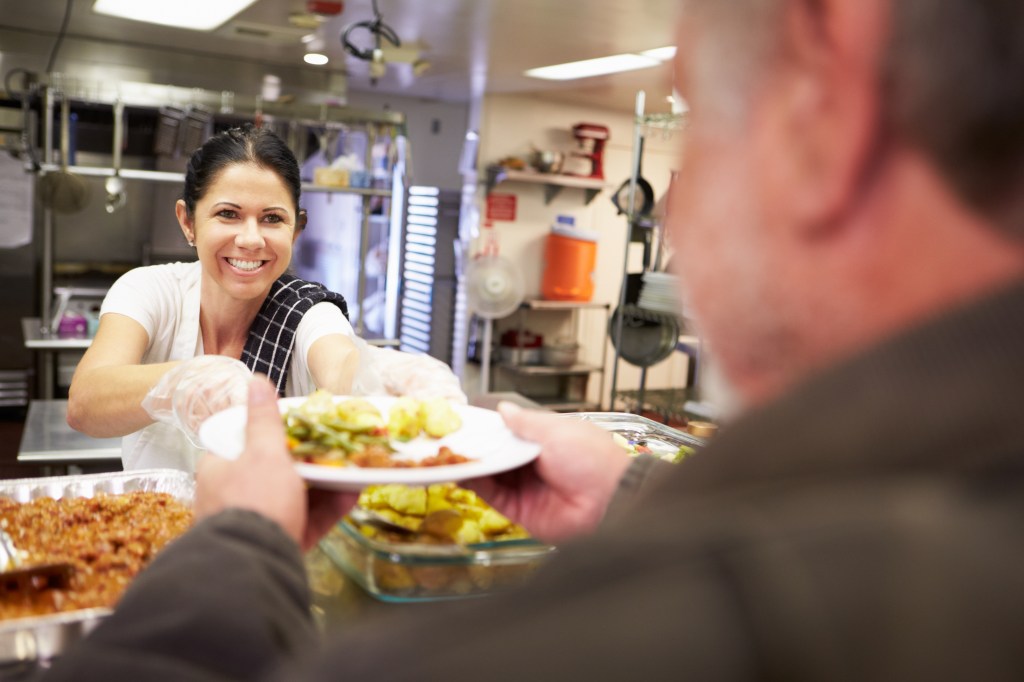
It’s important that everyone feels safe at a food pantry. Building an inclusive community depends on establishing a physically safe space. Because food pantries serve such a wide diversity of people, this can sometimes be a challenge.

Conflict is not uncommon. People experiencing food insecurity often endure trauma, high stress, and sometimes mental health and substance abuse issues. Hunger is a traumatic experience both mentally and physically, and it’s essential that we respond with compassion and empathy rather than force. All my previous food pantries had occasional visitors we had to navigate carefully because of the potential for unsafe or violent behavior. It is important that food pantry staff have an established protocol for how to manage these interactions while ensuring that everyone feels safe and welcome.

Pantries need to carefully consider how they build a safe space. Most food pantries are run by people of priviledge with no lived experience of poverty, which means they are more likely to trust law enforcement personnel. Many other communities feel less safe with an official in uniform present, which means bringing a security officer into the pantry does not necessarily build a more welcoming environment. Whatever you believe about the police, it’s important to remember that everyone does not agree with you, which influences the conditions you facilitate.

Depending on your location and demographics, fears about immigration enforcement can also impact who feels safe around a security officer. Many food pantry advocates remember the decrease in Latine clients we saw during the height of President Trump’s anti-immigrant deportations. We should expect similar situations to arise again.

In many scenarios, dedicated security officers exacerbate conflict by responding with combative rather than de-escalatory tactics. While having a staff member trained and skilled in building a safe space should be every pantry’s goal, a security officer is unlikely to be the most productive response for building a safe and welcoming environment.

Here are some strategies for de-escalating conflicts and maintaining a safe space:

  • The biggest mistake that food pantries make is treating poor behavior like a deliberate effort to be difficult rather than a symptom of trauma, fear, or mental illness. Responding to these issues as transgressions that need to be punished fuels confrontation rather than alleviates it. People respond with the same level of energy we direct at them, which means aggressive responses evoke aggressive answers.

Instead, train your team to prioritize above all else that your visitors are food insecure individuals who need help and support. Trauma-informed care recognizes that hunger isn’t the only challenge they’re bringing in the door. Start by checking in with the shopper to see if they have specific needs that help can resolve the issue- it often is as simple as a snack or bottle of water. I can’t emphasize enough how many times getting someone a snack resolved any issues.

  • Remember the power imbalance inherent to food pantries. Staff and volunteers literally control whether our clients will get to eat today or not. I’ve met teams who’ve grown casual about this authority, which fosters a lack of empathy for the needs of shoppers. Everyone deserves to eat.
  • Have as few rules as possible for clients to violate. Some of the pantries with the highest levels of conflict also have the most rules about eligibility, shopping style, or food choices and amounts. When we set up situations where we prioritize discipline and obedience, we build opportunities for conflict. What policies are nonnegotiable and which are flexible based on the situation?

  • Anytime you need to escalate a concern with a client, take it outside of the pantry space even if that means waiting until they are done shopping. If they get angry or threatening, this helps keep everyone else safe.

Volunteers should never participate in confrontation with clients. This should be a trained staff responsibility only, which helps maintain a positive experience for volunteers and avoids fueling negative attitudes towards shoppers who are struggling.

The opinions expressed here are solely my own and do not express the views or opinions of my employer.

Want to learn more about food justice? Subscribe so you never miss a post!

Why You Shouldn’t Host Your Own Holiday Food Event

As the holiday decorations have arrived in force at all commercial retailers, I’ve been pleased to see many of them them partnered with barrels and posters collecting for food drives. I’m excited to donate cans at my local rock climbing gym and funds at the grocery store.

However, it often seems like every business not supporting a food drive is now hosting their own holiday meal, food box distribution, or toy drive. It’s a great way to connect with neighbors, market services, and build a positive reputation. But it’s not always the best thing to fight hunger. 

While hosting a your own food program sounds great on paper, it’s not as simple as one might believe. 

We all enjoy the warm feelings of helping people in need, but if your organization hasn’t hosted before, you may not be well set-up to safely manage and serve hot foods, store and distribute food boxes, or ensure that your services prioritize the dignity of your recipients.

Too often, these kinds of distributions focus more on generating goodwill towards the host than providing meaningful support and empathy for community members.

Even more frequently, these distributions are designed with one particular community in mind rather than the broader population (commonly seniors, children, or veterans). While wanting to support your friends and your neighbors is noble and good, communities thrive when services prioritize those with the greatest need and barriers rather than the people the American business community relates to the most.

Consistency is important to food access. Offering a one-time event can be hard to ensure neighbors know about it, and one-off events can leave people confused without options the following year. Anti-hunger organizations are well-suited for hosting these events because that is what they do. They have established relationships with their neighbors and clients and are trained to safely distribute food in a way that elevates the dignity of all involved. Your local athleticwear store or graphic design studio doesn’t have the same tools and skills.

If you’re suddenly inspired to use your business to make a difference this year, consider why. Are you motivated to ensure your neighbors have access to the food they need to celebrate their community? If so, you are better off partnering with an existing organization that has the capacity, framework, and resources to make the event a success. 

If you are interested in hosting it yourself for the marketing potential, then it’s important to recognize that your primary goal is self-promotion rather than food access. When you ask your food bank for support on this project, know that the staff are intimately aware of your motives, and frustrated by your requests. 

If you want to host a food distribution because you want to nourish and uplift your people – your church, your apartment complex, your community group, or your clients, think about who in your area is already offering assistance. With very rare exceptions, most food banks require that any distribution be open to any and all who need it, not just specific people.

Encourage your clients, church, or community to explore the services that already exist. Using existing services helps food banks more than setting up new distributions. Established programs have a better understanding of the needs in a region and can better allocate resources without needing to train, certify, and coordinate an inexperienced partner.

Additionally, food banks, who are likely to provide most, if not all, of the food distributed, are already swamped during the holidays. They have limited capacity to onboard and support new and one-time partner agencies. They also may plan most of their holiday food orders around the number of agencies they anticipated serving, so sourcing additional foods may not be easy. 

How to have the most impact this holiday season:

  • Evaluate your focus. Why do you want to host your own event? Do you think you can do it better than anyone else who’s already doing it? If so, why aren’t you doing this work full-time? Using charity as a marketing tool is a long-established tradition, but that doesn’t mean that it’s ethical or effective at addressing hunger. Partnering with an established organization makes everything easier by allowing everyone to lean into their strengths.
  • Volunteer at an established organization. They absolutely need your help, which saves you from dealing with complicated logistics like unloading pallets, finding places for people to park, or scheduling your own volunteers, and lets you enjoy all of the fun aspects of the work. Established organizations have mechanisms for reaching and advertising to clients, so they can be confident that the community is aware of the events or resources they offer. Existing programs are also likely to have more capacity than first-time, one-off events, which means they are prepared for the demand. As a new resource, you wouldn’t have that confidence, and nothing would be worse than turning people away at the door. 
  • Donate funds to these established organizations. Food banks NEVER have enough turkeys for Thanksgiving (although they occasionally see an increase after the holiday as stores donate the ones that didn’t sell). Having the funds to buy the specific foods for people to celebrate their holiday is hugely empowering. And if you want to keep you money and support more local, donating directly to pantries or meal sites enables them to do more of what they are already doing well, instead of offering a cheap imitation.

The opinions expressed here are solely my own and do not express the views or opinions of my employer.

Want to learn more about food justice? Subscribe so you never miss a post!

The Future of Hunger in America

No matter how you feel about the outcome of this election, the reality is that if Trump implements the policies he has proposed, food insecurity is likely to significantly increase.

Mass deportation (or even just threats of) will decimate the agriculture community which depends on migrant labor. This will contribute to both food shortages and increased costs.

Separating nutrition programs from agriculture within the Farm Bill, as proposed by Project 2025 (Chapter 10), removes any incentive for compromise between parties and is a deliberate move towards slashing SNAP. (This one really frightens me.)

Further proposals within the document recommend reinstating SNAP work requirements, which are proven to increase hunger and have no positive impact on employment.

The administration also plans to target Universal School Meals, which over the last year have provided ample proof that nourished children have better outcomes. The list goes on.

It’s true we have no idea what will happen, but these are the policies that have been proposed.

What this means is that we can expect significant changes in America’s hunger landscape. The resources we have and the policies we uphold are likely to fluctuate alongside a volatile economy. We face uncertainty, fear, and an increasing disinterest in evidence-based policy. Anti-hunger work is going to get harder.

One of my biggest frustrations of working in the anti-hunger community is that we tend to be reactive rather than proactive. Food bank and pantry staff are overworked, underpaid, and under-resourced, which makes it incredibly hard to plan long-term. But long-term planning is the only way we will make a difference, because ending hunger depends on ending it tomorrow and not just today.

We can amplify our impact if we are prepared for the future, which is why I’m outlining steps that food pantries should take now to prepare for increasing need.

What your food pantry can start doing today to prepare for a changing landscape:

  • Conduct a SWOT analysis. Does your pantry have the capacity to grow if demand for your services increases? By how much? What are the obstacles to that growth?

I fully recognize and empathize that we are entering the busiest time of year for this industry, but doing this now is the only way we can prepare for future changes that could very well overwhelm our services.

  • Clarify your organizational values. While I’m sure you’ve got beautiful mission statements on the wall of your pantry, it is important for food pantries to be clear about whether they are a safe space and who they are dedicated to serving. The Trump administration has shown enthusiasm for attacking marginalized communities like BIPOC, LGBTQ+, migrants, and others. People within these communities are rightfully concerned about their safety in all public spaces, given the increase in hate crimes we saw during his last administration. Food pantries can be proactive by deciding if they are safe for these communities. If you want to keep serving these communities, you need to prove they are welcome.

I know that there are plenty of organizations and staff that aren’t interested in being these safe spaces. It’s important that everyone share this information- so advocates know where we can safely refer our clients and direct resources. If your pantry doesn’t want to serve LBGTQ+ shoppers, I certainly don’t want to send them to you.

  • Build safe spaces. This means establishing a staff and volunteer team committed to genuinely welcoming vulnerable communities. Teach your team about the importance of pronouns. Source culturally specific foods, and celebrate them. Do your shoppers see their communities represented among volunteers, staff, and leadership? A future blog will specifically examine building safe physical environments and the trend of food pantries hiring security staff. If our neighbors are fearful of law enforcement, a security agent can deter them from seeking food assistance.
  • Assess eligibility. Who do you serve, and who do you have capacity to serve? One of the major food access programs in my region uses federal welfare eligibility as their primary qualifier for services. What happens if the administration adds requirements that cause people to lose benefits? I will be looking for whether this organization changes their eligibility requirements, or if they allow the disqualification of thousands of their shoppers because of federal changes. Who do you serve, and/or who do you have capacity to serve? Who might need more help in the future?
  • Teach your volunteers and broader community about the value of a well-nourished world. When everyone is well-fed, we are all stronger. Policies that eliminate food access resources are intended to punish individuals for behaving differently than we think they should. But these efforts to deprive our neighbors of the food they need to survive do not help anyone. They hurt us all.

The opinions expressed here are solely my own and do not express the views or opinions of my employer.

Want to learn more about food justice? Subscribe so you never miss a post!

Fighting Hunger Vs. Food Justice

For most of America’s history, anti-hunger efforts have focused on getting food into the hands of people who need it. An essential component of survival, we prioritize efforts to sustain people needing nourishment today. This is why this work predominantly manifests through services like food pantries and meal sites. As important as it is, this strategy does nothing to help people access food tomorrow.

The emergency food access industry often argues that by freeing people from spending money on food, we’re helping them save up to escape poverty. Realistically, this is unlikely.

If food was the only thing that was unaffordable, maybe it would make a difference. Unfortunately, poverty also makes appropriate housing, healthcare, transportation, and childcare inaccessible. While providing food aid might allow individuals to reallocate the dollars they would have spent on food, it’s unlikely that families have enough to save rather than spend it on other essentials.

While I enthusiastically believe in the need for the services provided by food pantries and meal sites, it’s important to recognize their inadequacy. Without deliberate efforts to address the root causes of hunger, they simply maintain a system that leaves too many people without the food they need to thrive.

This is why we need food justice.

While I find myself occasionally using anti-hunger and food justice terms interchangeably, it’s important to recognize that they have distinct meanings.

Fighting hunger means getting food into the hands of people who need it. Food justice seeks to change the systems preventing people from accessing food in the first place.

Anti-hunger organizations focus on food access for individuals. By their very nature, these efforts treat hunger as a personal, rather than systemic, failure.

In contrast, food justice explicitly calls out the systemic barriers that perpetuate hunger like racism, sexism, unaffordable housing, and inaccessible healthcare. For organizations such as food banks who have long staunchly maintained their “apolitical” status, going anywhere near these controversial issues can be terrifying.

This is an area that increasingly causes discomfort in anti-hunger organizations unwilling to step away from the narrative of hunger as an individual problem precisely because it means examining systems of oppression.

We can’t effectively fight hunger without pairing the fight against hunger with food justice. Without examining root causes, food banks will never meaningfully influence the problems that bring food insecure individuals through their doors. But without providing immediate food assistance, food justice efforts may induce change too slowly to help people facing hunger today.

How can food access organizations introduce food justice to their communities?

  • Educate your team on how hunger is a systemic rather than individual problem. If your organization is gun-shy about discussing controversial issues, you can start by focusing on how some people can’t afford food because of a lack of jobs, affordable housing, or accessible healthcare, which allows you to stay clear of more controversial topics. (You should be prepared to dig into these challenges, but I understand that for many organizations this transition will be slow. I encourage you to take a slow approach rather than avoiding it completely).
  • Start an advocacy program, whatever that looks like for you. Provide resources to help people register to vote, or advocate for SNAP, WIC, and Summer EBT. Start a conversation about what systemic problems perpetuate food insecurity in your community.
  • Examine the language you use when you talk about clients to donors, volunteers, and other community members. If it’s not the same language you would use in front of your shoppers, then you need to revisit your standards of dignity and respect. I emphatically believe that how we talk about hunger is the most influence thing shaping how we treat it. Take an active role by choosing your words.

The opinions expressed here are solely my own and do not express the views or opinions of my employer.

Want to learn more about food justice? Subscribe so you never miss a post!