Can You Be “Too Dependent” on Food?

“Our clients can only visit once per month,” a fellow food banker told me when comparing services offered by our respective organizations. “We don’t want anyone becoming too dependent.”

Most people know that food pantries lack the supply and capacity to provide shoppers with everything they’ll need to get through the month. Restricting visits and quantity is a common solution. But somehow, these limitations have become entwined with the idea that they also prevent people from growing “too dependent” on assistance. We justify providing inadequate resources in the name of fostering self-sufficiency.  

The belief that offering help reduces self-sufficiency shapes modern welfare. Ensuring that resources are never enough forces users to continue looking for other options to fill the gap; to work harder; to “better themselves.”

This idea assumes that there are other options.

Thanks to the myth of the American dream, we tend to believe there is always something one can do to escape poverty- work longer hours, continuing education, a higher-paying job, or smarter budgeting. At its core, this attitude embraces the idea that poverty results from a lack of effort, and that finding the right motivation is the key to success. Ensuring that welfare doesn’t provide security is supposedly that incentive.  

However, the reality is that economic mobility in the U.S. has never lived up to the hype.

The fear of dependency entirely neglects the reality of the environment around us- success is rarely achieved through individual effort. Most people who attain self-sufficiency enjoy inherited wealth, racial privilege, and social advantages not available to everyone. How hard we work has little impact on our economic mobility.

Preventing people from growing “too dependent” on things like food or other resources robs them of stability. Instead of enjoying the security of having their needs met, it forces individuals living in poverty to constantly scramble to make end meet. This instability makes it impossible to plan for the long term because the short-term is always a crisis of scarcity.

Hunger never happens in a silo. Denying a household adequate food, besides leaving them hungry, may force them to deplete their housing budget, fuel trauma, impede their health, reduce work performance, or have other harmful impacts.

Our disdain for providing adequate help is one of the very reasons keeping people in poverty.   

At its root, our preoccupation with the idea that someone might grow “too dependent” on food assistance boils down to the fear that they haven’t earned it. But the primary result of this policy is that it removes stability and security. We’ve institutionalized perpetual uncertainty for welfare recipients.

How can anti-hunger advocates fight the dependency narrative?

  • Be outspoken about why this is a ridiculous concern. We need food to live, so arguing against people becoming too dependent on a reliable food source is both absurd and dehumanizing.
  • Acknowledge the inadequacy of our system. Few organizations can offer enough food to fully support their clients. That’s ok, but make sure your community knows that it’s not enough. Don’t ignore or dismiss comments about the inadequacy of resources- empathize!
  • Advocate at every opportunity for increasing benefits, on the local, state, and federal level. We know that adequate support helps people succeed. Increased SNAP benefits during the height of Covid kept hunger at bay. Providing people experiencing poverty with a stable foundation is the best way to set them up for success.

The opinions expressed here are solely my own and do not express the views or opinions of my employer.

Want to learn more about food justice? Subscribe so you never miss a post!

Can We Solve Hunger and Food Waste with the Same Solution?

“Clean your plate- don’t you know there are children starving in Africa?”

Even if your parents didn’t say it, I’m sure you’re familiar with this prompt to finish your meal instead of throwing it away. It’s meant to guilt us into appreciating what we have through an awkward celebration of abundance in comparison to the scarcity experienced by others.

This phrase also feels like it could be the potential origins of the theory that reducing food waste is an effective strategy for fighting food insecurity. In addition, it is one of the most common misconceptions I encounter about hunger.

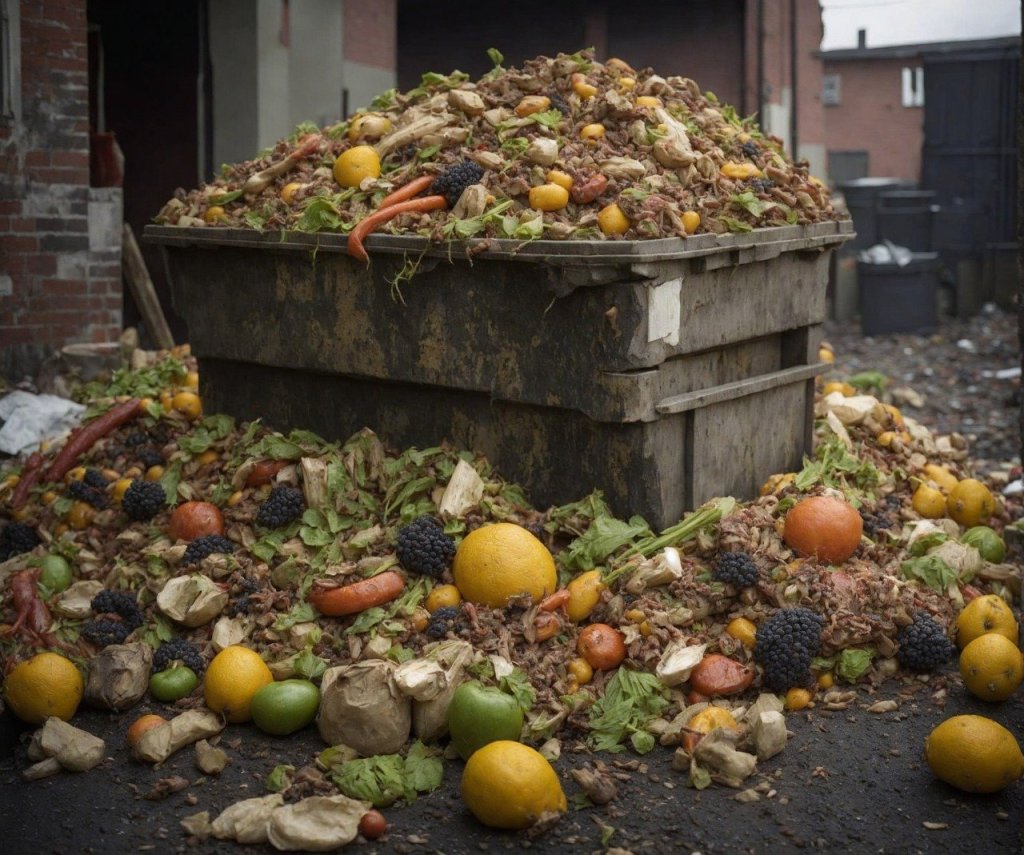
A growing global population and fears about the impacts of climate change on agriculture have prompted a movement focused on the reduction of food waste. By keeping food out of the garbage, we reduce our own consumption and theoretically add to the supply available for others while minimizing our contribution to climate change. Salvaged food is distributed for free to people who can’t afford to buy their own.

If there weren’t enough food for everyone, reducing waste and redistributing the excess would be a logical solution. This idea has facilitated the growth and development of food banks, who have an essential and positive impact on their communities. But wanting food shortages to be a root cause of hunger doesn’t make it a reality.

 While we absolutely should worry about climate change’s impacts on agriculture and reducing our contributions to the landfill, we do not have a food shortage. Reducing food waste is an essential component of a sustainable food system but not a magical solution to hunger.

I am a passionate advocate for sustainable agriculture and responsible consumption, as well as food banking, but this framing fails to capture the complexity of food insecurity.

Hunger is primarily caused by a lack of access to food. People experiencing hunger can’t afford it, can’t physically access it, or don’t have the ability to use it.

Reducing food waste in itself does not improve physical access, doesn’t make it more affordable (for people in need, although there are significant financial advantages for corporations to donate), and rarely increases an individual’s capacity to use it. Redirecting it to food pantries does improve financial access but doesn’t guarantee that the physical location is available to who need it most or ensure that it is nutritionally or culturally appropriate for the community.

Food pantries also face a constant struggle of determining whether their food selection promotes respect or disdain for their clients. Too often, the push to reduce food waste leads organizations to distribute produce that is wilted and mushy, dented cans with illegible labels, or dairy products long past their expiration with questionable edibility.

Whether or not the food is perfectly good or rotting in its package, using food waste as an anti-hunger tool also perpetuates harmful stigmas about food insecurity and food assistance.

Our cultural conviction that it’s possible to “pull yourself up by your bootstraps” if you just work hard enough means that we often view poverty as an indicator of laziness or personal failure. Framing people who are food insecure in this way justifies providing them with food otherwise destined for the garbage, and subtly reinforces the idea that they deserve less because of their inadequacies.

In an ideal world, everyone would have the resources they need to access their own food. But recognizing we still depend upon the essential services of food banks and pantries, here’s how we can make sure we’re still uplifting, rather than oppressing, our clientele while using salvaged resources.

  • Does your food demonstrate respect for your shoppers? Are you giving it away because it’s functional, or because your volunteers didn’t want to toss it? The fact that clients take it does not mean they’re excited about- it just implies they have no other option. You may need to start throwing out more food than you want to to elevate the quality of what’s offered. Respecting your shoppers needs to be the number one priority of every anti-hunger organization.  
  • Are your donors using you as their waste disposal? Are you receiving food that should have already been discarded, and they’ve just offloaded it from their garbage to yours? It is uncomfortable to correct donors, but what a waste of your time, energy and resources! By distributing poor quality food, you’re likely offloading the garbage onto your shoppers just as your donors did to you. Make sure donors know and follow your standards, with an emphasis on human dignity.
  • How do you talk about your use of food waste? Without careful navigation, emphasizing how much food is salvaged can reinforce the public perception that it’s ok for people experiencing hunger to eat garbage. Consider focusing on “food rescue” or “food surplus” rather than “food waste.” Food pantries usually have a significant cadre of volunteers whose mission is environmental rather than social, and it is important that you educate them on the nuances of this distinction. There is room for them to support the environment while still emphasizing that everyone deserves good quality food no matter their capacity to purchase it.

The opinions expressed here are solely my own and do not express the views or opinions of my employer.

Want to learn more about food justice? Subscribe so you never miss a post!

Why Think of Food as Medicine?

At one of my food pantries, I once welcomed a couple looking tired and stressed. They were from across the state, and they explained that they were camping in their car while a friend was in the local hospital. They didn’t have money for a hotel or groceries, so the internet had directed them to us for help.

Food pantries are often poorly equipped to serve people without access to a kitchen, but we did our best to supply them with healthy options that didn’t require preparation or storage. They discussed the possibility of coming back once their friend was released from the hospital, to make sure this individual had a fully stocked pantry for their recovery. I never saw them again, so I never learned how things turned out. I can only hope that they all found the foods they needed to stay healthy.

There is no time where inadequate food access is more destructive than when someone gets sick. When the body is at its weakest is the time where we need nourishment for healing the most. My own experience with serious illness and the relationship with food allows me to vouch for the importance of what we eat for health and quality of life.

 Emergency food assistance programs are designed to prioritize processed and nonperishable foods, which means we’re working against the current to uplift fresh and whole options. SNAP is wholly inadequate for supplying a healthy diet.

With skyrocketing increases in diet-related illness like diabetes and heart disease, it should be abundantly clear that improving healthy food access is essential to keeping people healthy and out of the hospital and free from medical debt.

While traditional food pantries will continue to play a role, there are new models increasing access to healthy food through healthcare that deserve recognition for their effectiveness and innovation.

Food pantries in hospitals

While the logistics of starting any new food pantry are huge, and grow exponentially in relation to their commitment to healthy foods, incorporating food pantries into hospitals is an incredibly valuable strategy. I started my anti-hunger career running three school-based food pantries, with the theory that being located in schools makes them more accessible and less intimidating to families. The same concept applies here, only amplified. Either for visiting families or for outgoing patients themselves, having a food pantry onsite removes the burden of having to seek out this additional resource after the stress and exhaustion that come with a hospital visit.

Healthcare providers can have increased confidence that their patients will be able to stick with their nutrition plan, because they have been supplied with the specific foods necessary for their recovery. While this doesn’t remove barriers for people without access to kitchens, the physical ability to cook, or access to healthcare itself, this is still a valuable progression for increasing food access to our most vulnerable populations.

Prescription programs

Diet-related diseases are one of the most common, and most preventable illnesses in the U.S. Despite popular rhetoric, my decade in food access work has also taught me that the unhealthy foods that lead to poor health are often unavoidable for those living in poverty. People experiencing food insecurity know what they should be eating- but the barriers to healthy meals are simply too high.

The healthcare costs for managing diet-related diseases are astronomical- both for individuals as well as their health insurance. While the more cynical among us may observe that profits offer little incentive for change, it does highlight the opportunity for potential savings when healthcare providers invest in food. Ensuring people have access to healthy, fresh options has a substantial impact on their short- and long-term health.

Luckily, the medical community is beginning to recognize the potential value of programs connecting clients with fresh food. A new strategy allow doctors and healthcare workers to prescribe fresh foods through coupons or other tools that connect patients with fresh and healthy options.

There is a wide range of structures for how these programs can be implemented, but this model generally offers far more dignity than a food pantry. This system also has greater capacity to supply quality fresh produce, since it is being purchased rather than donated.


There are alarms sounding everywhere as food insecurity rises. Frustration at the inability of government to take effective action may prompt communities to push for opening more food pantries- but now is an opportunity to consider alternate models. We’ve been fighting hunger with roughly the same approach for the last fifty years- and now is the time to try something different.

The opinions expressed here are solely my own and do not express the views or opinions of my employer.

Want to learn more about food justice? Subscribe so you never miss a post!

When Are Clients Too Entitled to Food?

This week, I heard someone who works in the anti-hunger field ask a speaker how to handle (and prevent) food pantry shoppers feeling “entitled” to food, and I can’t stop thinking about all the ways to unpack this concern.

Anti-hunger and food banking staff do this work to have a positive impact on the world, with the bold aspiration of eliminating hunger entirely. With a fundamental ambition to do good, it can be hard to tolerate situations and people that don’t leave us with a warm glow.

When these interactions don’t feel good, it’s easy to justify a defensive response to preserve our feelings of appreciation and impact. Staff and volunteers should feel this way- but not at the expense of the people we serve.

Every food pantry client IS entitled to food.

The power differential that exists between food pantry staff and clients unfortunately offers an opportunity to demand behaviors from people experiencing hunger– commonly humility, gratitude, and submission. Giving free food to an individual who behaves in this manner is much easier and more gratifying than someone complaining about the selection, quantity, or model of distribution.

While some attitudes and behaviors are harder to deal with than others, everyone deserves to eat, no matter what. While it’s easy to say, “they can just go somewhere else” to avoid challenges or confrontation, this is false.

Finding transportation to another location may be impossible, distribution hours might not work with their schedule, previous incidents of harassment at other pantries may make them uncomfortable returning, or other organizations might not have resources that meet client nutritional or cultural needs.

I’ve heard tearful stories of food pantry clients being turned away because they didn’t have proof of address, citing fears of exploitation, or because an intake form was completed incorrectly, and they were accused of fraud. I’ve listened to panicked tales of waiting in line for an hour only to see the pantry doors close the moment the distribution ends, leaving clients still waiting without food.

These experiences elicit anger and frustration from people experiencing hunger, but this very justified emotional reaction too often leads to accusations of entitlement.

Believing that people aren’t entitled to food is synonymous with the idea that everyone doesn’t deserve to eat.

How do anti-hunger organizations perpetuate the idea that people aren’t entitled to food?

Are you open to criticism?

Defensiveness is often the first reaction to a complaint, especially when it’s something we’ve poured our heart and soul into making perfect. It’s entirely human to want to react to any attitude besides humility with deflection. As we’ve been conditioned to believe that hunger is an individual failure, it’s a logical next step to treat criticism as an attitude problem rather than a genuine concern. But dismissive attitudes towards shoppers can foster environments which consistently disregard the needs, and even the humanity, of the people we intend to help.

Catch your malicious compliance.

Are you holding your shoppers to the letter of the law, or the spirit? If someone was in line before you closed, were they really too late or can you still serve them? If a mistake is found in their paperwork, can you help them fix it rather than accusing them of ill-intentions? If someone is struggling to self-regulate, can you give them a granola bar and a bottle of water before accusing them of disrespect? Setting your guests up to fail is an active way to increase conflict, resentment, and hostility on all sides of the relationship between organization and community. Maybe your policies are inflexible for a reason, but I’ve too often witnessed their enforcement as a tool to demand submission from shoppers, which further models the acceptability of this attitude to volunteers.

If someone doesn’t get food from you, they might not eat at all.

Imagine the panic and fear of having your food security depend on someone else’s interpretation of your attitude. Consider the humiliation that accompanies the demand to humble yourself to deserve food to feed your family tonight. If we want to build anti-hunger systems that actually fight hunger, we need practices and models that support, rather than subjugate, people experiencing hunger. It is entirely possible, while uplifting the dignity and respect of every person experiencing hunger, to ensure everyone is served well. De-escalation techniques are a vital resources, and every direct service organization should host regular trainings so that everyone has the tools they need for their community to thrive.


Of course, this work is more fun when everyone is kind, humble, and deferential. But demanding this behavior implies that people experiencing hunger are only deserving of what we decide they’ve earned. Everyone is entitled to food, and it’s up to us as anti-hunger advocates to figure out systems that honor this reality.

The opinions expressed here are solely my own and do not express the views or opinions of my employer.

Want to learn more about food justice? Subscribe so you never miss a post!