
Why Kindness Doesn’t Fight Hunger

A media source once visited one of my food pantries and requested interviews with some of our shoppers. My favorite moment was when a client told the interviewer with great enthusiasm, “They’re not just nice to me- they’re nice to EVERYONE!”

This resonated because I regularly heard stories about the experience our clients had at other food pantries- and kindness seemed in short supply. In most cases it was not that volunteers or staff at other organizations were explicitly rude- it was that those seeking emergency food assistance are sensitive to judgement, disingenuity, and prejudice. There is already such stigma against using emergency food assistance internalized by both recipients and distributors, that without conscious effort, it’s easy to commit microaggressions even while acting kind and welcoming.

No one wants to go to the food pantry.

I have never met someone who preferred to be handed discarded, cast-off, or expired food at a food pantry over having autonomy over their own grocery shopping.

Of course, many people are grateful for the much-needed help in feeding their families, but even the most dignified food pantry experience isn’t better than the power to choose what and how much your family wants to eat without restriction. (And of course, no one needs to be grateful for food.)

This reality influences every food pantry visit. Recognizing that no one wants to be there, it’s essential for organizations to ensure that they’re sensitive to the baggage that accompanies such a task.

While institutional policies impact the food pantry experience, volunteer attitudes and actions carry the greatest weight when it comes to building a safe space for people experiencing hunger. Having volunteers truly committed to compassion, kindness, and empathy is the most effective way to establish a dignified food pantry environment but is no simple achievement.

Even when volunteers are kind and welcoming, it can be easy to unconsciously reflect problematic attitudes through their actions. By building respectful foundational attitudes, you can help your volunteers practice empathy at every shift.

Assume good intentions.
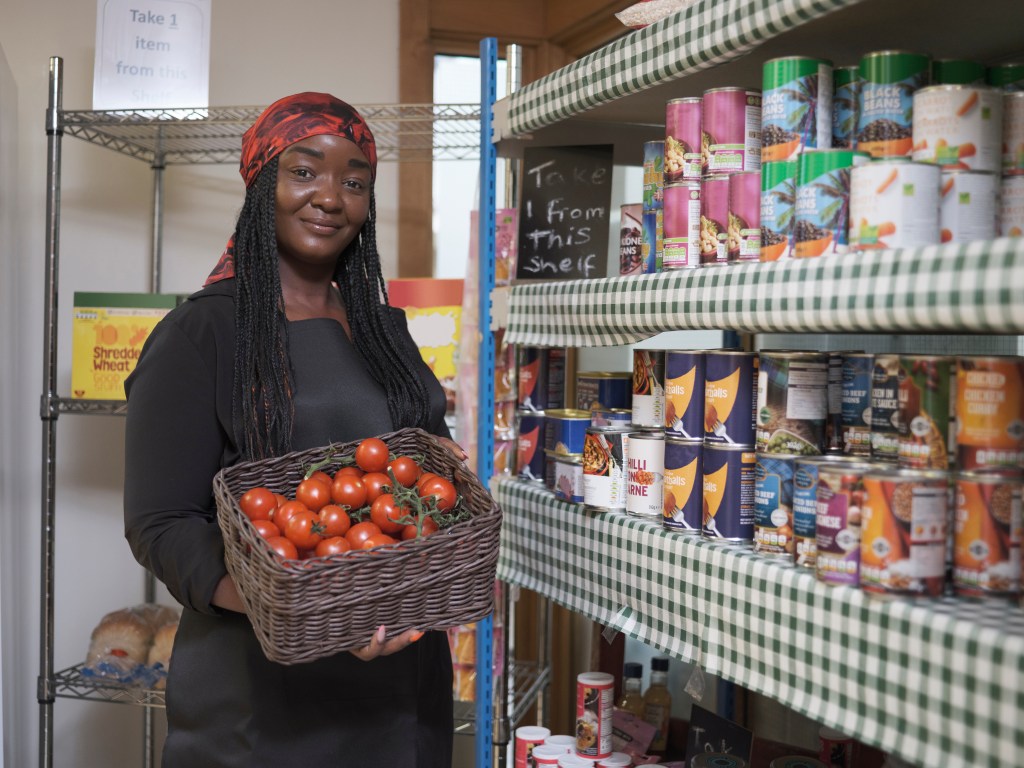
Remind volunteers that we never know the whole story of why someone is at the food pantry- and it’s none of our business. If your community embraces the idea that people only come who are in need, then it’s easy to make everyone feel welcome without judgement. If volunteers (or staff) think people are there to exploit the system, this reflects in conversations, actions, and policy. Any concerns voiced should be an opportunity for discussing barriers to food security and building respect.

A client arriving in a fancy car may have recently experienced a catastrophic job loss or medical bill that leaves them broke, even though their car screams wealth. Expensive belongings may have been donated, or speak to previous stability, or maybe were all that was grabbed while fleeing domestic violence.

Remembering to be open-minded about the circumstances that bring someone to the food pantry creates a space free of judgement, which will help visitors feel more welcome. Volunteers who can’t adopt this mindset may need to find a different opportunity.

Food is a gift.

Just like any other gift given, the giver has no authority over how it is used. With all the work that goes in to sourcing and distributing food for emergency services, it’s easy to feel possessive over how it’s used. But if we maintain the assumption that everyone who visits a food pantry does so out of need, we need to relinquish the compulsion to control how the food is used.

We’re still building food security if the food is shared with a neighbor, or served at a church luncheon, or stashed in the back of a cupboard untouched for a future emergency. For pantries that are without limits, this attitude can also help check judgements about how much people take. Once it’s in someone’s cart, we can appreciate the hard work we put in to get it there and celebrate that someone will eat well tonight. It doesn’t matter who, or what, or how much.

Services are for shoppers.

I once had a week-long argument with a coworker who was adamant that our food pantry was a volunteer-centered organization. They argued that clients were the vehicle we used to provide an experience for our volunteers, which justified turning away any client who negatively influenced this experience.

The fact that services should focus on fighting hunger seems obvious, but all direct-service anti-hunger organizations wrestle with this conundrum every day. An explicit commitment to serving the community needs to be regularly revisited to ensure that policies focus on the needs of shoppers. This doesn’t mean that volunteers or staff are neglected, but their needs should be considered in a different light.


Everyone knows the importance of being kind at a food pantry, but establishing an atmosphere that truly welcomes people without judgement or stigma requires a much stronger foundation. While established a clear mission and supporting policies can help, this is also the kind of foundation that can be built guerilla-style by a single individual ready to make a change. Conversations uplifting each of these tenets can slowly permeate the organizational culture and build an environment that is more genuine and welcoming, and therefore more effective at fighting hunger.

The opinions expressed here are solely my own and do not express the views or opinions of my employer.

Want to learn more about food justice? Subscribe so you never miss a post!

The Best Volunteers are Taught, Not Found

Several years ago, I was working with a group of volunteers who were sorting donations of fresh and perishable foods. I remember emphasizing that if they were unsure of the quality, they should throw it out because making sure that no one got sick from this food was of the utmost importance. One volunteer nodded and said, “That’s true, because if they get sick then they’ll want us to pay for their medical bills too!”

I was shocked to hear this comment from someone who was volunteering to fight hunger.

It was hard to believe that an individual motivated to do this work could also be so cynical and unkind to the people they were there to help.

One of the major challenges that all food banks and pantries face is working with volunteers. Because nonprofits tend to depend on donated labor to keep staffing costs low, volunteers are essential for accomplishing our social justice goals. However, volunteers come with an incredibly wide range of motivations which can present unique obstacles for the organizations with which they serve.

Volunteering is widely recognized to be good for our physical and mental health, provides important social opportunities, and gives everyone a way to make a meaningful contribution to the world around them. However, this also means that nonprofits are faced wrangling a diverse and eclectic population to meet their goals.

The most effective food pantries have volunteers with a comprehensive understanding of the root causes of hunger, respect for the realities of living in poverty, and trust the mission of their chosen organization to make an impact. (A future post will explore the importance of volunteers with lived experience of hunger.) Here are some of the strategies I use to ensure my volunteers have the skills, confidence, and knowledge they need to be powerful food justice advocates.

Building a Powerful, Anti-Hunger Volunteer Force

1. Present a Unified Message

Every anti-hunger organization needs to be articulate about their mission and goals, which should clearly align with the assignments of volunteers. Are you trying to end hunger? Give your clients all the food they need to thrive? Ensure all the children in your neighborhood have a healthy dinner tonight? This message needs to come from the organization’s leadership, have buy-in from staff, and be regularly explained and reviewed with volunteers.

2. Repetition

Many of your volunteers might not agree with your message. They may believe that people experience hunger because they’re lazy. They may volunteer because they want to spend time with their friends. They may be committed to reducing food waste to be more environmentally friendly. Whatever reason brings them to your food pantry, you will have to explain and model your mission a thousand times every day. Although tedious and emotionally fatiguing, this repetition will help your team understand and eventually internalize your message.

3. Address Power Dynamics

It is essential to be aware that even in the most respectful food pantry, there is an imbalance of power. People seeking assistance are expected to adhere to rules, and volunteers are generally there to enforce them. They have the authority to supply or deny an individual the food they’re looking for, and this authority must not be abused.

As this famous 1973 Stanford experiment taught us, people adopt attitudes that reflect the position they’re in. As the prison guards became more abusive of their authority, it’s easy for volunteers to also inappropriately focus on enforcing rules.

I have two solutions to this problem:

 A. Implement as few rules as possible, so that there are fewer opportunities for violation or enforcement. For example, our clients have no predetermined path that they must travel through our pantry, and they can take as much as they like of many items.

B. Explicitly discuss the power imbalance and the specific language we expect from volunteers to minimize it. For example, if a volunteer sees a client taking more of something than the posted limit, their script is, “we ask that everyone only take (#) of this item. I know it’s not enough, but we’re trying to ensure that everyone gets some. We’re sorry about that.” We always interrupt the use of phrases like a client trying to “take too much” or “steal food,” and instead discuss the potential challenges of accessing the food they need. (We also tell our volunteers that if they find themselves getting too caught up in monitoring our clients, they are to excuse themselves to the breakroom for some candy.)  

4. Model Respect

Like any organization, we occasionally serve individuals who are annoying, frustrating, or aggravating. But no matter how challenging I find them to be, it is essential that volunteers only hear staff speak of and treat these clients with respect and dignity. We also discuss the factors that may influence the behavior of our clients such as stress, embarrassment, mental health, or trauma.  

When I first started working with my food pantry, there were two clients in particular who were known to be difficult. Every visit was an event that took an enormous amount of maintenance to be successful. Eventually, it became clear that previous volunteers had been rude and disrespectful to these individuals so they anticipated conflict every time they came to use our services. By establishing an environment that prioritized respect where they knew they would be treated with kindness, the challenges with these clients largely vanished. Your community will respond to the attitudes of your volunteers, who look to pantry leadership for guidance. When respect is expected at every level, everyone has a better experience.


No matter what your specific mission is, every organization has the capacity to harness their volunteers to be food justice advocates. This is a slow process that depends on the environment you create and the organizational culture you celebrate. Eventually, these attitudes and tools will produce volunteers who find greater fulfillment from their service, higher client satisfaction, and an organization less prone to conflict or abuse.

The opinions expressed here are solely my own and do not express the views or opinions of my employer.

Want to learn more about food justice? Subscribe so you never miss a post!