Anina Estrem, MPP
I am a food justice advocate who has been fighting hunger for a decade. Growing up on a small farm in the Pacific Northwest, food was a communal experience. The running of a successful family farm mandates that everyone participates, which makes what we eat interactive and engaging instead of just a vehicle for nourishment.
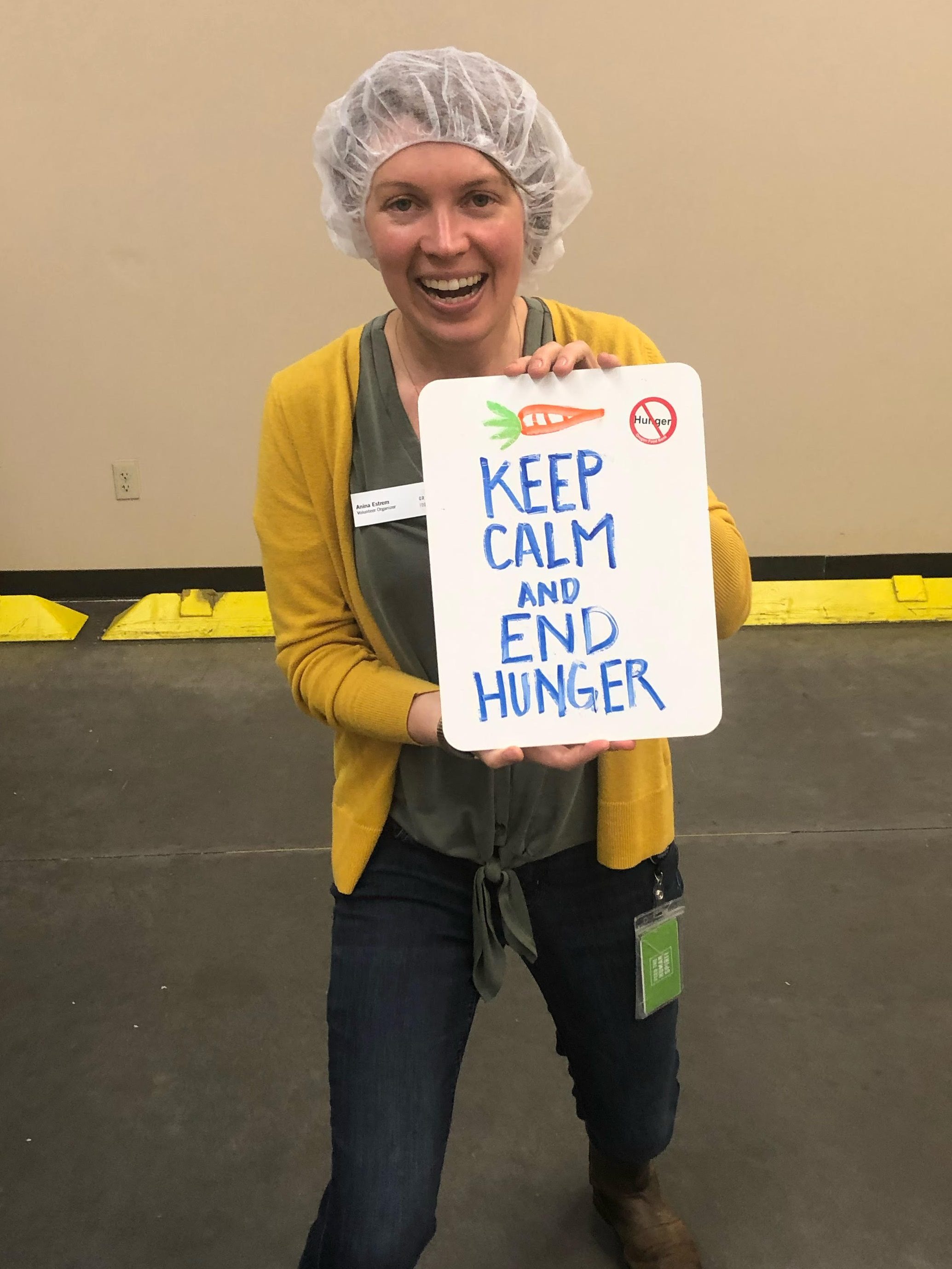
My work is guided by the fundamental idea that food should be fun.
I started my career as a FoodCorps Service Member in rural, low-income schools looking to improve the quality and health of school lunches. My students were passionate and enthusiastic about eating the vegetables they harvested, but I realized that many of them did not have anything to eat for dinner when they got home.
No matter how much I taught them to love kale chips or carrot salad, I wasn’t doing anything to ensure that they knew where their next meal was coming from.
I realized that if I wanted to make food fun, I needed to make it accessible first.
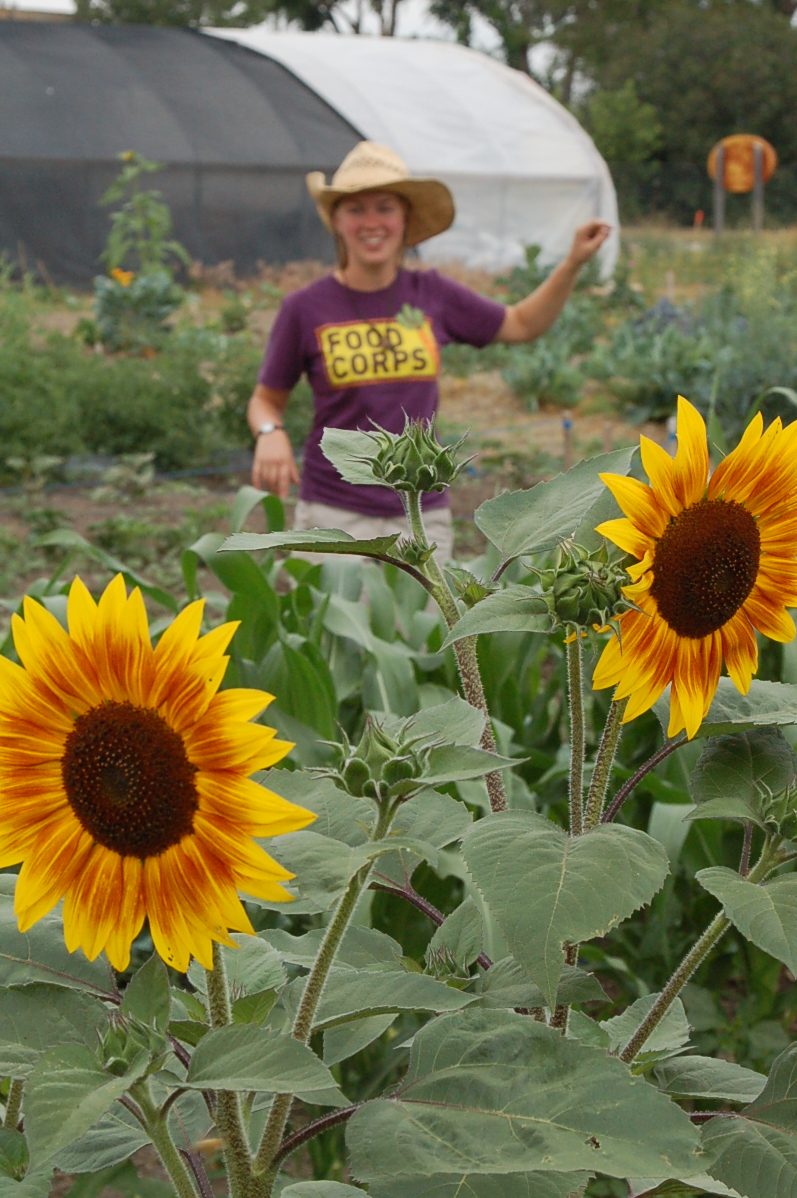
I have manifested this idea in several ways. For two years, I ran three school-based food pantries. These were a pilot project intended to make food easier to access, physically by being open to families when school got out, and emotionally since it was in a familiar space for families.
One of the many lessons I observed was that the organizations and individuals setting the policies I was tasked with implementing had little experiences working with people experiencing hunger. This motivated me to earn a master’s degree in Public Policy specializing in food justice and access.
At a major food bank, I then learned how to engage large volunteer shifts in anti-hunger advocacy. Following this, I spent three years managing a large food pantry serving over 10,000 individuals and distributing over 160,000 pounds of food monthly. I now run a large farmers market with an emphasis on building access to for marginalized and low-income communities.
In all of these pursuits, I have found that it takes special attention to making food fun, communal and culturally relevant in order to effectively fight hunger.
I love food banking. I find my power in helping people access the food they need to thrive.

I know that food pantries and the emergency food system cannot solve hunger alone. Education and advocacy are the most effective tools for policy change, but I have found that there is a lack of discussion on how food pantries can participate.
While food banks increasingly work towards policy change, have the funds for innovative projects and generally receive all the press, food pantries are often excluded from these campaigns. As the on-the-ground organizations directly supporting clients, this is a major mistake.
Through this blog, I intend to address how and why food pantries should engage in social justice, advocacy and anti-hunger education alongside the distribution of food.
The opinions expressed here are solely my own and do not express the views or opinions of my employer.
Want to learn more about food justice? Subscribe so you never miss a post! Look for one email in your inbox every Monday morning.
 Reintroducing justice and dignity to the fight to end hunger