Out Sick This Week

I’m sorry readers- no new blog post this week.

I’ve tested positive for Covid, and it takes all I’ve got just to sit upright on the couch long enough to finish a warm beverage (I lost my sense of taste today so I can’t tell if it’s tea or coffee.) My fiancé has been working hard to prepare tasty meals to keep me nourished, which has me reflecting on the unique requirements our bodies have to stay healthy. Respecting everyone’s individual needs inform much of my practices at the food pantry, so today I’m revisiting this post about how my personal challenges with food inform my own effort to fight hunger.

Check in next week for a new post!

The opinions expressed here are solely my own and do not express the views or opinions of my employer.

Want to learn more about food justice? Subscribe so you never miss a post!

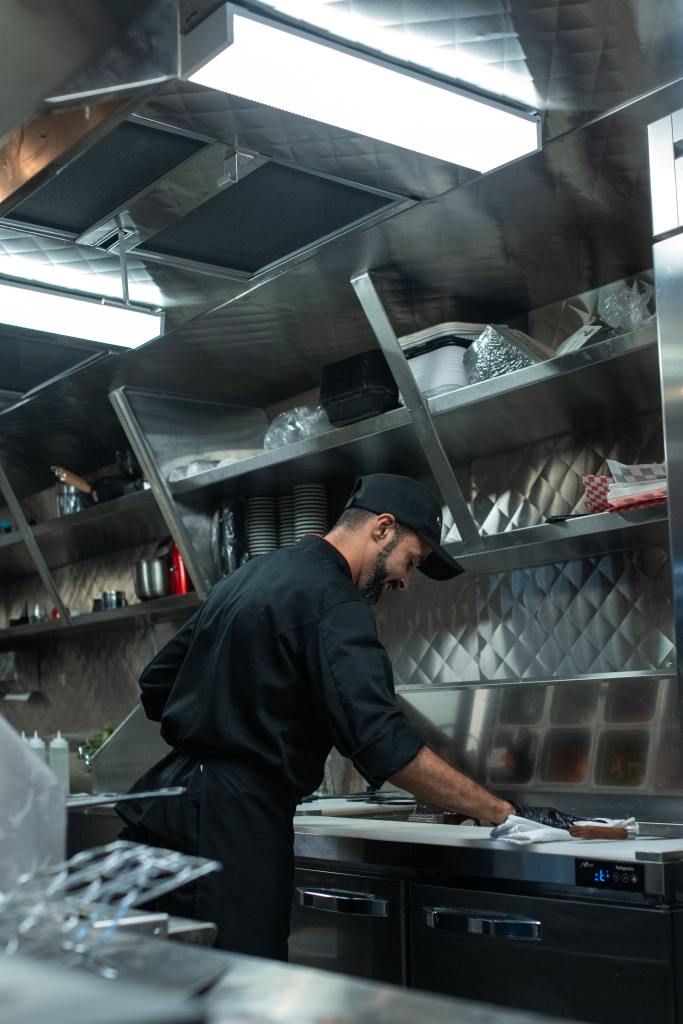
Why You Should Run Your Food Pantry Like a Restaurant

Imagine walking into your favorite restaurant. You know the staff is going to be kind and friendly. You are anticipating what foods you’re likely to enjoy, and you’re confident that it will be served safe and clean. You leave feeling nourished, pampered, and fulfilled.

Although they differ in many ways from a restaurant, food pantries should aspire to imbue their visitors with the same feelings. How your guests are welcomed impacts how they feel about their entire experience. A clean environment with reliably high-quality options will help clients feel respected and empowered. High standards of food handling and safety contribute to an air of professionalism. Quality foods help avoid the feeling that shoppers are receiving society’s discarded and unwanted options.

Maintaining such high standards is hard for organizations that primarily depend on the labor of volunteers. When there are a million responsibilities to manage, it can be hard to repeat food safety training every day for your team to ensure consistency. Volunteers may be uninterested, not adhere to your standards, or not even understand the value of dedicating this extra level of dignity to your clients.

But by continually pushing for the highest quality of dignity, food safety, and facility maintenance, you ensure that guests feel more comfortable, that your food stays safe, and that you have an operation you can be proud of and where your clients leave feeling taken care of.

Here are my four top tips for adding that extra level of professionalism your food pantry deserves to provide a high-quality food service experience for your community.

1. Keep bad or spoiled food out of sight

No matter what, food pantries regularly receive food that is not appropriate to distribute. Grocery stores may donate items that they can’t bear to throw away even though they are clearly inedible. Produce from the food bank may not last as long as we’d hoped. A donor may throw a whole mess of items together in a box that may be crushed, damaged, or contaminated. Every food pantry must dedicate significant effort to sorting the good options from the bad.

Keeping this process out of sight of clients helps reduce or eliminate the impression that food pantries only receive and distribute cast-off, undesirable foods.

No one wants to feel like they are eating garbage, and clients don’t need to know if your food supply was salvaged from a motley collection of questionable donations. Just like making sausage, witnessing the process may negatively impact how clients feel about the good food they do receive.

2. Keep the pantry clean

One of the most common complaints I hear from clients who visit food pantries is that they’re concerned about the cleanliness of the facility. As organizations that primarily depend on volunteer labor, sometimes it can be hard to maintain the building.

Coordinators may be reluctant to add cleaning responsibilities to the volunteer role when the team is focused on supporting clients. Volunteers may not know how to prioritize these responsibilities or may not have adequate training on how to do it well. Staff may not have the capacity to do it all themselves.

Consider establishing a daily check list for volunteers and specific, mandatory cleaning procedures.

For example, my food pantry displays produce in gray plastic bins that are washed and sanitized once emptied. Even if there is only one dirty bin at the end of the day, we still require completing the wash/rinse/sanitize process to ensure everything is kept appropriately clean and food safe. Establish which procedures may have short-cuts and which ones are nonnegotiable.

3. Apologize for spoiled food

Occasionally, no matter how good your team is, food that really shouldn’t be given away makes it up to the pantry shelves. Particularly in the summer heat, food that was already near the end of its viability may go bad for clients to see. When a client points out that something has spoiled, we immediately grab it and apologize, commenting on how embarrassing it is that it happened.

By ensuring our clients know that we recognize that they deserve better, we help them feel respected and dignified. In the same way a restaurant would apologize for serving a faulty meal, we apologize for presenting our clients with poor food options.

4. Thank the people you serve

Food pantry clients need food pantries. We offer an essential resource for people who are struggling to access the food they need to get by. But with the stigma and shame around utilizing food assistance, clients don’t want to be reminded of their dependence on this service. That’s why we always thank our clients for visiting us, and let them know that we’re grateful they came in.

In the same way our clients need us, we need our shoppers- increasing food security makes our entire community stronger and healthier. This simple gesture imbues dignity to the experience and helps avoid any impression of pity or condescension.

Next Post: How to Convince Yourself There’s Enough Food For Everyone.

The opinions expressed here are solely my own and do not express the views or opinions of my employer.

Want to learn more about food justice? Subscribe so you never miss a post!

When Do People Deserve Help Getting Food?

“Can I still get food even though I am working?”

“I lost my job- am I eligible to get food?”

These are two questions that we regularly hear at our food pantry. First-time clients who are brought to our pantry due to inadequate wages or unemployment worry that their situation might make them ineligible to receive food assistance. It is tragic that people in these opposing circumstances both worry that they don’t deserve help feeding themselves and their families.

Why is our idea of who deserves to eat so focused on employment?

The United States first began to view hunger as a domestic issue rather than a problem experienced by impoverished nations facing famine and conflict in the 1960s. As understanding and data around food insecurity grew, the 1970s produced the significant expansion of the Food Stamps program as we know it (now known as the Supplemental Nutrition Assistance Program, or SNAP). Providing low-income families with money specifically dedicated to purchasing food, the program had a significant impact on fighting hunger.

In the 1980s, President Reagan began fueling fears of welfare abuse with his rhetoric regarding a mythical “welfare queen,” a caricature of a low-income woman living large on tax-payer dollars. This concept stoked conservative fears of enablement and welfare abuse and has become an integral piece of the American concept of poverty. Fears of abuse by both unemployed individuals unmotivated to work as well as people who don’t really need the assistance have cultivated this complicated relationship between hunger and employment.

A key part of SNAP participation has long been work requirements, which require participating individuals to work a minimum amount of hours every month in order to receive benefits. This policy has recently risen to prominence as it was reevaluated and updated as part of the debt ceiling negotiations. Making sure that people are working or pursuing employment may seem like a simple expectation to set, but making survival conditional on productivity simply brings more shame and humiliation to the experience of being food insecure.

Most households who have the capacity to work are already doing so- this policy does not effectively increase employment.

Work requirements demonstrate more about our cultural reluctance to help people living in poverty than an actual commitment to ending hunger.  

The new policies include work exemptions for houseless individuals and veterans which are actually predicted to increase the number of program participants, but overall continue to reinforce the idea that individuals don’t deserve assistance unless they are working (but if they need help then they’re probably not working hard enough).

Imbuing ideas about who deserves to eat into anti-hunger policies does not do much to change behaviors, but it does ensure that more people don’t have access to resources or don’t believe that they are entitled to the food they need to survive.

When people aren’t allowed to use SNAP, they must turn to other resources like food pantries. Everyone must eat, so these policies simply offload the burden from government to nonprofit programs. There is no option for people to just not eat if they are not deemed deserving enough.

If we’re truly committed to the idea that everyone deserves to eat, then these policies need to be called out for perpetuating the idea that anyone doesn’t deserve access to healthy, nourishing food. Food security should not depend upon your employment status.

The opinions expressed here are solely my own and do not express the views or opinions of my employer.

Want to learn more about food justice? Subscribe so you never miss a post!

Tips for Building a Shame-Free Food Pantry

“I’ve never done this before.” The client walking in the door was visibly shaking, and she repeatedly dropped her reusable grocery bags as she tried to prop them up in her shopping cart. “I’m really nervous. I never thought I’d need to do this.”

“Well,’ I told her, ‘we’re really glad you made it in today. We’ve got some fun options and I hope you’re able to find some foods that work for your family.” I explained our pantry processes before ushering her to Cannery Row where we keep our nonperishable options, and left her hesitantly browsing the shelves.


Visiting a food pantry is highly stigmatized. For many shoppers, just having to use this service is embarrassing, humbling, and shameful. While we have a long way to go to overcome cultural biases against receiving food assistance, here is how you can make sure that they do not dominate your food pantry.

1. Let clients shop how they like.

We don’t have a prescribed path by which clients must traverse the food pantry. It’s a small space so the lack of a traffic pattern does cause some serious traffic jams, but we noticed that clients were unnecessarily worried about doing things the “right” way.

I like to tell them, “We’re lawless rebels here so there’s no right or wrong way to shop.” Our clients usually laugh, and the traffic jams slowly work themselves out. People have the option to revisit their food choices, browse as new options are restocked, or even take a break if they get overwhelmed. Freedom from the fear of making a mistake substantially relaxes the atmosphere within our pantry.

2. Allow your visitors to take what they need, rather than telling them what they can have.

Beyond the few items that we do have set limits for because we run chronically low (frozen meat, eggs, cooking oil), the pantry is filled with signs asking clients to take what they need and leave what they do not. We still regularly get questions about how much they can take, and my team takes delight in responding, “as much as you need!” More than once, this answer evokes tears in shoppers who had expected or previously experienced different attitudes.

Clients with big families can load up their shopping carts, or people excited by a food familiar to their culture can take an abundance. Although we usually do not have enough of one item for everyone to take a large amount, the beauty of this system is that because everyone’s needs vary, it all evens out in the end. One client may finish the bell peppers, but the next client will get access to a new bin of potatoes or onions instead. We have never had any client conflict over our unlimited food choices.

3. Celebrate building food security!

We celebrate when people take lots of food. Clients often worry about taking “too much,” so our volunteers gently encourage them to take more and help our visitors enjoy the abundance that we have.

We have also learned that unlimited abundance often results in people taking less food, because they are confident that we have what they need so there’s no urgency in their shopping. We’re here to end hunger, and we know that a full shopping cart means a family knows they have what they need for a few more days.

By having as few rules as possible, we’ve made it so that our shoppers can’t make a mistake which contributes to a relaxed, comfortable environment. Few people who need to use a food pantry are visiting us on their best day, so ensuring that they come to a place where they know they will not be judged, shamed or scrutinized goes a long way to making the food pantry experience more comfortable.

The opinions expressed here are solely my own and do not express the views or opinions of my employer.

Want to learn more about food justice? Subscribe so you never miss a post!