
I recently had a conversation with a first-time client as she hesitantly browsed the shelves of our food pantry. She told me how grateful she was to access our resources, and then vigorously promised me that she would only take the foods she needed to get by until she next got paid.
American culture is steeped in the idea that people experiencing hunger do so because of their own failures, and that food pantries are at risk of abuse by these individuals. This is so engrained in our brains that many of our clients feel like they must reassure me that they won’t abuse our program while taking as little food as possible.

At my food pantry we emphatically believe that no one deserves to be hungry. Hunger is a systemic rather than individual problem, and we know we’re only a tiny band aid for a gaping wound. I gently responded to this new client by telling her that I wanted her to take more food than she needed. I asked her to try foods she’d never eaten before, and to pick out some ingredients that just looked fun to cook with. I told her I hoped she could find some indulgences to treat herself, and that I didn’t want her to only visit us when her cupboards were empty.
Our goal is to keep everyone’s kitchen stocked so that there is never a moment when they are unsure of when their next meal will be. She did not expect this answer and began to cry.
Why is it so radical to tell her to take as much food as she wants? What paradigm taught us to operate under this idea of scarcity?
What is a Scarcity Mindset?
The idea that there isn’t enough food for everyone is engrained in the emergency food assistance program. There isn’t enough food in the donation system for individual pantries, and there isn’t enough food for all the clients who visit those pantries. Pantries then limit how much food people take to ensure there is enough for everyone. It is a simple, clear way to equally dispense food to hungry households. It also makes it likely that someone experiencing hunger will leave a food pantry with less food than they want, and feeling that their individual needs were not met.

I have worked hard over the last several years to turn this attitude on its head by adopting an attitude of abundance. Although there are major shortages throughout the food system, I also see opportunities for changing how we think about the food we give away and the clients we serve.
It is possible for food pantries to foster a culture which celebrates providing everyone the food they need and the dignity they deserve even while facing food shortages.
How do you cultivate an attitude of abundance?
Physical display of abundance
When we display food in bins, on shelves and in coolers, we make a deliberate attempt to make it look like we have as much food as possible. For our fresh produce bins, that simply means keeping them as full as possible so when clients walk in they immediately see plenty of brightly colored, healthy options.
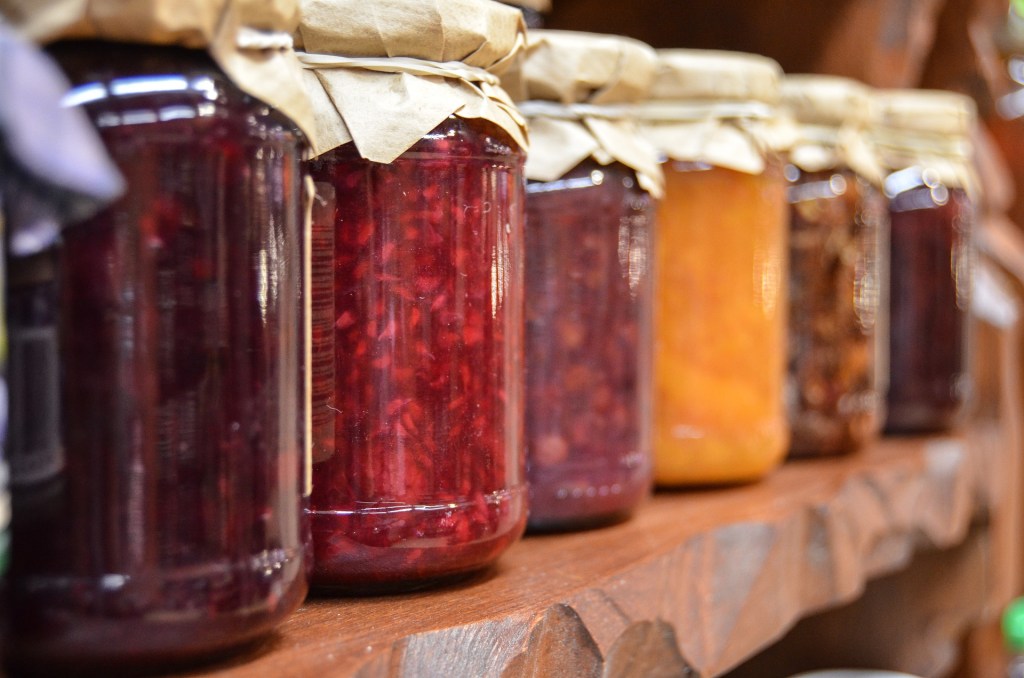
We also keep our shelves looking full by arranging items like canned goods to take up as much physical space as possible. This may mean not stacking them, bringing them to the front of the shelf, and neatly spacing them out. It is important when our clients first enter the food pantry that they immediately feel, “they’ve got lots of food for me,” rather than worrying about there being enough for everybody.
I also always tell our clients that there’s one specific food I want them to take lots of it. Regular clients now ask me as soon as they walk in, “what do you need me to take today?” This further emphasizes our abundance and implies that we need our clients’ help, making this a reciprocal relationship. (The excess food item has been sweet potatoes for months now due to a generous donor, so our clients will joke and tease me as I beg them to take yet another bag.)
Ensure the pantry culture embraces abundance (which means making sure your volunteers are on board!)
During the height of the pandemic, our pantry offered prepacked food boxes to minimize contact. It allowed us to strictly control how much food went out, but I still heard concerns from volunteers about someone getting too much or having too many specific requests to fill.
To change our attitudes while working with the prepacked boxes of food, I set challenges for my volunteers. I found items not packed in boxes because they were hard to find the perfect home for (frozen banana leaves, a fifty-pound bag of oatmeal, or jars of lutefisk), and challenged my volunteers to find someone who wanted them. It became a game to offer these items to every shopper, and a point of pride for the volunteers who successfully gave them away. Our team began to compete and then to brag about how well they did at meeting clients’ individual needs. As well as being fun, this emphasized to both volunteers and clients that we had an abundance to share, and helped my team appreciate the unique needs of everyone we served. We learned that having one specific item was often more meaningful to a client than giving them boxes and boxes of our regular options.

We also started offering first-time clients double the standard amount of food. Volunteers learned about the stigma of using food assistance, and how that may result in people postponing seeking help until their cupboards are literally bare. Giving double the food helped these families refill their cupboards and provided the emotional security of having what they need to be comfortable and not just survive.
This meant that new clients left with approximately 80 pounds of food. For individuals who had been anxious or reluctant to visit our pantry, this immediately changed their attitude. Many left in tears of gratitude, which also increased our volunteer satisfaction as they saw firsthand the impact that their service had for our neighbors experiencing hunger.
Although we now operate as a grocery-style pantry where clients make all their own food choices, the practice of focusing on individual needs and understanding the stigma of visiting a food pantry was transformational for our organizational culture.
Celebrate meeting your clients’ needs
Prioritizing individual needs and increasing the amount of food clients receive made our transition to a grocery-style pantry much easier since our team had already adopted an attitude of abundance. The most important thing we do now to maintain that culture is to celebrate when a client leaves with a full grocery cart. We know their cart is full of foods that work for them, and that making their own food choices brings dignity and autonomy to a process that can so easily be humiliating.

We have gradually seen the amount of food people take go down, as everyone transitions from a scarcity mindset to an attitude of abundance. Our clients know that we will have the food they need again next week, so there is no urgency in loading up today.
No matter what model a food pantry uses to distribute food, it is possible to foster an attitude of abundance. It is easy to focus on scarcity, but prioritizing abundance helps us change how we think about the needs of our community, how our clients feel when they use these services, and how to imbue dignity into the institutions that fight hunger.
The opinions expressed here are solely my own and do not express the views or opinions of my employer.
Want to learn more about food justice? Subscribe so you never miss a post!

 Reintroducing justice and dignity to the fight to end hunger
6 thoughts on “How to Adopt an Attitude of Abundance”